

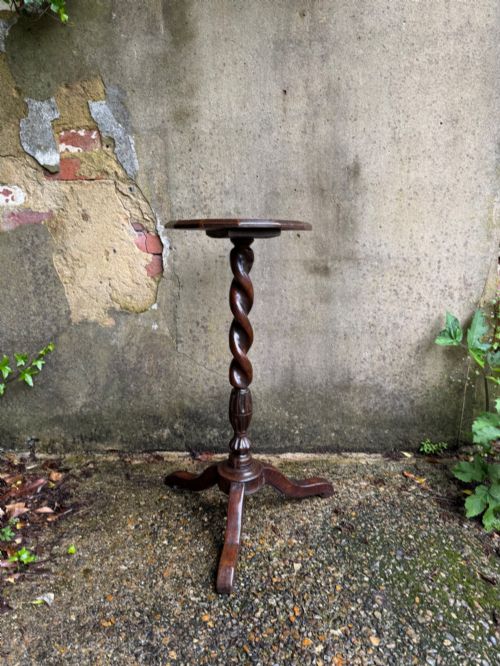
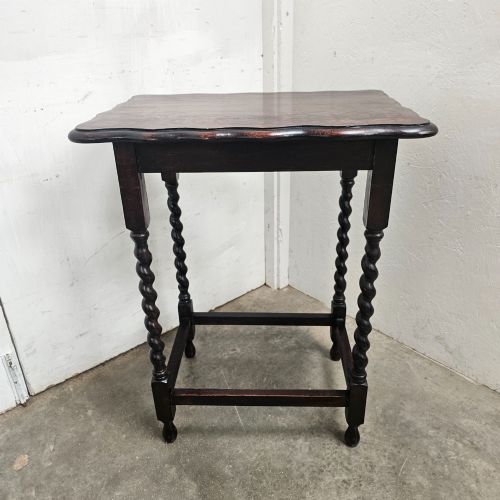
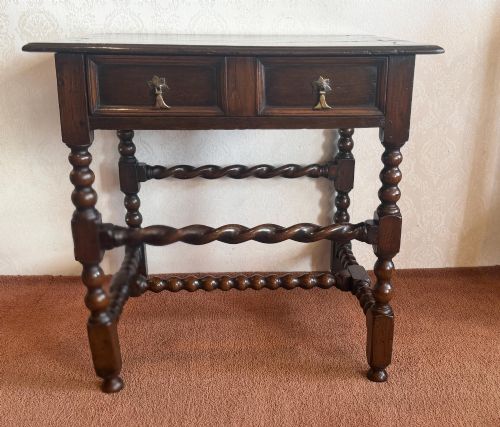


Barley Twist Accent Table
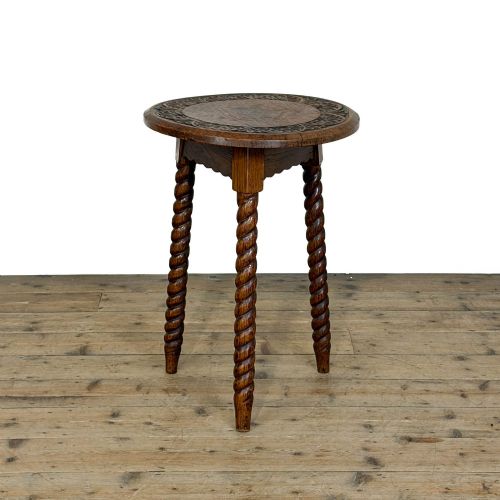
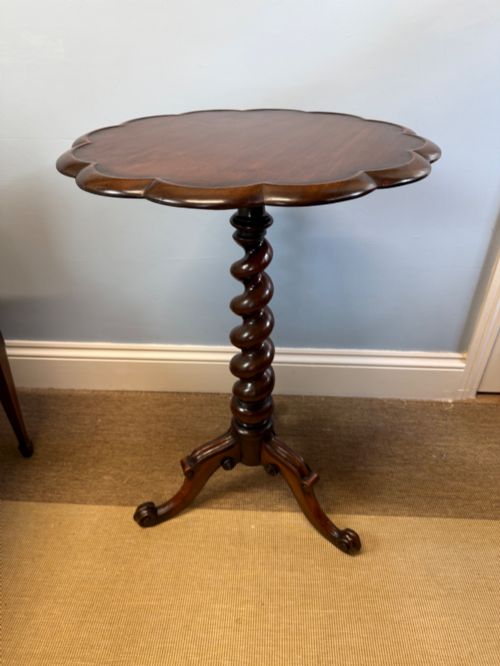
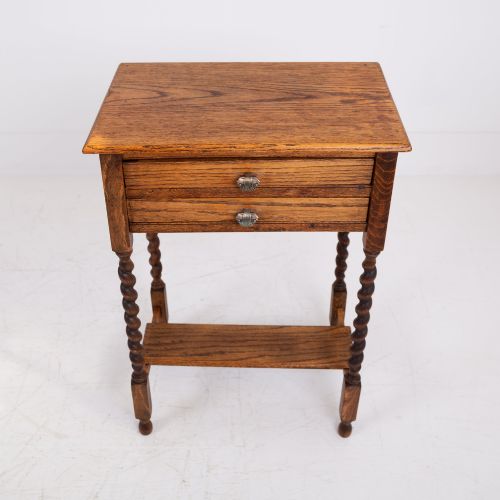
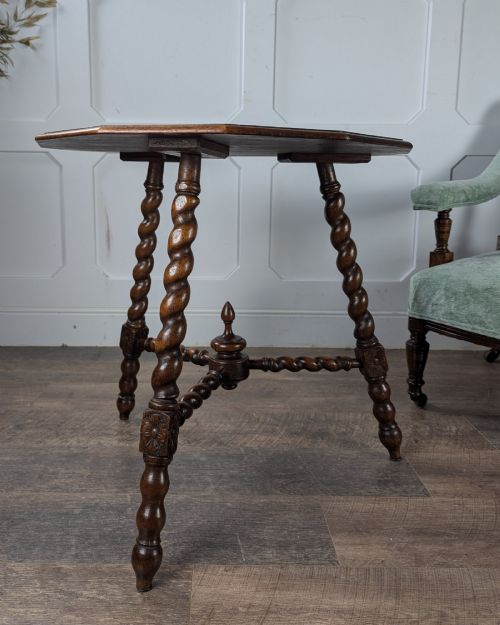
A barley twist accent table brings sculptural timber supports and period character into a room.
Barley Twist Accent Table
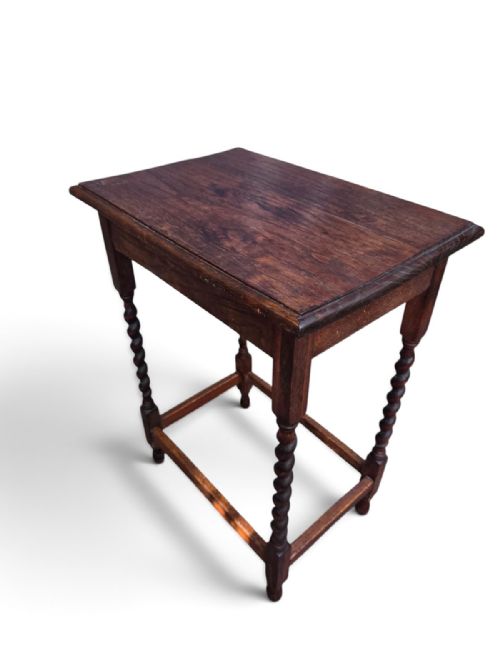
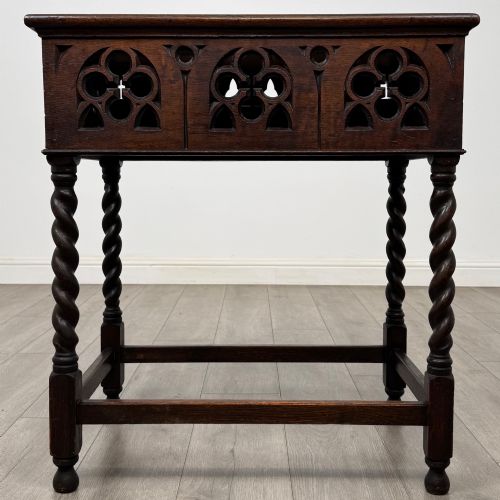
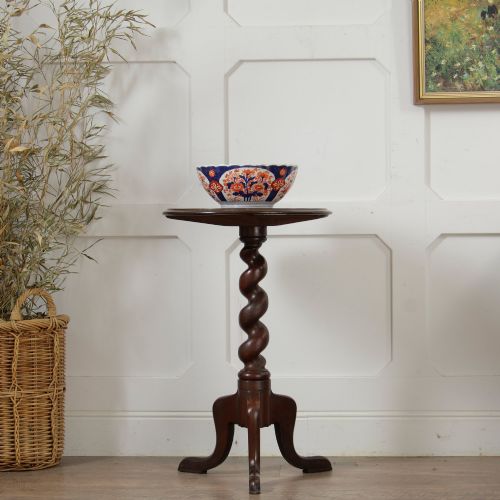
A barley twist accent table provides a sturdy surface for lamps, books and displays while adding distinctive turned timber profiles to a room. These pieces appear primarily as side tables, occasional tables and plant stands, serving practical functions beside seating or in corners.
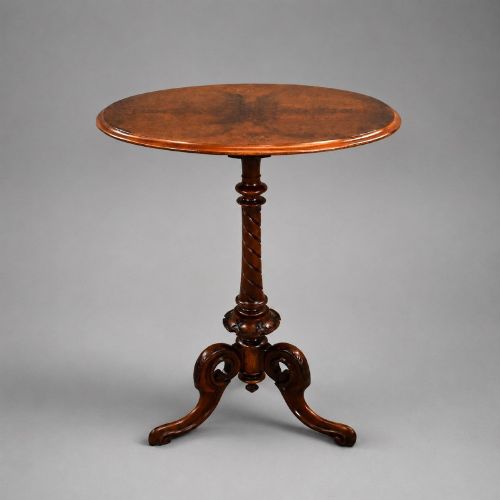
The selection ranges from compact Edwardian examples in solid oak to Victorian pedestal forms rendered in rich walnut and burr walnut. Earlier influences surface through Jacobean Revival and William and Mary styles, showing how later makers adapted historic turning techniques for domestic interiors.
Formats extend beyond standard square or round tops to include pie crust edges, tilt-top mechanisms and nesting configurations. Oak and mahogany dominate the timber choices, though occasional pieces utilise rosewood, brass and burr walnut to create varied visual weights.
Materials and construction
Makers fashioned these tables using dense hardwoods such as oak, walnut and mahogany, selecting timber for strength and grain pattern. Turning lathes shaped the characteristic helical twist legs, requiring precision to maintain uniform spirals down the length of each support.
Joinery methods relied on traditional mortise and tenon construction for stability, while decorative elements such as burr walnut veneers, brass fittings and floral marquetry enhanced the finished surfaces. French polishing or wax finishes protected the wood while accentuating natural tones.
Listings feature oak, walnut, mahogany and rosewood across Victorian, Edwardian and 19th-century periods.
Assessing quality and execution
Quality rests in the crispness of the timber turning and the selection of figured veneers. Hand-carved details and substantial timber frames distinguish superior pieces from utilitarian production.
The integrity of the construction, from tight joints to smooth mechanical action in tilt-top or drop-leaf examples, dictates the durability and standing of an individual table.
The Barley Twist Accent Table Glossary
- Barley twist
- A helical turn resembling a twisted rope, cut into timber or metal table legs and supports. This decorative form draws on 17th-century furniture traditions.
- Occasional table
- A small, movable table designed for specific, intermittent use within a room. These pieces function as tea tables, lamp stands or small side surfaces.
- Burr walnut
- Timber sliced from the gnarled growth of a walnut tree, yielding complex, swirling grain patterns. Makers applied this material as a veneer to elevate the visual appeal of table tops.
- Tilt-top table
- A table featuring a hinged top that pivots vertically for storage against a wall when not in use. This mechanism often pairs with a central pedestal and tripod base.
- Pie crust edge
- A raised, scalloped wooden rim carved around the perimeter of a circular table top. The profile emulates the fluted edge of pastry work.
Barley Twist Accent Table: Frequently Asked Questions
What rooms suit a barley twist accent table?
These pieces fit comfortably beside sofas, armchairs or beds, serving as stable surfaces for lighting and daily items. Their compact footprints also allow them to function as plant stands or hallway display points.
Their varied heights and wood tones enable them to blend with both traditional and contemporary interior schemes without dominating the floor space.
How do I identify the period of a table?
Dating relies on observing timber choices, construction methods and stylistic revival cues. Victorian and Edwardian examples often combine machine assistance with hand finishing, while earlier interpretations draw on 17th-century turning traditions.
Examining the underside, screw types and secondary woods provides clearer clues to the exact manufacturing era.
Are these tables sturdy enough for daily use?
Solid hardwood construction ensures these tables withstand everyday demands such as holding lamps, drinks and books. Tripod bases and four-leg frames distribute weight evenly across the structure.
Regular care with appropriate wax or polish helps maintain the timber strength and joint stability over time.
What is the difference between a side table and an occasional table?
Side tables typically maintain a fixed position against a wall or beside furniture for regular utility. Occasional tables often feature lighter frames or movable mechanisms like tilt-tops for flexible placement.
Both categories overlap considerably in historical listings and serve similar domestic roles.