







Barbizon Landscape Painting
Barbizon landscape painting captures the quiet, rustic mood of rural France through atmospheric brushwork and observed nature.
Barbizon Landscape Painting
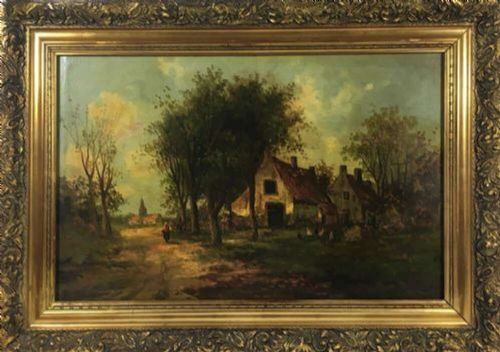
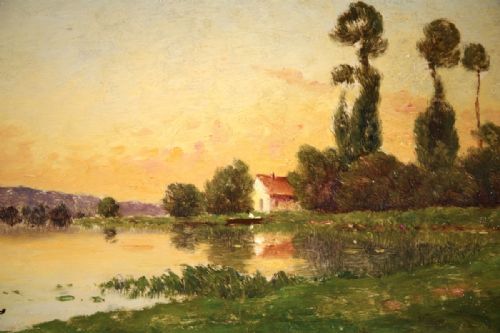
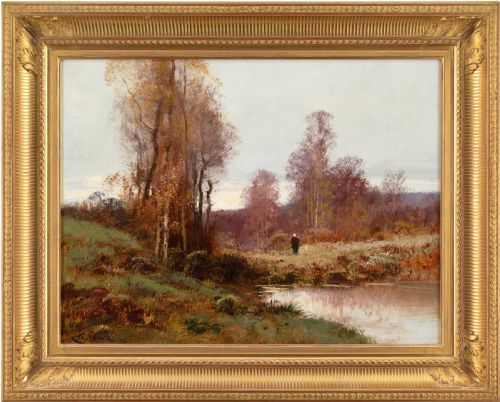
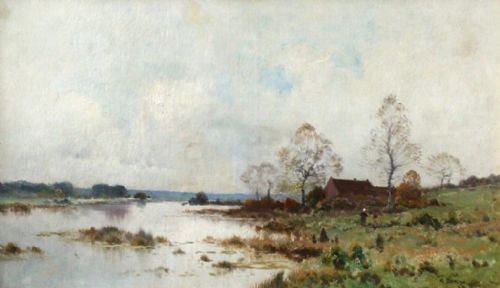
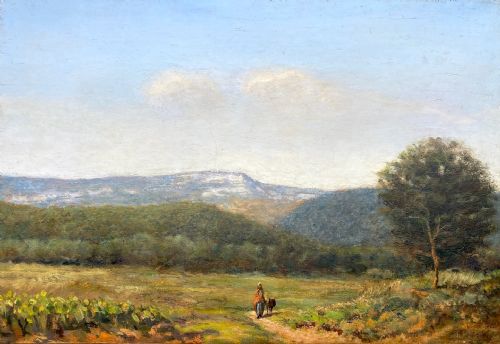
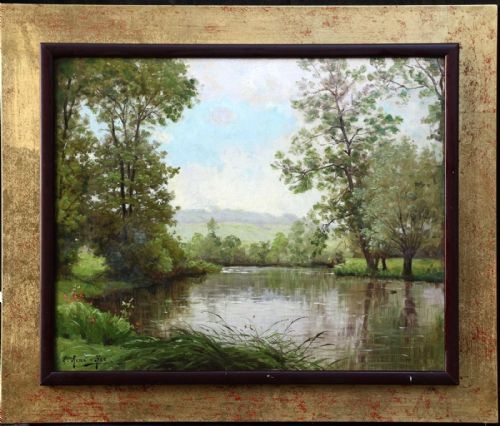
Barbizon landscape painting centres on the rural and pastoral views of the French countryside, often depicting forests, rivers, and farmyards.
The version most commonly met on this page is the nineteenth century oil painting on canvas, occasionally rendered in watercolour or executed on board.
These works bridge traditional academic landscape art and the emerging impressionist movement by prioritising direct observation of light and weather.
Canvas, oil paint, and gilded frames
Painters of this tradition worked primarily with oil paint applied to canvas, and occasionally on wood panels or paper mounted to board, capturing plein air studies directly in places like the Fontainebleau forest.
Surviving works are frequently housed in period frames constructed from wood and finished with giltwood or gilded surfaces.
Distinguishing the finer works
Quality rests upon the subtlety of the atmospheric rendering, where the handling of light and the tonal balance of the rustic scene dictate the visual depth.
Works attributed to documented painters or circles within the school generally demonstrate superior brush control and more confident spatial composition.
Paul Désiré Trouillebert·Henri Joseph Harpignies·Pierre Emmanuel Eugene Damoye·Charles Edmond Rene His·Charles Clair
The Barbizon Landscape Painting Glossary
- Plein air
- Painting executed outdoors in direct contact with the subject matter. This approach allowed artists to capture transient effects of natural light.
- Fontainebleau
- A vast forest south of Paris that served as the primary gathering place for painters seeking untamed rural scenery.
- Pastoral landscape
- A genre depicting rural scenes of herdsmen, farm animals, and agricultural fields. These compositions evoke a quiet, unhurried country existence.
- Giltwood
- Wood carved and coated with gold leaf or a gold-coloured metallic finish. It provides a reflective decorative border for traditional frames.
Barbizon Landscape Painting: Frequently Asked Questions
What is a barbizon landscape painting?
These works are nineteenth century French artworks focused on realistic depictions of forests, rivers, and rural farm life. They emerged from artists gathering near Fontainebleau to paint outdoors.
They represent a significant shift toward naturalism, moving away from grand mythological scenes in favour of ordinary countryside views.
How were these paintings originally displayed?
Makers housed these oils in heavy wooden frames, often finished with giltwood to complement the rich, earthy tones of the canvas.
Such frames were designed to project the artwork forward on domestic walls while protecting the edges of the linen.
How do you date a barbizon painting?
Dating relies on recorded artist lifespans, stylistic indicators like the presence of early impressionist brushwork, and archival signatures.
Clothing on figures, such as cowherdesses or peasants, also offers clues to the decade of execution.
Where were these scenes usually painted?
Artists worked directly in rural locations across France, particularly around Barbizon village and the surrounding Fontainebleau forest.
Other regional views include Provence, the Alpilles, and river valleys like the Loire.