





Bamboo Style Side Table
These bamboo style side table pieces bring exotic warmth and texture to an interior through organic materials and playful nineteenth century interpretations.
Bamboo Style Side Table
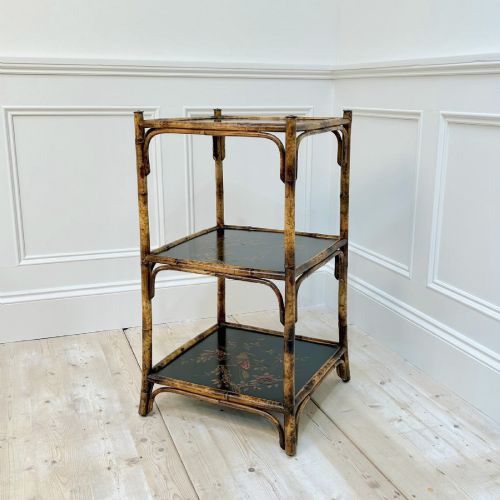
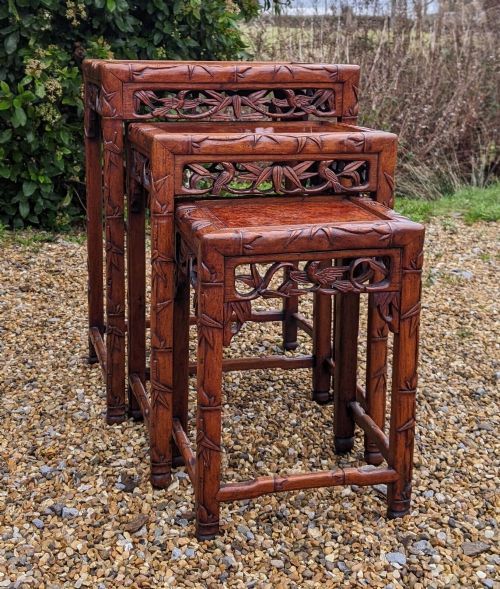
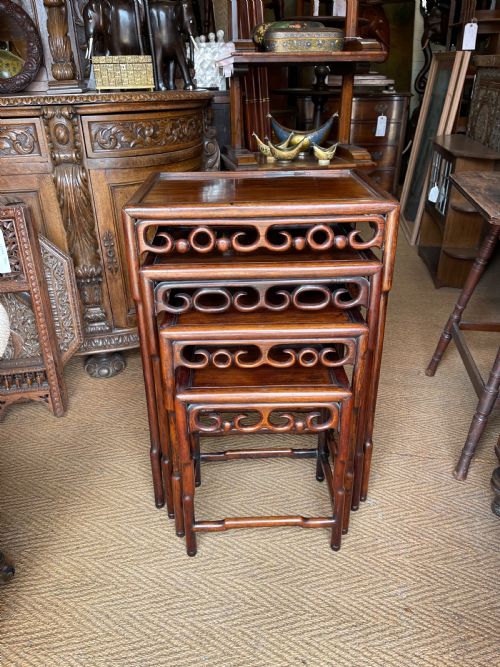
A bamboo style side table encompasses compact occasional surfaces, nests of tables, and tiered étagères spanning the nineteenth century, the Edwardian era, and the nineteen-thirties. These forms originate from diverse design movements including the Aesthetic Movement, Chinoiserie, and Regency style, reflecting a long fascination with Eastern motifs.
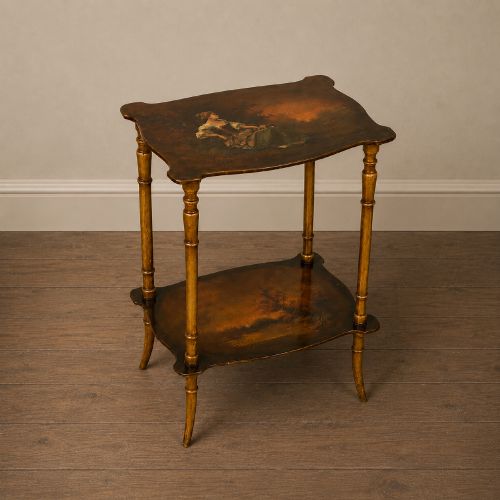
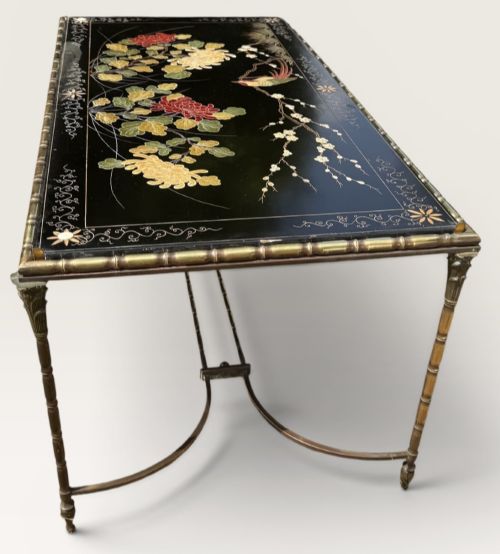
The most common examples met here are nineteenth century bamboo and lacquered two tier side tables or occasional pieces featuring woven reed and painted panels. Such tables served versatile roles in period drawing rooms as tea tables, sewing tables, or display stands for prized ornaments.
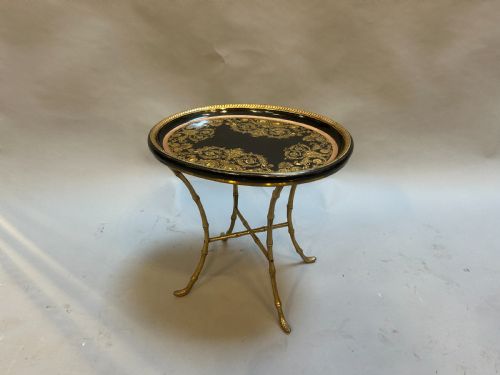
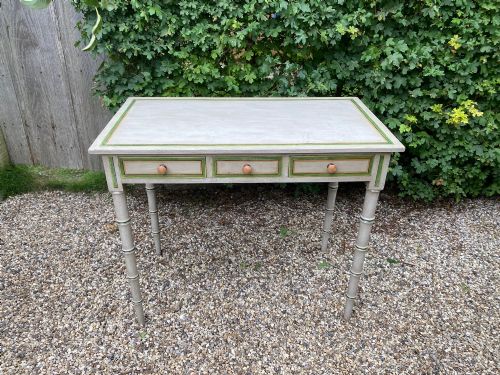
Makers adapted traditional forms using varied materials like hardwood, mahogany, brass, and papier-mâché, sometimes applying faux bamboo finishes to standard timbers. Buyers select these tables to introduce botanical character and compact utility into modern or traditional rooms alike.
How they were made
Construction relies upon natural bamboo stalks, turned hardwoods, and painted or ebonised timbers shaped into sturdy frames and delicate legs. Artisans joined these components with traditional joinery, often incorporating tiered platforms or half-moon console configurations to maximise stability.
Surfaces frequently feature hand-applied lacquer, Chinoiserie ornamentation, or woven reed panels set within the wooden framework. Gilt highlights, brass mounts, and painted faux bamboo finishes complete the decorative scheme, requiring patient layering and polishing by skilled cabinet makers.
Bamboo Style Side Table Retail Price Guide 2026
Typical asking prices for bamboo style side table among the pieces listed under this phrase on Sellingantiques today, from the lower quarter to the upper quarter. They describe what is for sale here now, not the wider market.
Victorian sewing tables doubled as secretive repositories for stray buttons, ribbon scraps, and gossip magazines tucked neatly beneath lacquered bamboo lids.
What varies in quality
Quality rests upon the integrity of the structural frame, whether natural bamboo or turned hardwood, and how firmly the tiers are joined. Superior examples display tight joints that resist wobble alongside crisp, well-preserved lacquer and hand-painted details.
The refinement of the surface decoration separates standard utilitarian pieces from exceptional ones. Finely executed Chinoiserie motifs, well-figured timber grain on panels, and intact woven reed work elevate a piece far beyond simple mass-produced interpretations.
Mallets·Maison Bagues
The Bamboo Style Side Table Glossary
- Étagère
- A piece of furniture consisting of a set of open shelves for displaying small objects or ornaments. These tiers are frequently supported by bamboo or turned wooden uprights.
- Chinoiserie
- A decorative style in Western art that reflects Chinese artistic influences. This aesthetic appears on lacquered panels and painted surfaces across nineteenth century tables.
- Aesthetic Movement
- A late nineteenth century design movement that emphasised visual and compositional beauty over narrative or moral content. Pieces from this era often utilise ebonised bamboo and oriental motifs.
- Faux bamboo
- Wood that has been turned, carved, or painted to imitate the segmented appearance of natural bamboo stalks. Cabinet makers utilised this technique when natural cane was unavailable or insufficiently rigid.
- Quartetto
- A set of four small occasional tables designed to nest neatly beneath one another. These sets were popular in Edwardian and nineteenth century homes for serving tea or playing games.
Bamboo Style Side Table: Frequently Asked Questions
How do I use a bamboo style side table?
These versatile tables fit easily beside a sofa or armchair to hold drinks, books, or lamps. Multi-tiered versions and nests also work well as bedside stands or plant pedestals.
Their compact footprints make them practical for smaller spaces where traditional heavy furniture would overwhelm the room. They add textural contrast when paired with upholstered seating.
What is the difference between natural bamboo and faux bamboo?
Natural bamboo utilises actual hollow cane stalks for the structural legs and framing. This material provides a lightweight yet resilient framework inherent to nineteenth century botanical pieces.
Faux bamboo is solid wood, such as mahogany or hardwood, turned and painted by hand to mimic the segmented nodes of real cane. This method offered greater load-bearing strength for larger tables.
How do I identify an Aesthetic Movement table?
Aesthetic Movement pieces from the late nineteenth century frequently feature ebonised wood or dark lacquered finishes. They often incorporate Japanese inspired motifs and simple geometric forms.
These tables focus heavily on visual harmony and decorative surface treatments rather than heavy classical revival carving. They frequently appear in bamboo or simulated bamboo constructions.
Where were Chinoiserie tables made?
Chinoiserie tables were produced by European workshops interpreting Chinese design motifs, as well as by craftsmen working in export hubs like Canton. European makers applied hand painted oriental scenes onto lacquered panels and papier-mâché.
Anglo-Indian and Chinese export workshops also created specialised pieces for Western markets. These combined traditional Eastern joinery with forms suited to European drawing rooms.