





Ball and Claw Coffee Table
A ball and claw coffee table brings centuries of revival design into a modern room, offering the grounded presence of carved wooden feet.
Ball and Claw Coffee Table
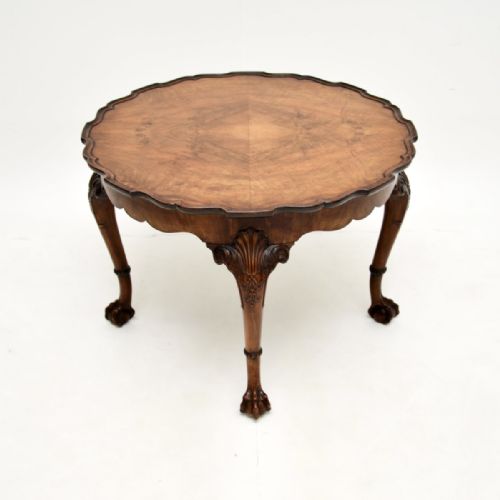
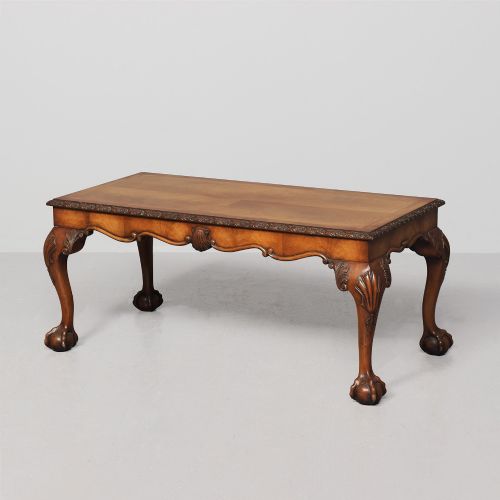
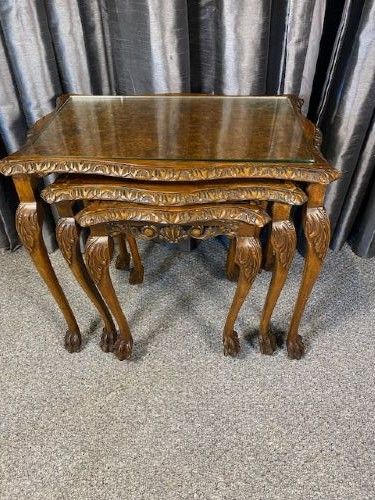
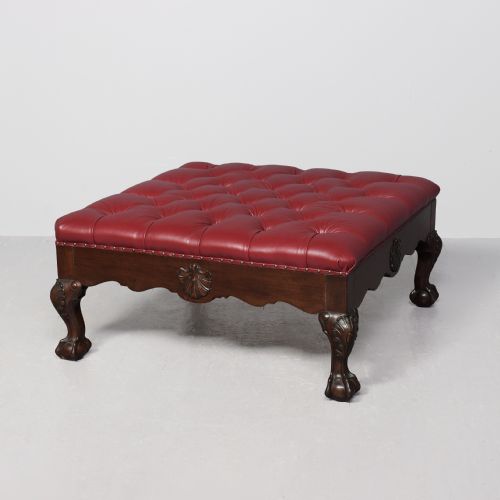
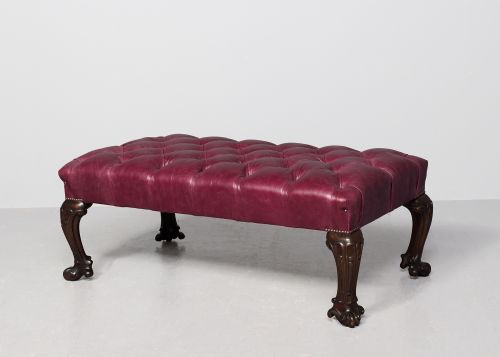
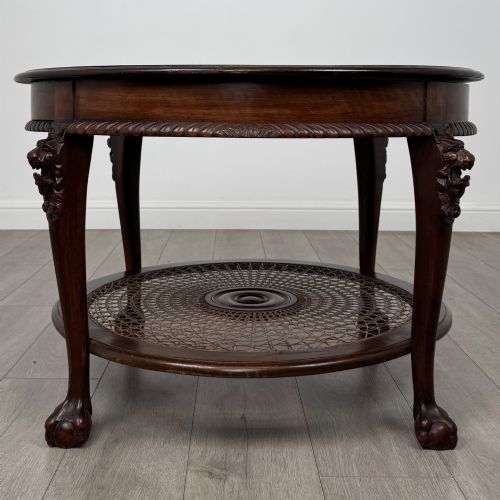
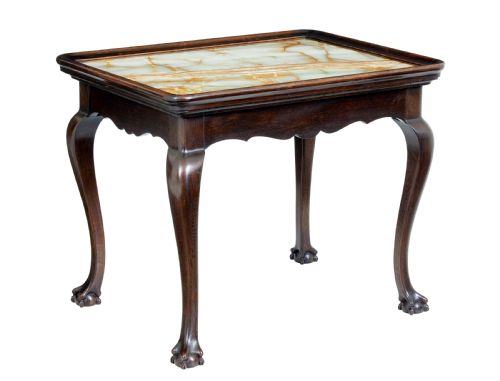
When searching for a ball and claw coffee table, a buyer encounters pieces drawing on Chippendale, Queen Anne, and Georgian revival aesthetics alongside earlier nineteenth-century examples. The selection spans low coffee tables, occasional tables, and large upholstered stools adapted to table heights, originating from the Victorian era through the early twentieth century.
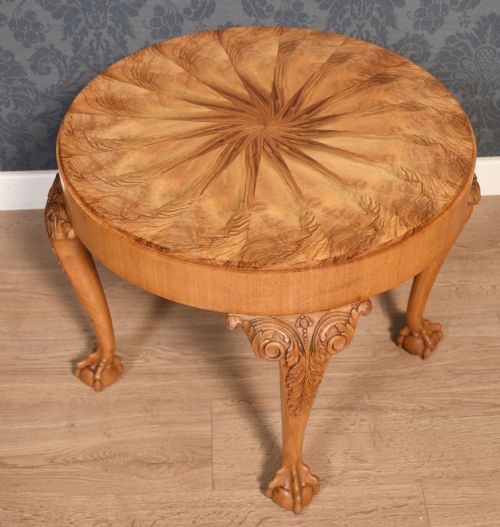
Most pieces meeting this description are constructed from mahogany or walnut, frequently featuring figured burr walnut veneers or carved pie crust edges. Forms range from circular occasional tables to low rectangular formats and carved occasional pieces reflecting historical revival movements.
Distinctions in quality
Quality rests in the depth and crispness of the timber carving on the legs and feet, where sharper detail distinguishes finer workshops from simpler production. The choice of timber grain, particularly figured burr walnut or dense mahogany, marks the grade of the piece.
Proportion and structural integrity separate standard items from superior examples. Well-balanced forms with harmonious dimensions and sound joinery indicate careful period craftsmanship.
Ball and Claw Coffee Table Retail Price Guide 2026
Typical asking prices for ball and claw coffee table among the pieces listed under this phrase on Sellingantiques today, from the lower quarter to the upper quarter. They describe what is for sale here now, not the wider market.
The Ball and Claw Coffee Table Glossary
- Pie Crust Edge
- A raised, scalloped edge carved directly from the solid timber top of a round table. This technique appeared on finer occasional and tea tables.
- Burr Walnut
- A veneer sliced from the knot growth of a walnut tree, yielding a swirling, highly figured grain pattern. It was favoured for high-status table tops.
- Cabriole Leg
- A furniture leg that curves out in an arc and then tapers inward, finishing in a decorative foot such as a ball and claw. The form derives from classical Chinese and later European furniture design.
Ball and Claw Coffee Table: Frequently Asked Questions
How do I date a coffee table?
Dating relies on examining the timber species, construction methods, and stylistic revival influences present in the piece. Pieces originating in the Victorian and Edwardian eras often reinterpret eighteenth-century forms using period-specific machinery and hand-finishing.
Comparing the secondary timbers, wear patterns, and joinery details against documented historical styles helps establish the approximate decade of manufacture.
Are these tables solid mahogany?
Many tables utilise solid mahogany or walnut for the legs and structural frames, while others employ timber veneers over secondary woods for wide surfaces. Burr walnut varieties specifically rely on sliced veneers to display complex grain patterns across the top.
Inspection of the edges and undersides reveals whether the visible surfaces consist of solid timber or applied decorative veneer.
How do I style an antique table?
An antique table integrates into modern spaces by contrasting traditional carved timber details with contemporary surroundings. Its low profile makes it suitable as a central coffee table or lamp table in a sitting room.
Maintenance involves regular dusting and occasional polishing with appropriate wax to preserve the finish of the mahogany or walnut surfaces.