







Balkan Wool Carpet
A balkan wool carpet brings distinctive geometric motifs and rich dye palettes into a room, offering durability alongside centuries of regional weaving heritage.
Balkan Wool Carpet
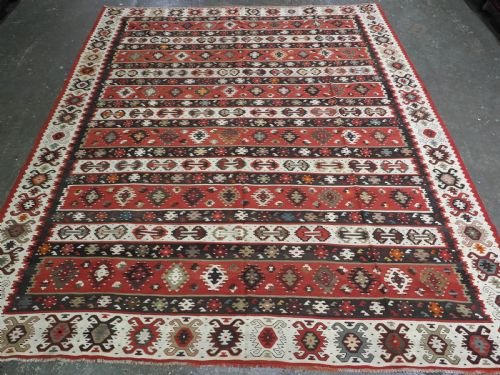
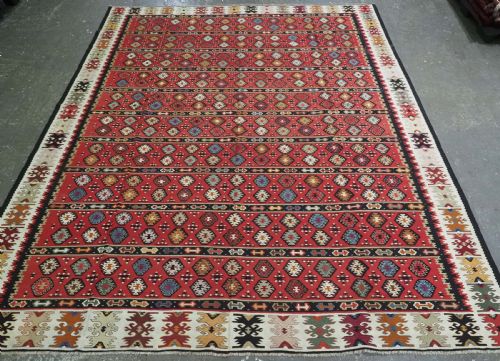
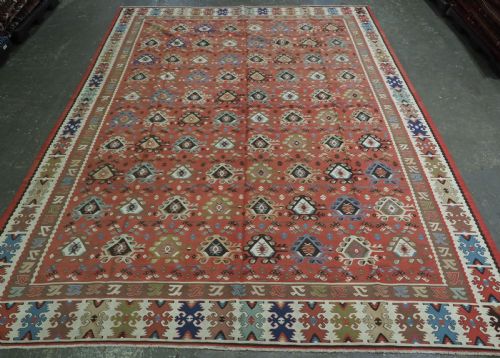
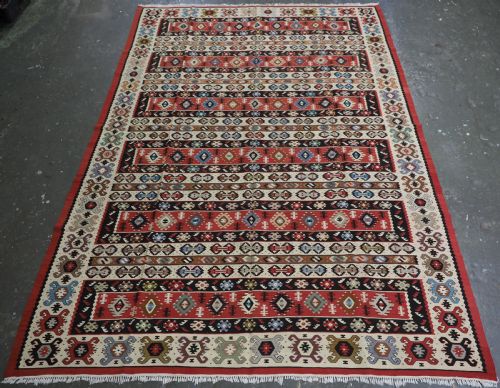
When searching for a balkan wool carpet, collectors encounter flatwoven kilims and prayer rugs originating from specific regional centres such as Sarkoy, Pirot, Monastir and Thrace. These flatweaves encompass styles described as Balkan folk art, tribal designs and Ottoman Balkan traditions.
The pieces appearing most frequently date from the late nineteenth century through to the 1930s. They take the form of large room-size carpets, area rugs and specific formats like prayer rugs, often displaying classic banded patterns, repeat medallions and flowering tree motifs.
How they were made
Weavers constructed these textiles primarily using wool for both the foundation warps and the visible surface wefts, sometimes incorporating cotton elements. This natural fibre combination provided the structural stability needed for large floor coverings while retaining flexibility.
The traditional production relied on flatweaving techniques without a piled surface, producing crisp geometric lines and intricate pattern repeats. Natural dyeing methods yielded the soft reds, warm pastels and varied colour palettes seen across the regional types.
The listings span production dates from the 1860s through to 1930, utilising wool and cotton across regional styles including Balkan folk art and Ottoman traditions.
What varies in quality
The calibre of a weaving rests upon the precision of its geometric execution and the balance of its compositional design, whether it follows a banded arrangement or a complex repeat medallion. Tighter structural weaves and well-preserved borders typically distinguish superior examples from standard production.
Colour retention and the subtlety of the dye work also divide the range, with nuanced pastel shades and deep saturated hues holding greater visual appeal. The overall scale, from compact prayer formats to expansive room sizes, influences the visual impact within an interior.
The Balkan Wool Carpet Glossary
- Kilim
- A flatwoven textile produced without a pile by tightly interweaving warp and weft strands. This technique creates a smooth surface with patterns visible on both sides.
- Sarkoy
- A specific regional designation for flatweaves originating from the European territories of the former Ottoman Empire. These pieces often utilise distinctive banded or floral tree motifs.
- Pirot
- A traditional weaving centre known for producing finely detailed flatweaves with geometric patterns and balanced borders. Pirot pieces are typically associated with specific regional design traditions.
- Prayer rug
- A small format textile traditionally utilised for personal devotion, generally distinguished by an architectural niche or mihrab design at one end. Examples from centres like Monastir follow this specific devotional form.
Balkan Wool Carpet: Frequently Asked Questions
How do I identify a Sarkoy kilim?
Sarkoy kilims originate from the European regions of the former Ottoman Empire and typically display banded layouts, flowering tree motifs, or geometric repeats.
They rely on flatwoven wool construction and often feature soft red or pastel colour palettes characteristic of the area.
Where were Pirot kilims made?
Pirot kilims come from the town of Pirot situated in the Balkan region, renowned for its distinct flatweaving traditions.
These pieces are recognised by their intricate geometric designs and careful attention to symmetrical pattern repeats.
Are these rugs suitable for heavy floor traffic?
Flatwoven wool construction provides a durable surface that withstands normal foot traffic in domestic spaces.
Using an appropriate underlay helps secure the rug on hard floors and reduces friction against the flatwoven structure.
How do prayer rugs differ from room size carpets?
Prayer rugs are smaller formats originally intended for individual devotional use, often featuring a defined niche or mihrab motif.
Room size carpets offer expansive field designs with overall repeats or banded compositions suited to cover larger floor areas.
How should I clean a wool flatweave?
Routine maintenance involves gentle vacuuming without a rotating brush roll to remove surface dust from the wool fibres.
Professional specialist cleaning is recommended for deeper remediation to protect the traditional dyes and flatwoven structure.