




Bakhtiari Tribal Carpet
A bakhtiari tribal carpet brings the bold geometric and garden patterns of western Persia directly onto your floor.
Bakhtiari Tribal Carpet
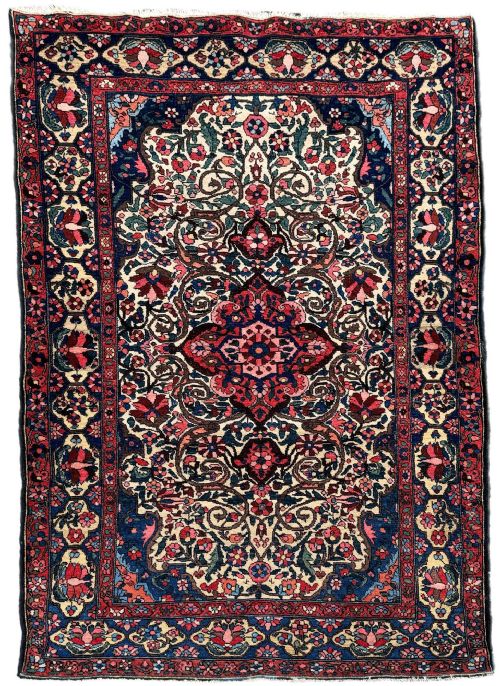
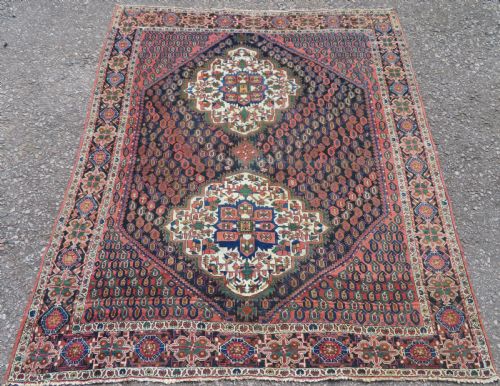
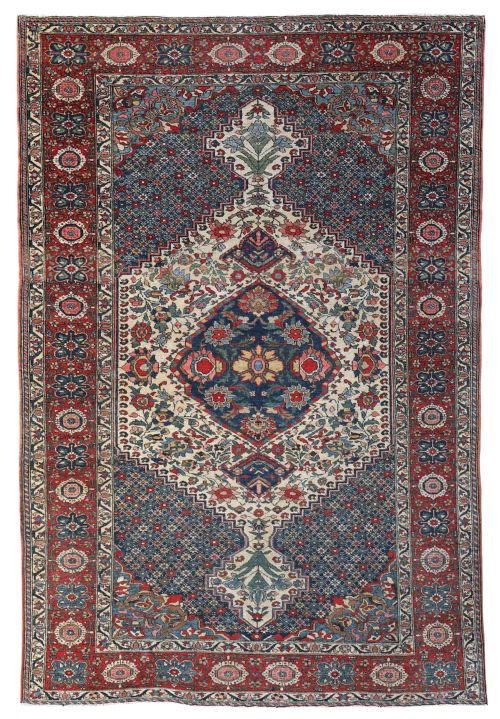
When you search for a bakhtiari tribal carpet, you are looking at woven floor coverings originating from the Chahar Mahal region and the wider western Persian area. The pieces available here span from the nineteenth century into the decades of the nineteen-thirties, reflecting traditional village and tribal craftsmanship. You will frequently encounter room-sized carpets, smaller rugs, corridor runners, and even saddle bag fragments.
The designs range from structured garden panels to central floral medallions and geometric village motifs. Many examples connect directly to the Bakhtiari and Kurdish tribes of west Persia, showing distinct regional character. These textiles served practical purposes in village and tribal life before finding their way into the antique market.
How they were made
These floor coverings rely on a foundation of wool and cotton, with wool pile knotted by hand onto sturdy warps and wefts. The makers utilised natural dyes to achieve deep and enduring colours across the field and borders.
Village and tribal weavers constructed each piece on traditional vertical looms, building up the pile row by row. This method produced a dense, hard-wearing fabric designed to withstand heavy daily use.
Current listings feature pieces dated across the nineteenth century and the early decades of the twentieth century, specifically from the eighteen-eighties to the nineteen-thirties.
What varies in quality
The primary distinction in quality lies in the fineness of the knotting and the complexity of the drawing within the design. Finer knot counts allow for crisper outlines in medallions and garden compartments.
Another factor is the depth and vibrancy of the natural dyes used throughout the wool pile. Examples with particularly rich colour palettes and balanced proportions stand apart from simpler utility pieces.
The Bakhtiari Tribal Carpet Glossary
- Chahar Mahal
- The high-altitude valley region in western Persia where many of these tribal and village weavings originated. It remains the geographical heartland associated with this weaving tradition.
- Kelleh
- A long, narrow format of carpet traditionally suited to specific room dimensions in Persian houses. These rectangular formats offer a striking linear presence in a hallway or corridor.
- Medallion
- A central ornamental motif set into the middle of the carpet field. This focal design element often anchors the surrounding geometric or floral patterns.
- Warp
- The vertical threads stretched tightly on the loom that form the structural foundation of the textile. Weft threads are inserted across these warps to lock the knots in place.
Bakhtiari Tribal Carpet: Frequently Asked Questions
Where were these carpets made?
Production centred on the Chahar Mahal valley and surrounding districts of western Persia. Village weavers and nomadic tribesmen produced these pieces for local use and trade.
Communities including Kurdish groups in the region contributed distinct tribal variations to the established repertoire.
What is a garden design carpet?
A garden design carpet divides the field into a grid of compartments representing formal Persian gardens. Each compartment typically contains floral or tree motifs.
This structured layout is one of the most distinctive and sought-after patterns associated with regional weaving.
How can I tell the age of a rug?
Dating relies on examining the structural materials, dye palettes, and stylistic nuances of the weaving. Natural dyes and hand-spun wool often point to nineteenth and early twentieth-century production.
Comparative study of known village types helps narrow the decade of origin.