
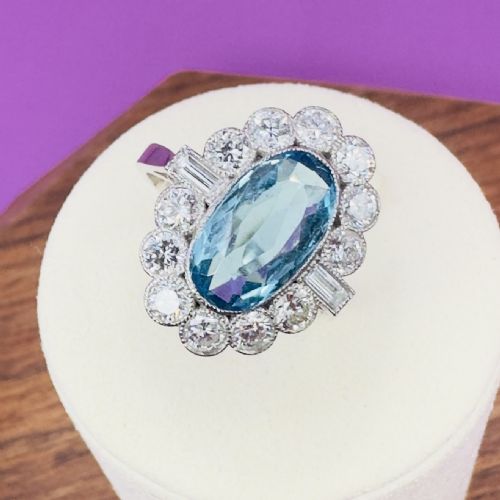


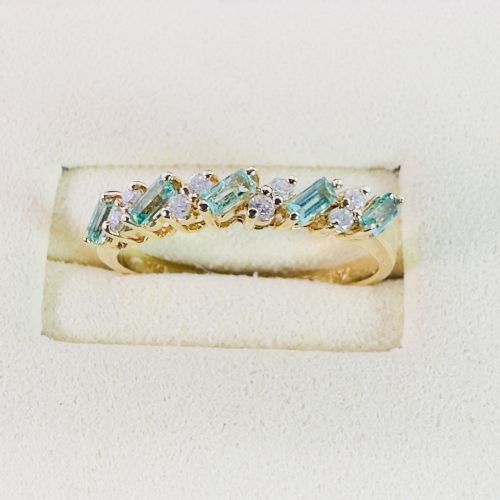


Baguette Diamond Dress Ring
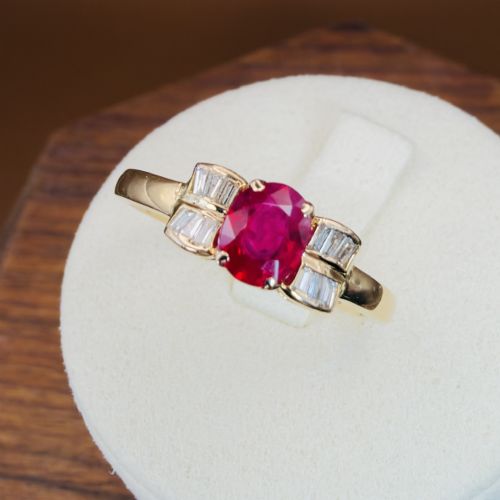
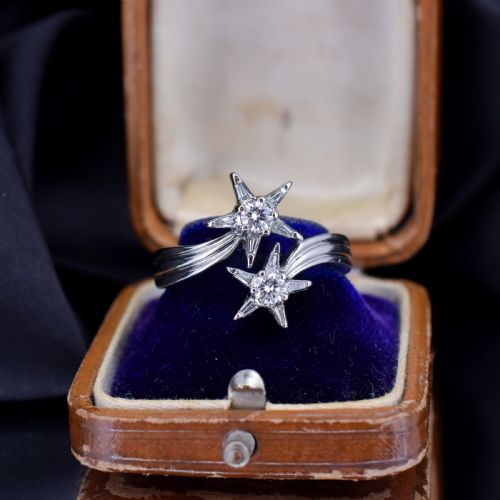
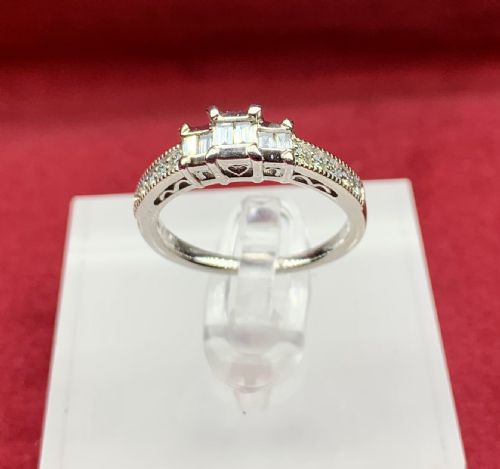
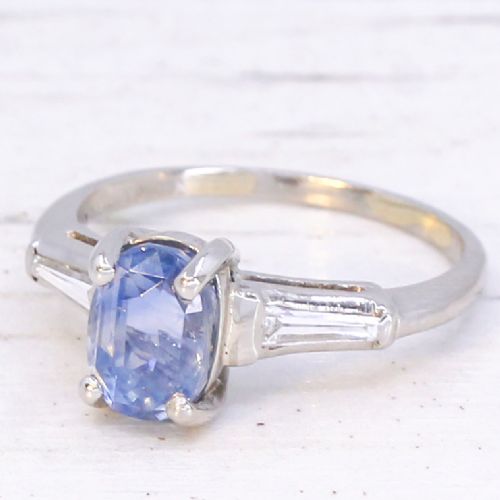
A baguette diamond dress ring pairs step-cut linear stones with central gems or diamond clusters for distinct twentieth-century geometry.
Baguette Diamond Dress Ring
The selection ranges from early twentieth-century examples to mid-century creations. Art Deco pieces show strong architectural lines, while later retro and mid-century designs incorporate curved or sweeping profiles alongside traditional white metals.
Central gems accompanying the diamonds frequently include sapphires, emeralds, aquamarines, rubies, and occasionally opals or moonstones. Platinum serves as a primary setting material alongside 18ct white gold and yellow gold.
Materials and construction
The pieces combine precious stones with durable mountings made from platinum, 18ct white gold, or 18ct yellow gold. Platinum provides the structural strength necessary for secure channel and prong settings typical of linear diamond work.
Gems are cut into specific shapes, including step-cut baguettes alongside oval, old-cut, and brilliant diamonds. Coloured stones such as emeralds, rubies, and sapphires act as focal points or contrasting accents within cluster and cocktail arrangements.
Some stones arrive with extensive geological travel histories, hailing from Kashmir, Ceylon, Burma, and Colombia.
Judging quality and character
Quality rests upon the precision of stone matching and the integrity of the metalwork. Clean step-cuts in baguette diamonds require exact alignment to maintain the intended geometric rhythm.
The choice of central gem significantly influences character, particularly with certified stones originating from specific localities like Kashmir, Ceylon, or Burma. The harmony between the linear baguette stones and the central cluster defines the overall visual balance.
Boucheron
The Baguette Diamond Dress Ring Glossary
- Baguette cut
- A small, rectangular step-cut diamond with straight edges and cropped corners. This cut emphasises linear clarity rather than brilliant sparkle.
- Cluster ring
- A ring featuring a central stone surrounded by a border of smaller gems. This arrangement maximises visual impact and light reflection.
- Cocktail ring
- A large, showy ring designed to be noticed during evening wear. These pieces often incorporate substantial coloured stones and complex diamond settings.
- Art Deco
- A design style spanning the 1920s and 1930s characterised by symmetry, geometric shapes, and stylised motifs. It remains a dominant influence in vintage ring design.
- Trilogy ring
- A ring set with three stones, traditionally symbolising the past, present, and future. They frequently combine diamonds with coloured gems.
Baguette Diamond Dress Ring: Frequently Asked Questions
What defines a baguette diamond?
A baguette diamond is a small, rectangular step-cut stone characterised by parallel facets. This cut creates a clean, architectural look rather than the intense sparkle of a brilliant cut.
Jewellery designers utilise these linear stones to frame central gems or create geometric patterns within the mounting.
How do I date an art deco ring?
Art Deco rings typically date from the 1920s and 1930s, identifiable through strict symmetry and linear geometry. Platinum is the predominant metal used for these detailed mountings.
Later revivals mimic these motifs, but period pieces display specific craftsmanship techniques characteristic of the early twentieth century.
Are these rings suitable for daily wear?
Many of these pieces were built for evening or formal wear as cocktail or dress rings. Platinum and 18ct gold provide robust settings, but the presence of delicate baguettes or softer coloured stones requires mindful handling.
Regular checks by a jeweller ensure the channel and prong settings remain secure over time.