




Austrian Vienna Regulator
An austrian vienna regulator is a precision wall clock prized for accurate timekeeping and elegant cabinetry.
Austrian Vienna Regulator
An austrian vienna regulator is a wall clock designed for precise timekeeping, appearing mainly in styles such as Biedermeier and Victorian. These clocks are encountered as wall clocks and Vienna regulators, originating across the nineteenth century.
The pieces listed on this page span several decades, including items from eighteen fifty, eighteen eighty, and nineteen hundred. Buyers frequently encounter forms such as small eight-day timepieces alongside larger multi-train models.
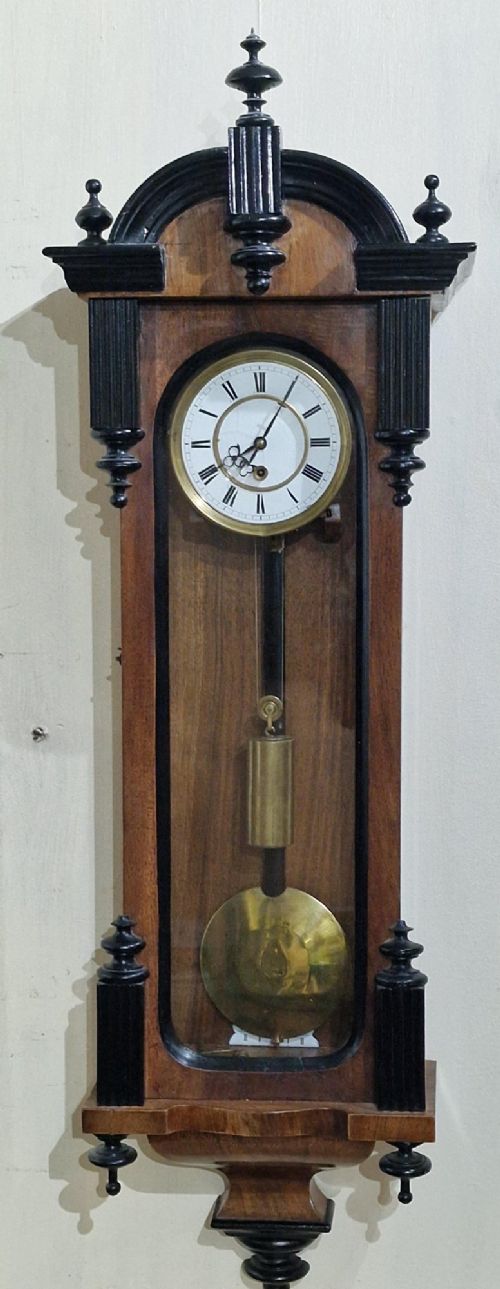
Originating in Austria and Germany, these wall clocks reflect regional cabinet-making and clock-making traditions. The typical form is tall and glazed, designed to hang securely upon a wall while displaying the swinging pendulum.
How they were made
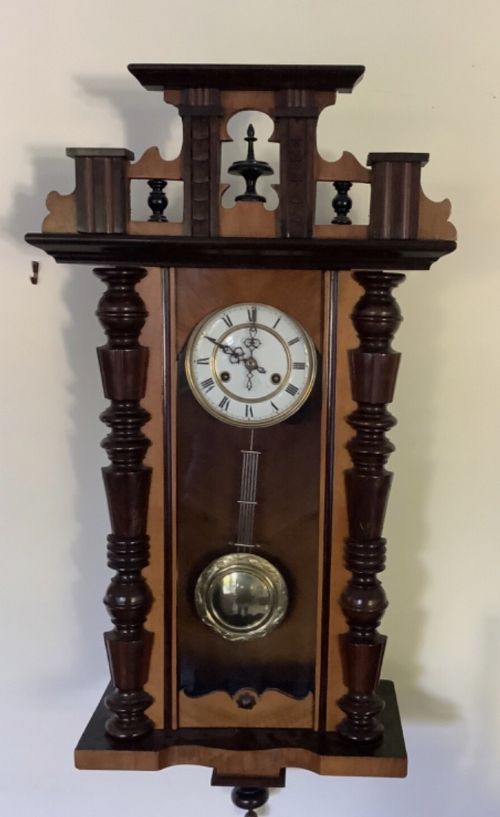
Makers constructed the cases using timber such as walnut, mahogany, and ebonised wood. These woods provided a stable and polished housing for the delicate interior mechanics.
The movements incorporated brass components while dials utilised enamel for clear legibility. Glass panels set into the doors permitted a direct view of the pendulum and weights in motion.
Austrian Vienna Regulator Retail Price Guide 2026
Typical asking prices for austrian vienna regulator among the pieces listed under this phrase on Sellingantiques today, from the lower quarter to the upper quarter. They describe what is for sale here now, not the wider market.
Some models feature triple weights just to ensure the clock chimes the hours and quarters without missing a beat.
What varies in quality
Quality separates simple timepieces from complex mechanisms such as the grande sonnerie triple weight Vienna regulator. The intricacy of the movement and the duration of the run dictate the standing of a piece.
Cabinetwork displays variance through the choice of timber and the refinement of the styling, ranging from plain Biedermeier surfaces to more elaborate Victorian and Gothic details.
Gustav Becker
The Austrian Vienna Regulator Glossary
- Vienna Regulator
- A high-precision wall clock developed in Austria during the nineteenth century. These clocks are known for accurate timekeeping and long pendulums.
- Grande Sonnerie
- A striking mechanism that chimes the hours and the quarters automatically. It represents a higher level of horological complexity.
- Biedermeier
- An influential Central European design style emphasising clean lines and functional elegance. Furniture from this period avoids excessive ornamentation in favour of polished wood surfaces.
- Ebonised Wood
- Timber treated to imitate ebony, creating a dark and uniform finish. This treatment was frequently utilised on clock cases for contrast.
Austrian Vienna Regulator: Frequently Asked Questions
What is a Vienna regulator?
A Vienna regulator is a high-precision wall clock originating in nineteenth-century Austria. They were designed for supreme accuracy in timekeeping.
These clocks usually feature long glass-panelled doors to display the pendulum and weights. Collectors value them for both their horological complexity and their cabinetwork.
How do I hang a wall clock safely?
Hanging a wall clock requires locating a secure fixing point in the wall that can bear the weight of the timber case and the metal movement. The clock must hang plumb for the pendulum to beat evenly.
Ensuring the case is level prevents uneven wear on the escapement and keeps the timekeeping accurate. Most Vienna regulators include stabilising screws on the lower case.
What does an eight-day timepiece mean?
An eight-day timepiece indicates that the clock movement runs for eight days on a single winding. This reduces the frequency of interaction with the weights or springs.
Such movements were standard for domestic convenience in the nineteenth century. They balance the need for accuracy with practical maintenance.
How do I identify a Biedermeier clock?
A Biedermeier clock displays restrained ornamentation and clean architectural lines. The style focuses on the natural grain of woods like walnut and mahogany.
These pieces typically date from the mid-nineteenth century. They offer a simpler aesthetic compared to later Victorian or Gothic variants.