


Austrian Ceramic Vase
These Austrian ceramic vase examples bring expressive nineteenth and early twentieth-century continental forms into modern interiors.
Austrian Ceramic Vase
An Austrian ceramic vase encompasses a rich variety of continental forms, ranging from monumental Art Nouveau pottery vessels to classical Vienna porcelain urns. Pieces frequently emerge from the latter half of the nineteenth century and the early decades of the twentieth century, reflecting distinct shifts in European design. Buyers encounter styles spanning Rococo Revival, Neoclassical, and flowing Art Nouveau aesthetics.
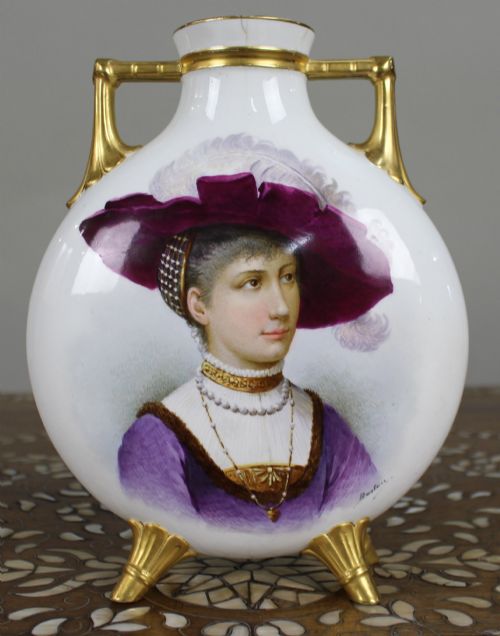
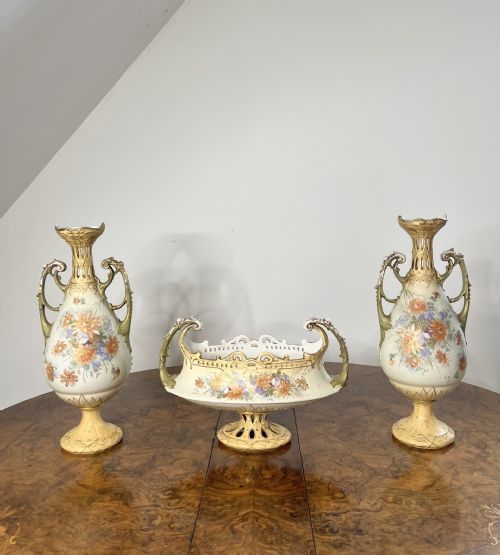
The objects take many shapes, including moon flasks, ewers, garniture sets, cornucopia vases, and spill vases. Centrepieces and side vases also appear among the offerings, often decorated with hand-painted scenes or rich gilding. These domestic and decorative items display the diverse output of Austrian kilns during the period.
How They Were Made
Potters shaped porcelain and earthenware into complex sculptural forms, often utilising moulds for elaborate decorative ewers and urns. Artisans applied bright glazes, enamel colours, and detailed hand-painting to the fired bodies. Gilding and gold leaf highlights frequently accent the rims, handles, and sculptural motifs.
Painters and modellers executed intricate portrait subjects, botanical studies, and flowing organic lines characteristic of the era. Kilns achieved varied surface finishes, from glossy translucent porcelain glazes to matte earthenware treatments. Careful firing preserved the delicate hand-painted details across both large monumental pieces and smaller cabinet items.
Listings feature earthenware and porcelain materials spanning the nineteenth century and the Edwardian era.
What Varies in Quality
Execution of hand-painted details and the precision of the gilding set individual vessels apart. Pieces featuring finely rendered portraits, intricate floral motifs, or complex sculptural handles demonstrate superior artistic investment. The crispness of the porcelain moulding and the balance of the overall form distinguish finer studio output from standard commercial production.
The sophistication of the glaze application and the preservation of original gold leaf details influence the visual impact of each piece. Works associated with notable designers or specific pottery houses display distinct technical confidence in both ceramic body composition and surface decoration.
Royal Vienna·Ernst Wahliss·Alexandra Porcelain Works·Turn Vienna·Eichwald
The Austrian Ceramic Vase Glossary
- Moon flask
- A flattened circular vase with a short neck and two small handles, often supported on a footed base. This form provides a wide, flat canvas for detailed hand-painted scenes.
- Garniture
- A set of three or more matching vessels designed to be displayed together on a mantelpiece or sideboard. These sets typically include a larger centre urn flanked by smaller matching vases.
- Ewers
- Large water jugs with decorative spouts and looped handles, adapted from functional vessels into purely ornamental display pieces. They feature prominently in Art Nouveau ceramics.
- Spill vase
- A small upright container historically used to hold wooden spills for lighting candles or fires. They often take simple cylindrical or figural forms.
- Gilding
- The application of gold leaf or gold powder onto the ceramic surface to highlight moulded details and borders. It adds reflective warmth to painted porcelain.
Austrian Ceramic Vase: Frequently Asked Questions
How are these vases cleaned?
Dust gently with a soft dry cloth to preserve delicate enamel and gold leaf decorations.
Avoid using water or chemical cleaners on antique porcelain surfaces.
Were these vessels used daily?
Most ornamental urns, garnitures, and ewers served primarily as decorative interior showpieces rather than functional household containers.
Smaller spill vases and jugs occasionally saw practical use in period rooms.
How do I identify Art Nouveau examples?
Look for organic flowing lines, natural motifs, and stylized plant forms typical of the turn-of-the-century aesthetic.
Earthenware and porcelain bodies from this movement often feature asymmetrical shapes and muted or iridescent glazes.
What is Royal Vienna style?
Royal Vienna style refers to porcelain decorated in imitation of the famous eighteenth-century imperial factory.
These later nineteenth-century interpretations frequently showcase rich gilding, classical figures, and hand-painted portrait panels.