



Asian Writing Table
An asian writing table brings enduring craftsmanship to a room, offering practical surface space paired with distinct regional character.
Asian Writing Table
An asian writing table spans varied forms from the nineteenth century onward, encompassing regional Chinese designs and Japanese examples created for calligraphy or general use. These pieces often serve double duty as side tables or console furniture while retaining their low profiles and functional surface areas.
Most examples seen here date to the nineteenth century, with occasional pieces from the decades following. Buyers encounter traditional elm timber alongside dense hardwoods, camphorwood, and striking red lacquer finishes that reflect historical workshops.
Materials and construction
Makers utilised native timbers such as elm and diverse Asian hardwoods alongside aromatic camphorwood for internal construction. Brass hardware often reinforces corners and drawers, while iron details provide structural stability.
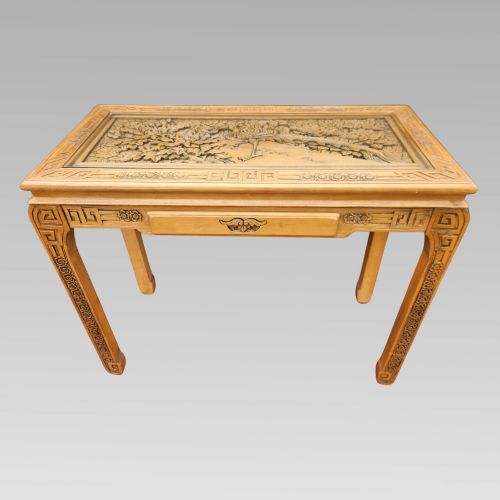
Surfaces frequently feature deep red lacquer or clear finishes that highlight the natural grain of the wood. Carved ornamentation ranges from subtle linear details to deeply undercut dragon motifs.
Asian Writing Table Retail Price Guide 2026
Typical asking prices for asian writing table among the pieces listed under this phrase on Sellingantiques today, from the lower quarter to the upper quarter. They describe what is for sale here now, not the wider market.
Camphorwood tables double as natural mothballs, perfuming your study with a scent that has survived since the nineteenth century.
Judging the standard
The division between standard workshop production and superior output rests in the crispness of the carved detail and the selection of timber. Dense hardwoods and well-preserved lacquer demand greater skill from the maker than simpler softwood or elm construction.
Integration of hardware and the stability of joinery dictate longevity. Superior examples maintain structural integrity without excessive modern intervention, allowing the original material to dominate the appearance.
The Asian Writing Table Glossary
- Elm
- A resilient timber native to temperate regions, utilised extensively for traditional furniture frames and panels. Its interlocking grain provides notable strength against warping.
- Camphorwood
- An aromatic timber prized for its insect-resistant properties, frequently selected for interior compartments and trunk linings. The distinct scent persists for decades.
- Lacquer
- A durable natural resin applied in multiple thin layers to wood surfaces, producing a smooth and protective finish. Red lacquer variants often incorporate cinnabar pigments.
- Brush pot
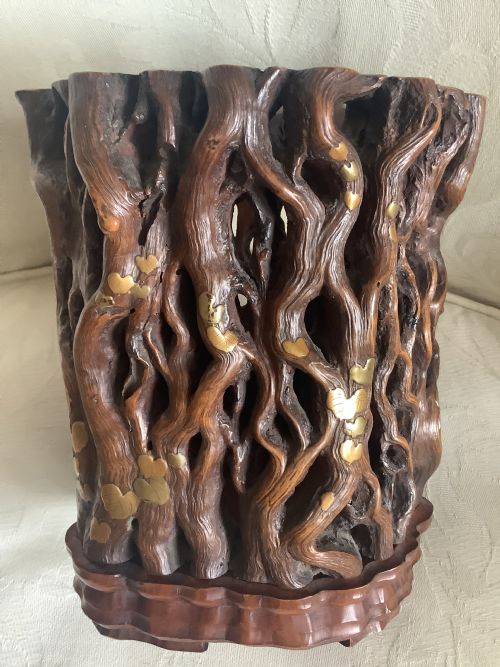
- A cylindrical vessel traditionally held on scholars' desks to contain writing implements. These items share aesthetic traits with related desk furniture.
Asian Writing Table: Frequently Asked Questions
How were these tables used originally?
These tables served primarily for study, correspondence, and calligraphy practice in scholarly or administrative settings. Many featured compact dimensions suited to low seating or specialised writing posture.
Over time, forms evolved to accommodate Western writing styles and administrative needs while retaining traditional decorative motifs and regional construction methods.
Where should I place one?
An asian writing table functions effectively as a compact desk in a home office or study. The finished backs and detailed carving allow them to sit away from walls as centre tables.
Placing them out of direct sunlight protects delicate lacquer finishes and prevents excessive drying of traditional hardwoods.
How do I care for the wood?
Maintain the timber surfaces by dusting with a dry, soft cloth rather than using silicone-based polishes. Natural wax can be applied sparingly to nourish hardwoods.
Keep these tables away from heat sources and maintain stable room humidity to prevent timber movement or lacquer cracking.
How do I distinguish regional styles?
Chinese examples often display structured framing with hardwood or elm, sometimes incorporating carved dragon motifs or simple scholarly restraint. Japanese tables frequently reflect Meiji period aesthetics with specific attention to calligraphy tools and native wood varieties.
Examination of the joinery and decorative vocabulary helps clarify the specific origin of each piece.