

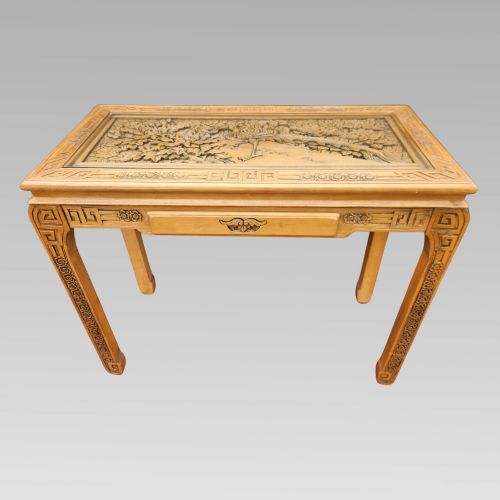


Chinese Wooden Altar Desk
A chinese wooden altar desk brings striking architectural form and rich timber grain into a room, serving equally as a console, writing table or side surface.
Chinese Wooden Altar Desk
A chinese wooden altar desk encompasses form types ranging from console tables and side tables to dedicated writing desks and altar styles. These pieces trace back through the nineteenth century, nineteen hundred, nineteen ten, nineteen twenty and nineteen thirty.
The most common examples encountered on this page are elm side tables and console tables, alongside larger altar style tables and occasional writing desks. They reflect traditional and provincial Chinese construction methods as well as export styles and Qing dynasty influences.
Buyers look to these items for practical surface space combined with distinct historic character. They suit contemporary interiors just as well as traditional room schemes, functioning flexibly as work tables or decorative console displays.
Judging quality
Quality reveals itself in the handling of the timber and the crispness of any carved detailing. Finer examples display harmonious proportions and careful joinery that keeps the structure rigid over generations.
The finish also separates the standard pieces from the superior ones. Smooth application of lacquer and well-fitted brass or metal hardware indicate a higher level of workshop skill during production.
Chinese Wooden Altar Desk Retail Price Guide 2026
Typical asking prices for chinese wooden altar desk among the pieces listed under this phrase on Sellingantiques today, from the lower quarter to the upper quarter. They describe what is for sale here now, not the wider market.
A desk that once held quiet ancestral offerings now happily holds your morning coffee and keys.
The Chinese Wooden Altar Desk Glossary
- Elm
- A durable hardwood native to temperate regions and widely utilised in traditional Chinese furniture making for its strength and expressive grain. It responds well to carving and maintains structural stability over centuries.
- Console table
- A long, narrow table designed to stand against a wall, frequently used in entrance halls or principal reception rooms. These tables often feature high-set drawers and slender legs.
- Lacquered wood
- Wood treated with multiple coats of resin to produce a hard, smooth and protective finish. This technique enhances the visual depth of the timber beneath.
- Qing Dynasty
- The final imperial dynasty of China, lasting from sixteen forty-four to nineteen twelve. Furniture from this era often combines restrained scholar designs with elaborate regional carving.
Chinese Wooden Altar Desk: Frequently Asked Questions
How do I use a chinese wooden altar desk?
These tables adapt easily to modern living spaces as console surfaces in hallways or as writing desks in studies. Their narrow proportions allow them to fit against walls without overwhelming the room.
They also function effectively as side tables or decorative display units in living areas. The surface provides ample room for lamps, books and ornaments.
What woods are typical for these desks?
Elm appears frequently across the listed pieces, valued for its resilient character and attractive grain. Camphorwood also occurs in the construction of storage elements.
Craftsmen often paired these timbers with brass or metal hardware, glass tops and traditional lacquer finishes. These secondary materials contributed both structural support and decorative contrast.
How do I date an antique chinese desk?
Dating relies upon examining the timber wear, construction techniques and stylistic markers associated with periods like the nineteenth century or early nineteen hundreds. Regional provincial variations also help establish the likely era of manufacture.
Changes in hardware styles and lacquer application offer further clues for chronological assessment. Comparing joint construction with known examples provides additional context.
What is the difference between an altar table and a console?
Altar tables historically derived from sacred domestic furniture featuring upturned flange ends, though the term now frequently overlaps with domestic console tables. Consoles generally prioritise flat surfaces for display against walls.
Both forms share similar proportions and structural framing. Regional workshops often blended these styles to suit domestic export markets.