



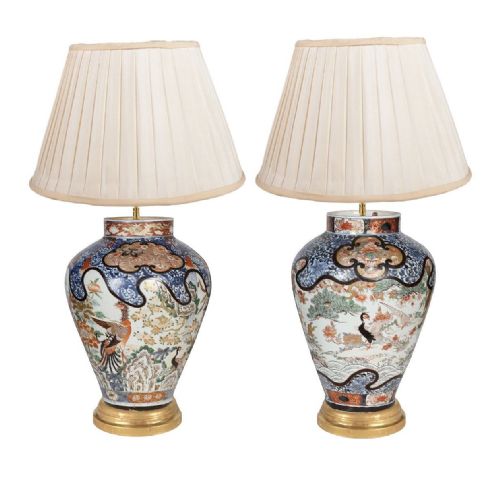


Asian Porcelain Desk Lamp
These asian porcelain desk lamp examples bring centuries of oriental ceramics into modern workspaces through careful conversion.
Asian Porcelain Desk Lamp
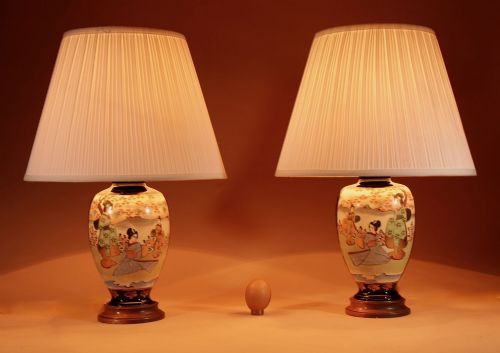
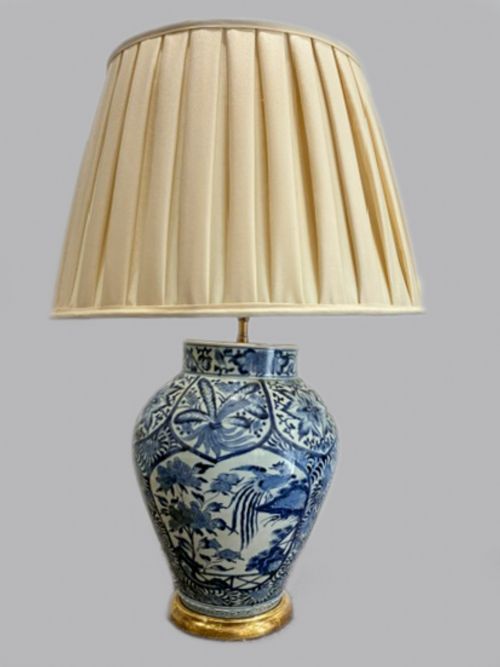
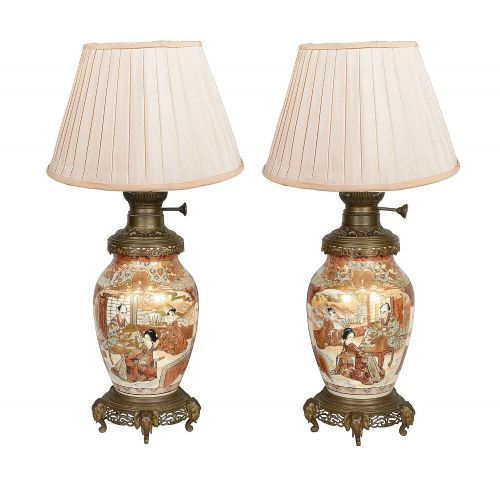
An asian porcelain desk lamp transforms antique vessels, including Satsuma, Imari, and Kutani wares, into functional illumination for interiors. These objects originate from periods spanning the late seventeenth century through the early twentieth century.
Most examples take the form of converted vases or spill vases mounted onto bases with fabric or silk shades. Buyers frequently encounter pairs alongside single statement pieces created from Chinese celadon, turquoise glaze, and Blanc de Chine ceramics.
The aesthetic bridges traditional Asian craftsmanship with European lighting utility. Japanese Meiji and Edo periods dominate the Japanese offerings, while Chinese Qing dynasty and Chinoiserie styles represent the mainland output.
Materials and construction
The primary bodies utilise porcelain and earthenware shaped into vases and figures, then decorated with enamel and gilt. Artisans applied detailed hand-painted glazes characteristic of Satsuma, Imari, and Kutani traditions before later conversion into lamps.
Hardware additions incorporate brass fittings secured to the ceramic vessels, often paired with textile shades made from silk or fabric. Wooden components occasionally provide structural support for the base and wiring apparatus.
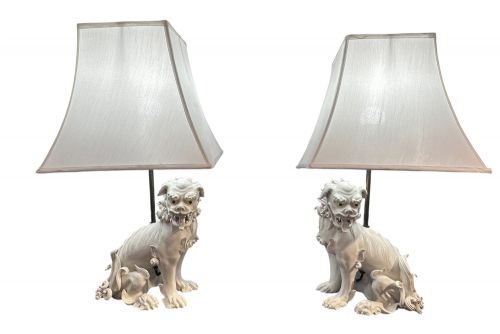
Shi Lions keep a watchful eye over desks, originally placed to ward off evil spirits before finding a second career holding lightbulbs.
Distinguishing finer examples
Quality rests upon the preservation of the original ceramic body and the delicacy of the hand-painted enamel work. Superior pieces display crisp brushwork, vibrant glaze retention, and minimal wear to the antique porcelain surface.
The conversion method also dictates overall merit, as professional mounting preserves the integrity of the ceramic vessel without causing structural damage. Finer lamps balance the visual weight of the base with well-proportioned brass hardware and appropriate shades.
The Asian Porcelain Desk Lamp Glossary
- Satsuma
- A type of Japanese earthenware featuring a ivory-coloured crackle glaze decorated with polychrome enamels and gilt. It gained widespread popularity during the Meiji period for export markets.
- Imari
- A style of Japanese porcelain named after the port from which it was shipped, traditionally characterised by a palette of underglaze blue, iron red, and gold. These patterns heavily influenced European ceramic production.
- Blanc de Chine
- A white porcelain made in Dehua, China, prized for its milk-white glaze and smooth texture. It frequently takes the form of figural subjects such as Shi Lions.
- Celadon
- A term for pottery denoting both wares glazed in jade green and the green glaze itself. The subtle colour derives from iron oxide in the glaze mixture fired in a reducing kiln.
- Kutani
- Japanese coloured porcelain distinguished by bold designs utilising greens, blues, purples, and red. Production centres in the Ishikawa prefecture.
Asian Porcelain Desk Lamp: Frequently Asked Questions
How do I clean an antique porcelain lamp?
Dust the ceramic body gently with a soft, dry cloth to prevent accumulation. Avoid chemical cleaners that might damage old enamel or gilt decoration.
Keep moisture away from any drilled holes or electrical components. Professional restoration advice should be sought for stubborn marks.
Were these lamps originally made for lighting?
Almost all of these ceramic bodies started life as vases, spill vases, or jars rather than lamps. They were converted later by mounting them onto electrical hardware.
This conversion process adapts historic Far Eastern vessels for contemporary interior use without altering their decorative appeal.
How do I distinguish Satsuma from Imari?
Satsuma wares are earthenware with a characteristic ivory crackle glaze and dense enamel painting. Imari pieces are hard-paste porcelain featuring distinct blue and red patterns with gold highlights.
Examining the base and weight helps confirm whether the ceramic is heavier earthenware or finer porcelain.
Can I replace the fabric shade safely?
Shades can be replaced provided the fitting matches the brass hardware on the lamp. Ensure the proportions complement the height and width of the ceramic base.
Silk and fabric options mirror the traditional presentation found on these converted antique vessels.