



Victorian Oriental Table Lamp
When you search for a victorian oriental table lamp, you are looking at nineteenth-century lighting conversions alongside occasional tables that served as lamp stands.
Victorian Oriental Table Lamp
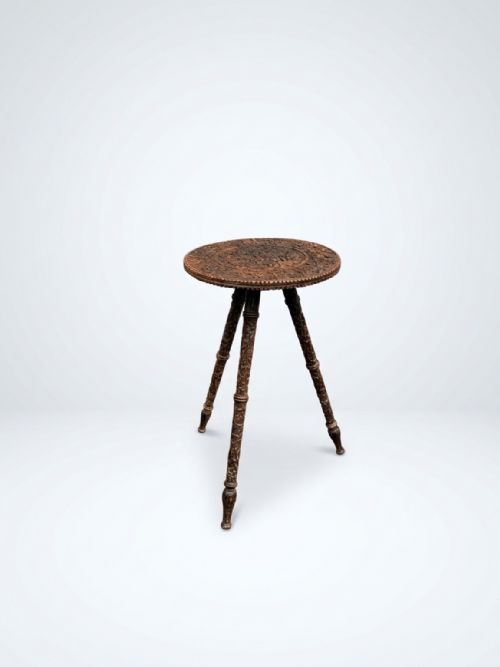
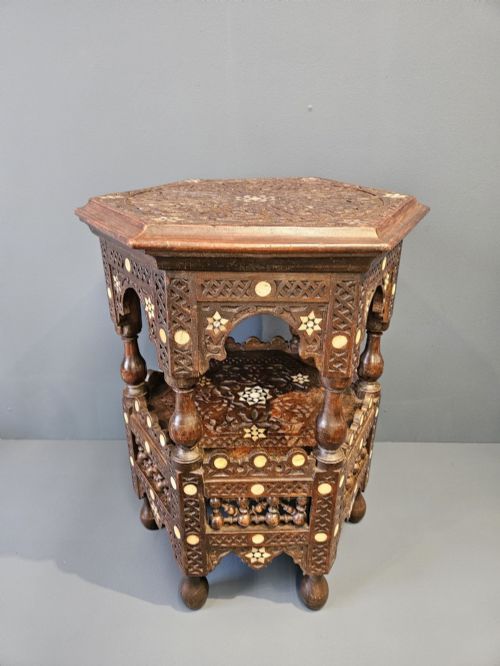
A victorian oriental table lamp encompasses both electrified ceramic or bronze vases from the nineteenth century and multi-tiered bamboo or lacquered side tables adapted to hold lighting. The selection spans styles from Japanese Meiji pieces and Chinese export porcelain to Anglo-Indian and Moorish carved occasional furniture.
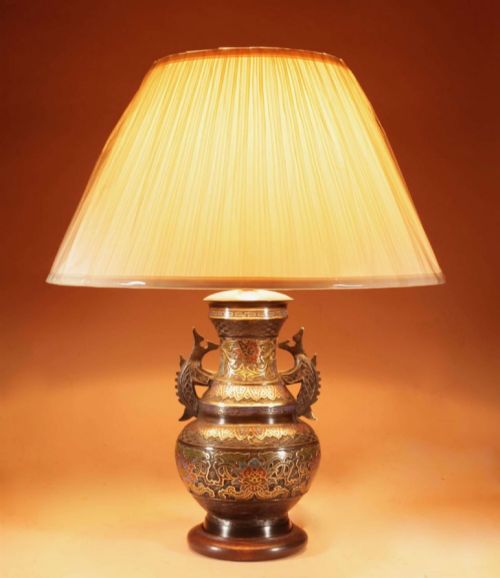
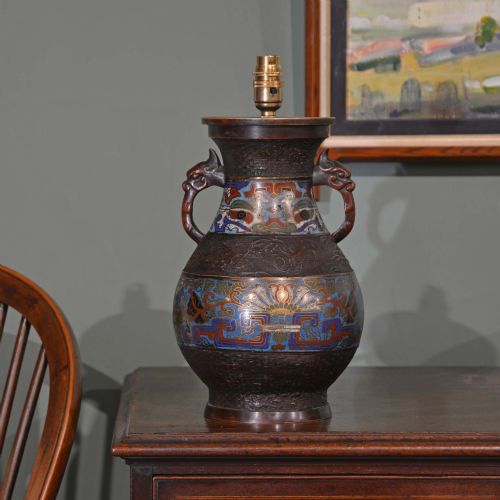
The ceramic examples frequently utilise converted Famille Verte, Famille Noire, Imari, blue and white prunus blossom vases, or cloisonné and champlevé bronze vessels. Alongside these sit bamboo and hardwood stands, including side tables, jardiniere stands, and lantern stands built in the Victorian era.
Most items emerge from the broader nineteenth century, with specific dates clustering around the eighteen-eighties and eighteen-nineties alongside occasional pieces from the early twentieth century. Buyers encounter both standalone table lamps and sturdy occasional tables serving double duty as lamp stands.
How they were made
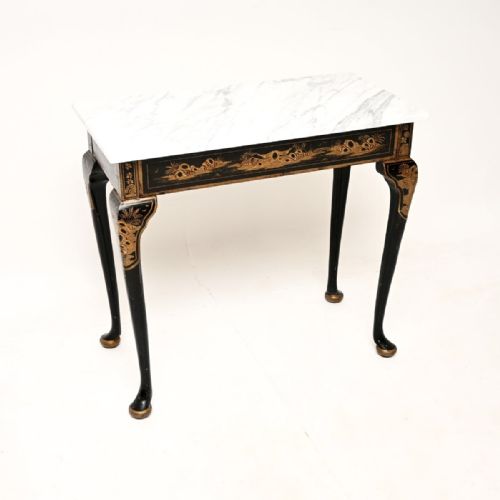
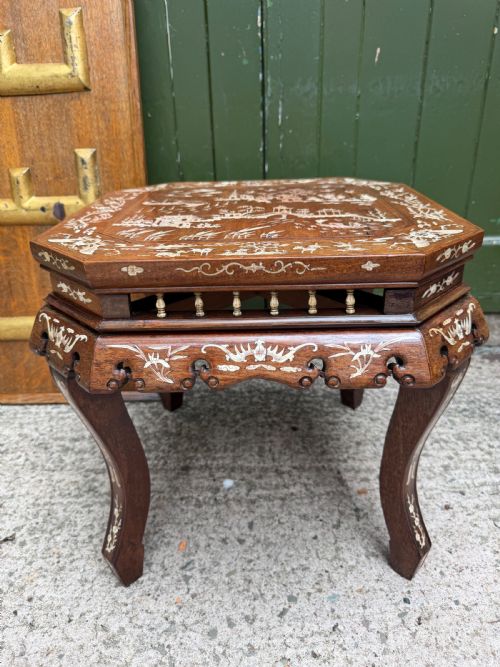
The furniture pieces rely upon natural materials such as bamboo, hardwood, ebonised elm, padauk, and root wood, often paired with lacquered panels and marble tops. Joinery techniques range from traditional Chinese framing to the lightweight pinned construction typical of Victorian bamboo occasional furniture.
The lamp bodies utilise cast bronze, brass mounts, and vitreous enamels, incorporating cloisonné wirework and champlevé recessing techniques. Cantonese porcelain and Japanese ceramics provide the colourful glazed vessels that were subsequently drilled and fitted for electrical wiring.
Listings feature items spanning the eighteenth, nineteenth, and early twentieth centuries, incorporating materials from brass and fabric to porcelain and bamboo.
What varies in quality
Quality rests upon the crispness of the carving in wood and bamboo components, alongside the depth and preservation of enamel work and gilding on bronze bases. Pieces featuring intact lacquered panels, original marble inserts, and unblemished porcelain demonstrate superior original craftsmanship.
Structural stability distinguishes practical table stands, where tight joinery and well-preserved tripartite bases ensure safe support for heavy lamps. Ceramic conversions differ in the subtlety of the original vase or vessel, with finer painted detail and heavier cast ormolu mounts elevating the piece.
The Victorian Oriental Table Lamp Glossary
- Cloisonne
- A decorative metalwork technique where enamel is applied within raised metal wires soldered to a bronze or brass base. This method produces intricate coloured patterns seen on nineteenth-century Japanese and Chinese lamp bodies.
- Chinoiserie
- European artistic interpretation and imitation of Chinese and East Asian artistic traditions, prominent in Victorian lacquered furniture and decorative objects. It frequently employs black lacquer grounds and gilded landscape motifs.
- Meiji Period
- The era of Japanese history spanning from eighteen-sixty-eight to nineteen-twelve, associated with fine bronze vessels and Satsuma pottery exported to Britain. Many Japanese lamp bodies originate from this distinctive manufacturing period.
- Jardiniere Stand
- A tall table or pedestal designed to hold plant pots or heavy decorative vases, frequently repurposed in interiors as a lamp table. These stands appear in bamboo, hardwood, and marble-topped variants.
- Famille Verte
- A Chinese porcelain palette dominated by green enamel overglaze colours, originating in the Qing dynasty and utilised on nineteenth-century vase lamps. The term translates from French as green family.
Victorian Oriental Table Lamp: Frequently Asked Questions
Are these lamps originally electrified?
Nineteenth-century lighting fixtures were originally adapted for oil or gas before modern rewiring brought them into contemporary use as electric table lamps. Many examples started life as decorative vases, ginger jars, or bronze spill vases before conversion.
Buyers find that porcelain and bronze bodies retain their antique character while accommodating standard modern lamp fittings and shades.
How do I distinguish bamboo from hardwood tables?
Bamboo pieces utilise natural segmented cane stems, often combined with lacquered panels, woven matting, and tiered shelving typical of Victorian Aesthetic Movement furniture. Hardwood tables employ dense timbers like padauk, ebonised elm, or carved root wood.
Both materials reflect nineteenth-century British tastes for imported eastern aesthetics, though bamboo offers a lighter visual weight.
Can I use an occasional table as a lamp stand?
Victorian occasional tables, side tables, and plant stands were frequently constructed with sturdy tops specifically to support heavy table lamps and decorative objects. Octagonal, two-tier, and tripartite-based tables provide stable platforms for modern lighting.
These pieces integrate functional surface space with distinct Chinoiserie, Anglo-Indian, or Moorish carved detailing.
How do I date an oriental table lamp?
Dating relies upon stylistic markers such as Aesthetic Movement bamboo designs, Meiji period bronze work, and Victorian manufacturing techniques like ebonising and lacquer application. Reference to nineteenth-century trade periods helps narrow the decade of production.
Documentation often pairs the ceramic vase era with the subsequent nineteenth or early twentieth-century adaptation for lamps.