
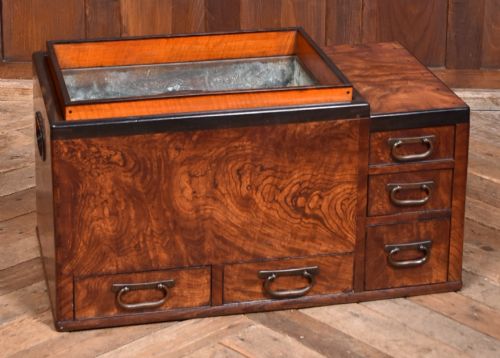


Asian Low Tea Table
An asian low tea table brings low-profile seating and rich timber grain into a room, offering a functional surface rooted in traditional forms.
Asian Low Tea Table
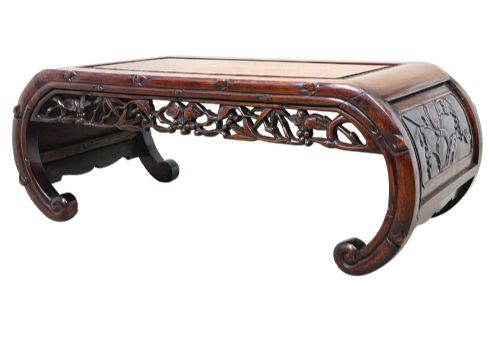
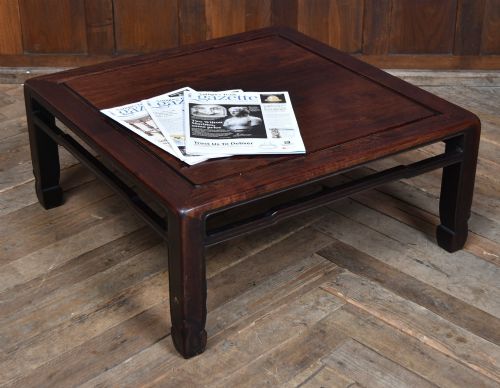
When you search for an asian low tea table, you encounter low-slung surfaces designed for kneeling or floor-level seating arrangements. These pieces span coffee tables, side tables, and traditional kang or opium tables adapted for modern living rooms.
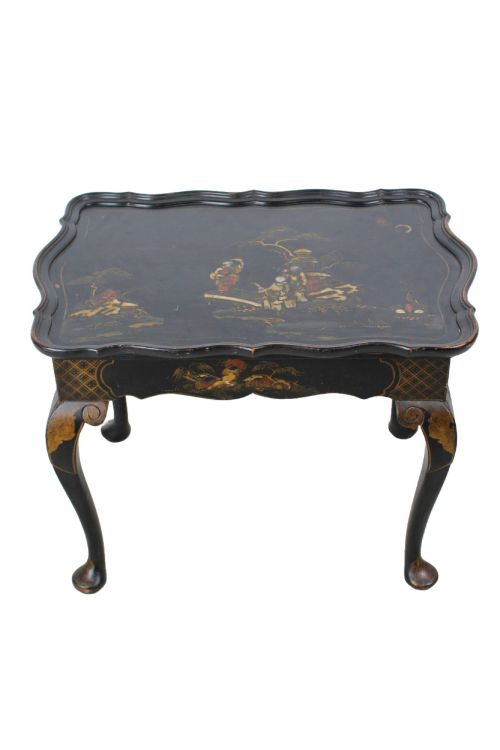
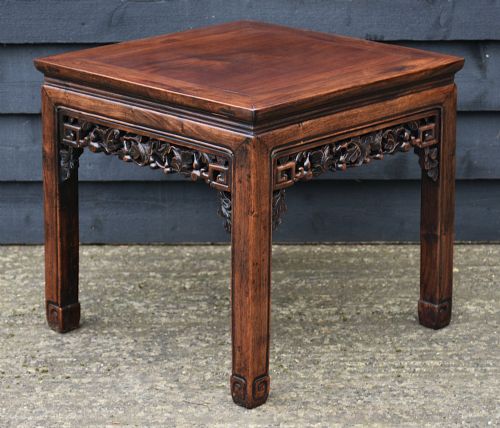
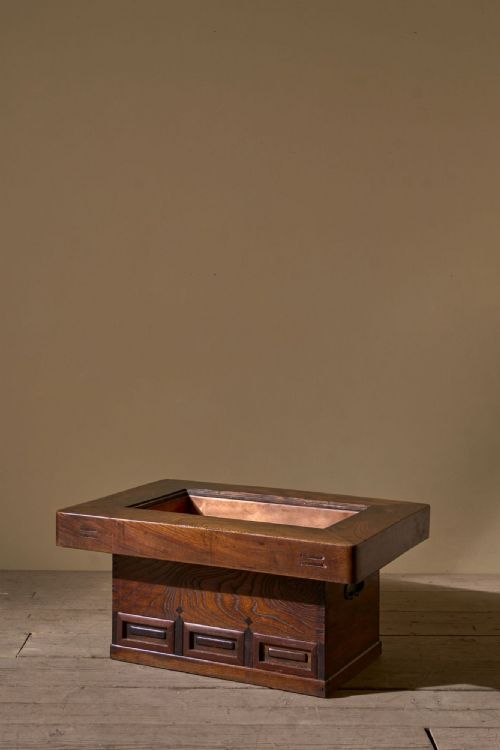
The selection ranges from nineteenth-century Chinese hardwood and elm examples to Edwardian chinoiserie tray top coffee tables and early twentieth-century Japanese hibachi or chabudai tables. Hardwoods and traditional lacquer finishes dominate the forms.
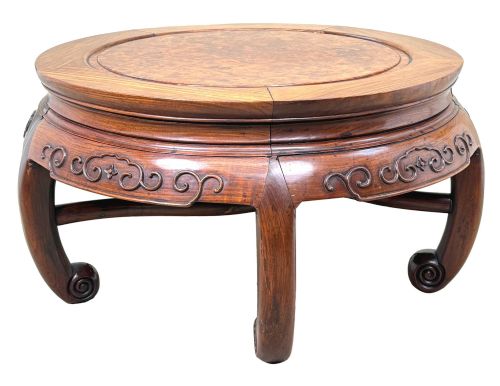
Originating across diverse periods from the Qing dynasty to the early twentieth century, these tables bridge traditional utility and decorative versatility. You will find rectangular, circular, and scroll-end variations suited to varied interior layouts.
Materials and Construction
Construction relies heavily on dense timbers such as rosewood, padouk, elm, and huanghuali, often selected for durability and pronounced grain. Artisans employed traditional joinery techniques to frame these low-profile surfaces without excessive metal hardware.
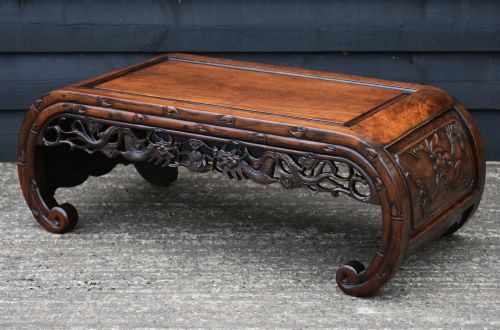
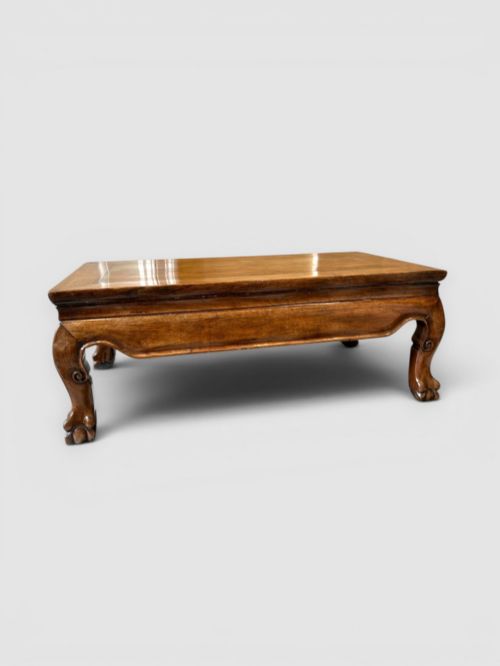
Surface treatments vary from polished natural timber highlighting patinated hardwood to rich red lacquer finishes. Specific examples incorporate carved dragon details, scroll ends, or glass inserts to complement the structural wood.
In certain Japanese hibachi and chabudai variations, integrated metal elements like copper liners appear alongside solid wood frameworks. This combination of copper and timber provides both decorative contrast and functional utility.
Assessing Craftsmanship and Material Selection
Quality rests primarily on the choice of timber and the crispness of the carving. Dense rosewood and huanghuali pieces with detailed scroll ends or dragon motifs stand apart from simpler elm or generic oriental hardwood builds.
Patina and surface preservation dictate the visual appeal of lacquered and polished finishes. An even, warm glow across the timber grain distinguishes superior examples from flat or heavily restored surfaces.
The Asian Low Tea Table Glossary
- Kang table
- A low platform table originating in China, traditionally used on a heated brick bed for dining or drinking tea. These low surfaces now function widely as coffee tables.
- Chabudai
- A short-legged traditional Japanese table used for partaking in meals or tea while kneeling on tatami mats. They form a distinct category of low furniture.
- Hibachi
- A traditional Japanese heating device, sometimes mounted within a low wooden table frame incorporating copper elements. They serve as decorative low tables in contemporary interiors.
- Padouk
- A heavy, durable tropical hardwood prized for its reddish-brown colour and strong grain. It frequently appears in traditional Chinese low tables.
- Chinoiserie
- A European decorative style reflecting Chinese artistic influences, popular during the Edwardian period. It often manifests as painted or lacquered decoration on tea tables.
Asian Low Tea Table: Frequently Asked Questions
How were asian low tea tables used?
These tables were historically placed on raised platforms or floors to serve tea, meals, or write letters while sitting or kneeling. Their low height encouraged close, communal gathering around the surface.
Today, they adapt seamlessly into modern homes as low coffee tables or accent pieces in living rooms and lounges.
What woods are used in these tables?
Maker workshops utilised dense Asian hardwoods including rosewood, padouk, huanghuali, and elm. These timbers were chosen for their structural strength and rich, decorative grain patterns.
Lacquer finishes and copper insets also appear on specific regional variants to enhance visual texture.
How do I style a low table?
Because of their reduced height, these tables anchor spaces where low seating or minimalist furniture arrangements take precedence. Pairing them with floor cushions or low sofas maintains the intended proportions of the room.
Keep surface decor simple to showcase the timber grain, carved scroll ends, or lacquered finishes.
How do I tell Chinese and Japanese styles apart?
Chinese examples frequently feature structured hardwood frames, carved dragon details, and scroll ends characteristic of kang or opium table designs. Timbers like rosewood and padouk dominate these forms.
Japanese variants, such as chabudai or hibachi tables, often emphasise simpler elm construction or incorporate functional copper elements for indoor heating.