



Asian Hardwood Seats
Asian hardwood seats encompass solid timber chairs, benches, and stools spanning the nineteenth and early twentieth centuries, prized for traditional joinery and durable woods.
Asian Hardwood Seats
Asian hardwood seats cover a broad selection of antique furniture designed for sitting, including armchairs, benches, settles, stools, and throne chairs. When exploring Asian hardwood seats, buyers frequently encounter pieces originating from the nineteenth century, alongside examples from the early decades of the twentieth century.
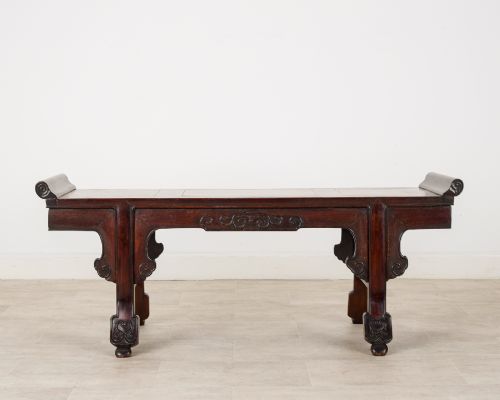
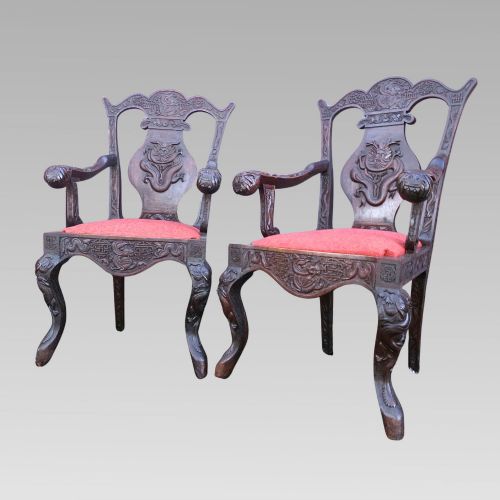
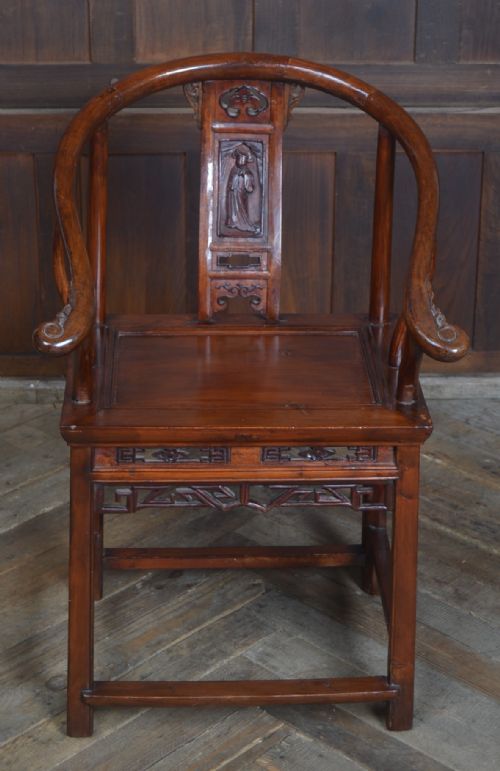
The assortment includes regional forms such as Chinese Qing Dynasty hall furniture, horseshoe armchairs, altar benches, and folding armchairs, often categorized under traditional Chinese or Anglo-Indian styles. Many items appear as individual chairs or pairs, whilst larger groupings form matched seating sets or suites.
Makers and workshops utilised dense timbers to construct functional domestic seating that doubled as display pieces for reception halls and living spaces. These items reflect enduring carpentry traditions adapted for both utility and formal presentation.
How they were made
Craftsmen built these seats using dense tropical and native timbers including elm, teak, mahogany, blonde wood, and heavy exotic hardwoods such as hongmu and huanghuali. Woodworkers relied on traditional mortise and tenon joinery, allowing frames to expand and contract naturally without metal fasteners.
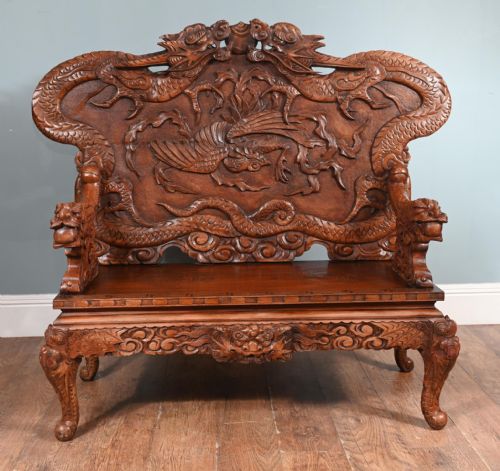
Surface decoration frequently involved intricate hand carving depicting dragons, foliage, and geometric motifs, occasionally supplemented by contrasting inlays of brass or mother-of-pearl. Certain pieces received multiple coats of lacquer, including red cinnabar finishes, which sealed the timber and provided a glossy, protective exterior.
Current listings feature hardwood seats spanning the nineteenth century through the 1930s, utilising elm, teak, lacquer, marble, and dense exotic timbers.
What varies in quality
The degree of refinement in the hand-carved ornamentation dictates much of the distinction between standard production and superior examples. Deeply undercut, crisp dragon motifs and detailed relief work require advanced artisanal skill compared to shallow or repetitive stamping.
The choice of raw material significantly influences the standing of a piece, with heavy, figured dense hardwoods like hongmu commanding greater appreciation than utility softwoods or plain elm. Intact original lacquer layers and precise joinery that remains rigid without modern reinforcement also distinguish better preserved specimens.
The Asian Hardwood Seats Glossary
- Hongmu
- A dense, dark tropical hardwood valued in traditional Chinese furniture making for its weight and rich natural grain. It was frequently deployed in the construction of formal throne chairs and heavy benches.
- Horseshoe armchair
- A traditional Chinese chair design featuring a continuous curved crestrail that sweeps down to form the armrests. This ergonomic shape provides comfortable support for the upper body.
- Settle
- A wooden bench equipped with high backs and solid arms designed to block drafts in large halls. These seats often incorporate panelled construction and storage provisions beneath the cushion area.
- Cinnabar lacquer
- A decorative coating derived from the toxic sap of the lacquer tree mixed with mercuric sulphide powder to produce a vibrant red colour. Artisans carved intricate patterns into thick layers of this hardened material.
- Qing Dynasty
- The final imperial dynasty of China, lasting from the mid-seventeenth century until the early twentieth century. Furniture from this era is noted for robust proportions and elaborate carved symbolism.
Asian Hardwood Seats: Frequently Asked Questions
How were antique benches used?
Antique benches served multiple functions in traditional households, ranging from window seats and altar ledges to primary seating in reception halls. Their long, linear proportions accommodated multiple sitters or served as display surfaces.
Heavier examples made from dense hardwoods stood in public entryways to receive guests. Lighter variants moved easily between rooms as needed.
What is hongmu wood?
Hongmu translates literally as red wood and represents a category of dense, heavy tropical hardwoods used in fine Asian furniture. The material exhibits a deep, natural colour that darkens further with age and polishing.
Because of its exceptional strength, hongmu allowed craftsmen to carve intricate relief details without compromising structural integrity. Pieces fashioned from this timber typically denote higher manufacturing status.
How do you date these seats?
Dating relies on analysing the timber species, joinery techniques, wear patterns, and stylistic markers associated with specific periods like the Qing Dynasty. Nineteenth-century examples often display deep patination and hand-forged or traditional pin construction.
Later pieces from the early twentieth century may incorporate slightly different proportions or machine-assisted preparation while retaining traditional hand finishing. Comparing decorative motifs against known historical styles helps narrow the timeframe.
Can I use these daily?
These hardwood seats were engineered for heavy daily use using durable timbers and robust joinery designed to last for generations. Their solid construction handles normal sitting without issue.
Placing them away from direct heat sources and sudden humidity shifts protects the wood and any lacquer or inlay work. Regular dusting maintains the natural finish.