




Asian Hardwood Coffee Tables
These asian hardwood coffee tables bring low, sculptural form and dense, figured grain into a modern room.
Asian Hardwood Coffee Tables
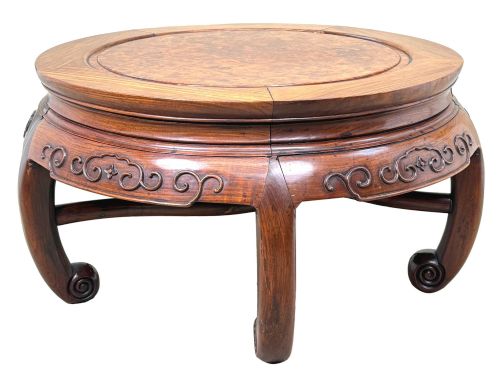
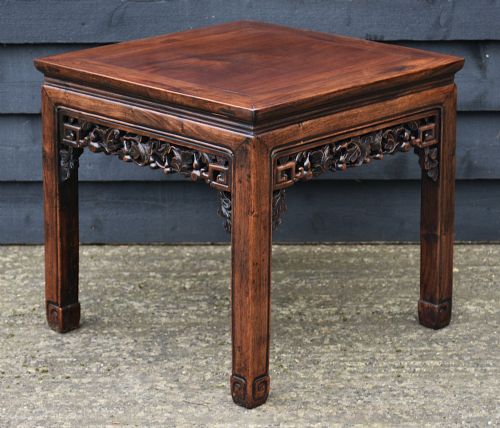
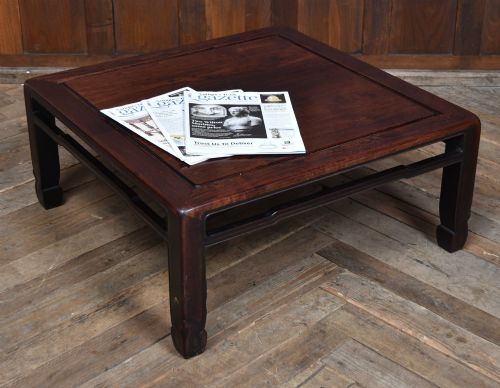
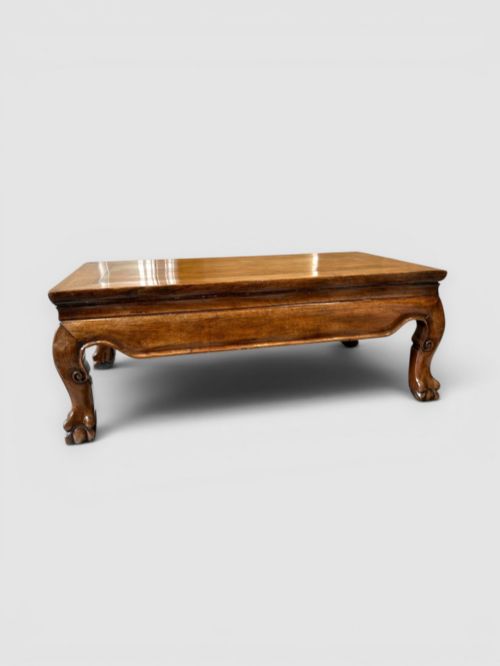
When searching for asian hardwood coffee tables, you encounter low forms originating primarily in China during the nineteenth and early twentieth centuries. These pieces include low kang and opium tables alongside nests of graduated tables and occasional stands. The nineteenth century yields the majority of examples, spanning traditional low formats to circular and rectangular shapes.
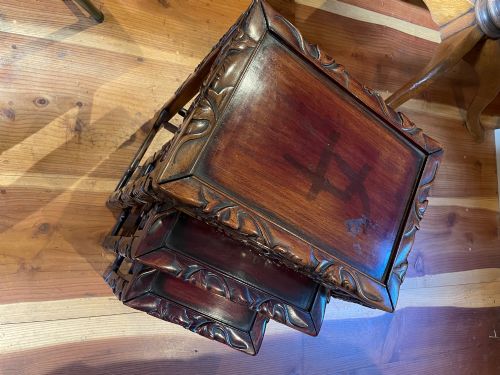
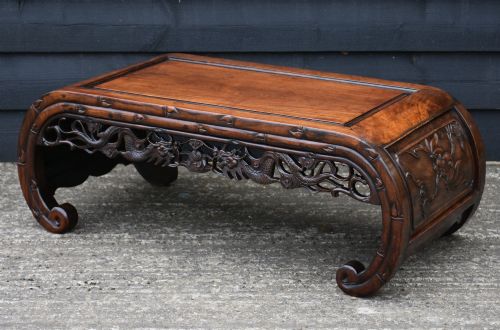
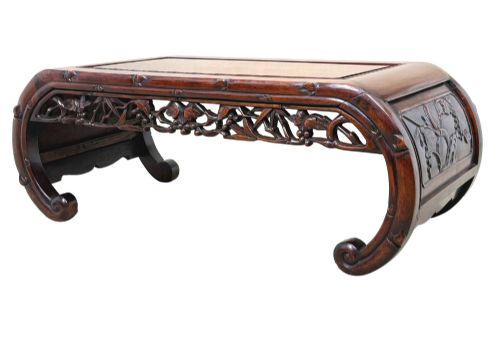
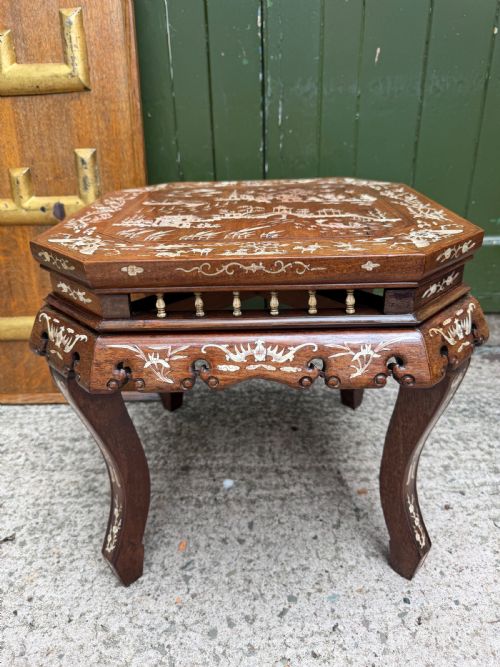
Kang and opium tables dominate the selection, built low to the floor for traditional seating arrangements. Alongside these low tables, nests of four tables appear frequently, designed to tuck away neatly when not in use. Styles range from plain surfaces to heavily carved panels depicting dragons and scroll ends.
Production extends into the early twentieth century, showing continued reliance on traditional Chinese forms adapted for contemporary domestic use. Regional export styles and Qing dynasty influences shape the design vocabulary of these low tables and nesting sets.
Materials and construction methods
Maker workshops utilised dense regional timbers including rosewood, padouk, hongmu, elm, huali, and huanghuali. These heavy hardwoods provide natural durability and allow for crisp detail in carved motifs.
Joinery relies on traditional interlocking techniques rather than modern metal fasteners, accommodating natural timber movement. Surfaces receive hand-carved decoration, scroll ends, and polished finishes that accentuate the underlying grain and patina.
Asian Hardwood Coffee Tables Retail Price Guide 2026
Typical asking prices for asian hardwood coffee tables among the pieces listed under this phrase on Sellingantiques today, from the lower quarter to the upper quarter. They describe what is for sale here now, not the wider market.
Listings feature pieces spanning the nineteenth century through the 1920s, constructed in rosewood, padouk, elm, and hongmu.
Assessing quality in construction and material
The density and selection of the timber dictate the baseline quality, with heavier woods like hongmu and rosewood holding sharper carved details. Grain selection and natural warmth of the patina separate superior examples from plainer utility items.
The crispness of hand-carved dragon motifs and scroll ends reveals the skill of the original maker. Well-preserved joinery that remains tight without modern intervention maintains the structural integrity of these low tables.
The Asian Hardwood Coffee Tables Glossary
- Kang table
- A low platform table traditionally placed upon a heated brick bed in northern China. These pieces form the basis for many modern low coffee table formats.
- Opium table
- A common Western term applied to low Chinese tables used for resting items near seating areas. They share the low profile and compact proportions of kang tables.
- Hongmu
- A translation meaning red wood, applied to dense, high-grade tropical hardwoods used in traditional Chinese furniture. It develops a deep, dark patina with age and regular handling.
- Padouk
- A heavy, durable timber with distinctive reddish tones utilised in Chinese furniture manufacturing. It accepts fine carving without splintering.
- Scroll end
- A decorative terminal detail where the ends of a table top curl outward or downward in imitation of rolled paper scrolls. This feature appears frequently on Qing dynasty low tables.
Asian Hardwood Coffee Tables: Frequently Asked Questions
How were opium tables used originally?
These low tables sat directly on platforms or heated brick beds in traditional interiors, serving as surfaces for dining, writing, or resting small items.
In modern rooms, their low proportions suit placement directly onto rugs before low sofas, functioning primarily as coffee tables.
How do I care for hardwood furniture?
Protect the dense timber from direct sunlight and sudden humidity shifts to prevent movement in the joints. Dust regularly with a dry cloth and avoid silicone polishes.
Applying natural wax occasionally helps maintain the deep patina developed over decades of handling.
How do I identify a Qing dynasty piece?
Look for traditional construction methods, dense regional hardwoods like rosewood or hongmu, and characteristic details such as scroll ends and carved dragon motifs.
Dating relies on stylistic markers from the nineteenth and early twentieth centuries rather than precise documentation.