




Asian End Tables
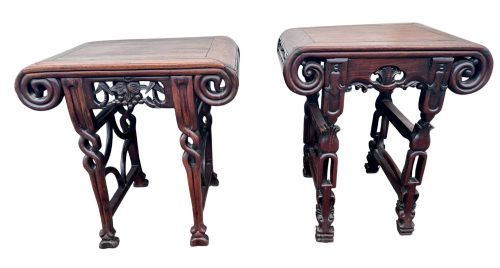
These asian end tables bring dense rosewood, elm, and traditional carving into a room to anchor an interior with genuine age.
Asian End Tables
When you search for asian end tables, you encounter a distinct selection of low tables, stands, and nesting sets originating from nineteenth and early twentieth-century workshops. The pieces span forms such as nests of four tables, low kang tables, side tables, and occasional tables designed for practical display.
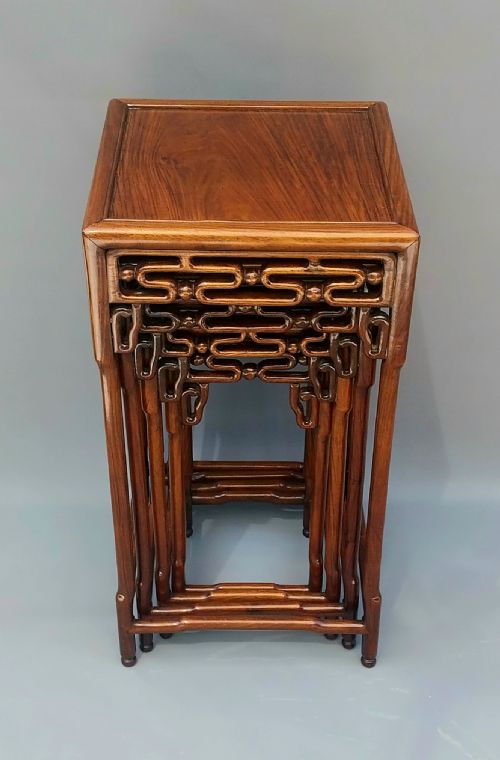
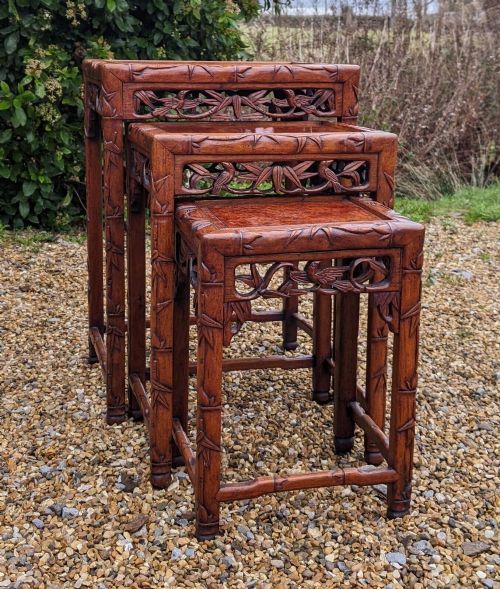
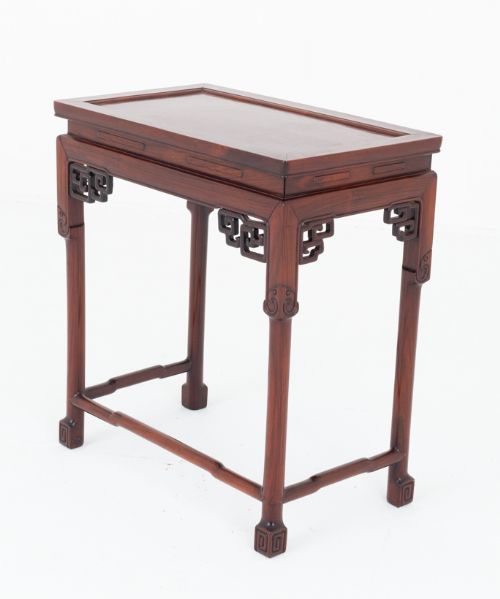
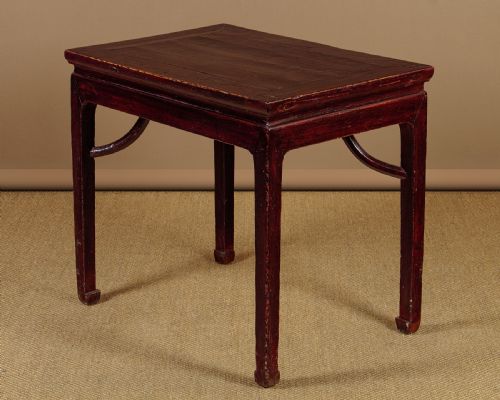
You are most likely to meet nests of four hardwood tables or single elm side tables originating from Chinese Qing Dynasty traditions or later export periods. These versatile items function naturally beside seating or as bedside cabinets.
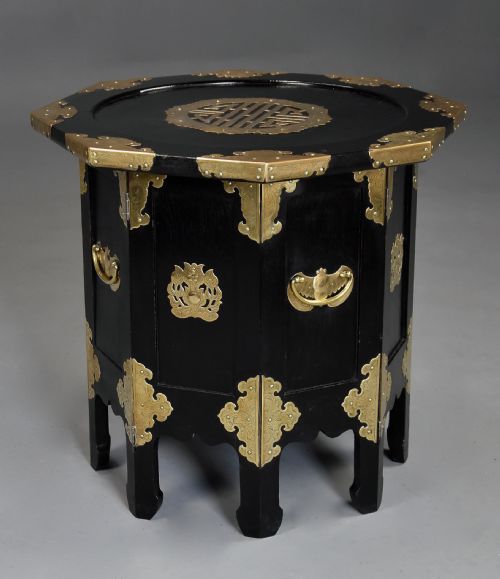
The selection includes specific regional variations, from carved huali hardwood to lacquered occasional pieces and marble-topped stands. Each variant reflects traditional woodworking methods adapted for both domestic use and export.
Materials and construction
The construction relies heavily on dense timbers including rosewood, huali, huanghuali, and elm, selected for structural stability and rich grain. Artisans employed traditional joinery techniques to frame tops, legs, and aprons without relying on modern fasteners.
Surface ornamentation ranges from intricate low-relief carving to smooth dark lacquer, occasionally accented with brass hardware or inset porcelain panels. These finishes protect the timber while highlighting the natural figuring of the hardwood.
Judging quality in the range
Quality rests on the selection of timber and the precision of the joinery, where denser rosewoods and well-preserved elm indicate superior durability. The crispness of the hand-carving on aprons and legs distinguishes finer workshop production from simpler commercial pieces.
The integrity of the structural frame and the preservation of original surfaces, whether polished hardwood or lacquer, determine the standing of an individual table. Subtle details like inset porcelain panels or well-fitted nesting sets elevate the distinction of the work.
The Asian End Tables Glossary
- Kang table
- A low domestic table traditionally used on a heated brick platform in northern China for resting or serving tea. These pieces now serve well as low coffee tables.
- Hongmu
- A translation meaning red wood, applied by Chinese cabinetmakers to dense tropical hardwoods of deep reddish-brown tone. It encompasses several heavy timber species.
- Quartetto
- A set of four graduated tables designed to slide neatly beneath one another. This form became particularly popular in nineteenth-century export workshops.
- Chinoiserie
- European decorative style reflecting Chinese artistic motifs and techniques. It appears on pieces created for Western markets during the Victorian period.
Asian End Tables: Frequently Asked Questions
How were kang tables used?
Kang tables served families as low surfaces for dining, writing, or drinking tea while sitting upon a heated sleeping platform.
Today, their low proportions suit modern living spaces as compact coffee tables or display stands.
What is a nest of tables?
A nest consists of several graduated tables designed to stack one beneath the other to save floor space.
They provide flexible surfaces that pull out easily when entertaining guests.
How do I identify elm furniture?
Elm displays a distinct open grain pattern with warm brown tones that mellow significantly over decades of use.
It offers a robust structure that supports functional forms like side tables and altar tables.
Are these tables solid hardwood?
The majority of these pieces utilise dense timbers such as rosewood, huali, and elm throughout their primary frames and tops.
This solid construction contributes to their considerable weight and lasting durability.