






Asian Ceramic Desk Lamps
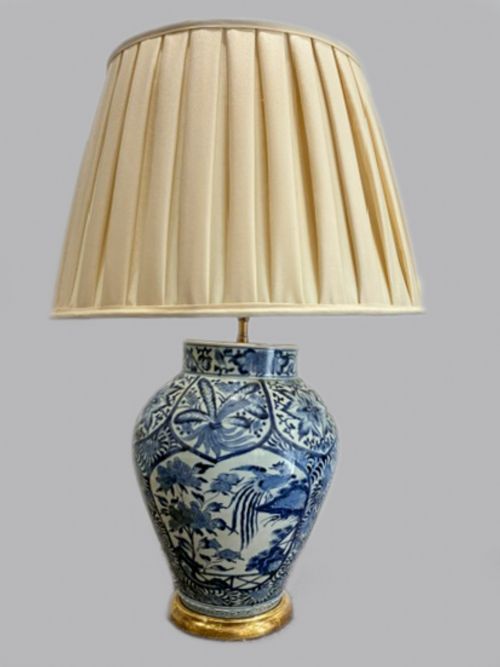
Asian ceramic desk lamps bring historic porcelain and earthenware into daily lighting, offering converted vases from Japanese and Chinese traditions.
Asian Ceramic Desk Lamps
When buyers search for asian ceramic desk lamps, they encounter converted vessels originating from various Asian ceramic traditions. These pieces transform historic vases, jars, and spill vases into functional table lighting.
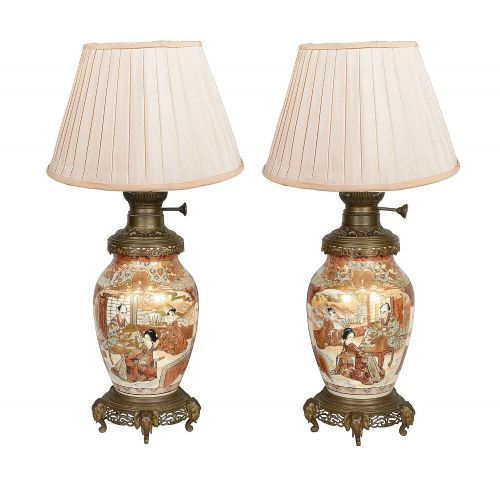
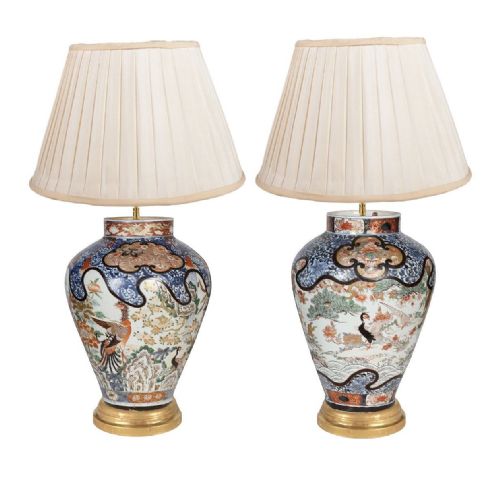
The selection on this page relies heavily on Japanese Satsuma, Imari, Kutani, and Arita wares alongside Chinese Celadon, Famille Rose, and Blanc de Chine porcelain. Many examples date from the nineteenth century, with earlier seventeenth-century and later pieces also appearing.
Vessels are frequently found as pairs, utilising forms such as Shi Lions, figural subjects, and baluster vases. Each piece bridges antique craftsmanship with modern utility through electrical adaptation.
Materials and construction methods
Potters shaped these bodies from porcelain and earthenware, applying intricate glazes such as enamel, turquoise, and celadon colourways. Base metals like brass often provide structural mounting for the electrical components.
Fabric shades in silk and standard textiles complete the construction, mounted above the ceramic body. Artisans historically painted designs directly onto the ceramic surface before glazing and firing.
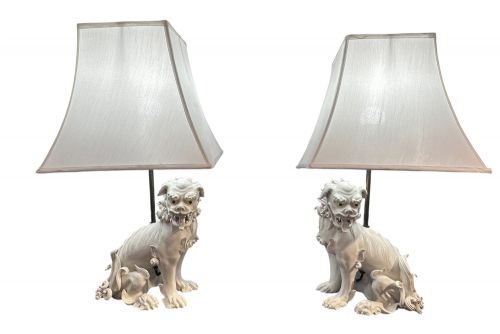
Shi Lions sit on guard duty beneath the lampshade, watching over the desk.
Evaluating quality and execution
The standard of painting on the porcelain body dictates much of the visual merit. Finer pieces display crisp hand-painted details in enamel and gilt, whereas simpler examples show broader brushwork.
The integrity of the original ceramic vessel before conversion influences desirability. Vases that retain their original form without extensive alteration hold distinct visual weight in a room.
The Asian Ceramic Desk Lamps Glossary
- Satsuma
- A type of Japanese earthenware featuring a pale, ivory-crackled glaze decorated with elaborate enamels and gilt. This style remains prominent among nineteenth-century table lighting.
- Imari
- A traditional Japanese porcelain style characterised by underglaze blue and overglaze red, gold, and green pigments. These vibrant schemes feature frequently on converted vases.
- Celadon
- A pale green jade-like glaze applied to porcelain bodies. This monochrome finish highlights the subtle contours of early Chinese and Japanese vessel forms.
- Blanc de Chine
- A white porcelain produced in China, literally translating to white from China. It frequently appears in moulded figures such as Shi Lions and Dogs of Fo.
- Kutani
- Japanese porcelain noted for bold pictorial designs and rich colour palettes. Pieces from this tradition often incorporate intricate figural and natural scenes.
Asian Ceramic Desk Lamps: Frequently Asked Questions
Are these original antique vases?
Yes, the ceramic bodies are historic vessels originating from centuries past, having undergone professional conversion into usable lighting.
This process adapts traditional ceramic forms for contemporary domestic settings without altering the primary antique body.
How do I identify Satsuma ware?
Satsuma ceramics are recognised by their characteristic crackled cream earthenware glaze and dense hand-painted polychrome decoration.
They often incorporate heavy gilding over the surface motifs, distinguishing them from smooth blue and white porcelains.
What is a Dog of Fo lamp?
These lamps utilise moulded porcelain figures of mythical guardian lions, known traditionally as Shi Lions or Dogs of Fo.
The ceramic figures serve as the central column of the lamp, typically finished in monochrome white blanc de chine.
How should I clean my lamp?
Dust the ceramic body gently with a dry cloth and use a soft brush for intricate painted areas.
Avoid harsh chemical cleaners that might damage the historic enamel or gilt decoration on the porcelain surface.