


Asian Bronze Cachepot
These asian bronze cachepot vessels bring heavy metalwork from the East into Western rooms, offering deep patinas and rich decorative surfaces.
Asian Bronze Cachepot
When you search for an asian bronze cachepot, you encounter heavy metal vessels designed to hold plants and flowers. These pieces cross paths with terms like jardinières and planters across the listings.
You meet Japanese items from the Edo and Meiji periods alongside Chinese pieces from the late Qing and Republic eras. The nineteenth century dominates the offerings, spanning from eighteen-eighty to nineteen-ten.
How they were made
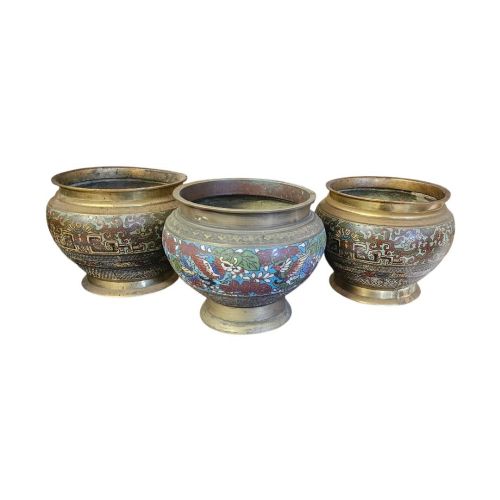
The makers cast these vessels in bronze and brass, often adding champlevé enamel work to create coloured patterns across the metal body. Artisans built heavy bowls and vases, with weights reaching over two kilograms on larger examples.
Surface decoration relies on traditional oriental motifs applied during the nineteenth century. The workshops combine metal casting with detailed surface finishing to produce sturdy jardinieres.
Listings span the nineteenth century, Victorian era, and early twentieth century up to nineteen-ten, using bronze, brass, and enamel.
What varies in quality
Substance and scale separate the heavier vessels from lighter bowls, with metal thickness and total weight indicating the work of better workshops. The presence of detailed champlevé enamel elevates the surface from plain metal casting.
The precision of the Japanese Meiji or Chinese Qing period execution dictates the artistic merit of each planter. Pairs command attention for their matched casting and uniform patination.
The Asian Bronze Cachepot Glossary
- Cachepot
- An ornamental pot used to hold a flowerpot. It conceals the inner vessel and lacks drainage holes.
- Jardiniere
- A large ornamental pot or stand for plants. These metal bowls function as indoor planters.
- Champlevy
- An enamelling technique where artists carve troughs in the metal surface to hold coloured enamel. This creates vibrant patterns across bronze bodies.
- Meiji Period
- A period of Japanese history lasting from eighteen-sixty-eight to nineteen-twelve. Metalwork from this era often shows exceptional decorative detail.
Asian Bronze Cachepot: Frequently Asked Questions
What is an asian bronze cachepot used for?
These metal vessels serve primarily as indoor plant holders or decorative jardinieres.
Buyers place them on furniture to display large plants or keep them empty as statement bowls.
How do I date a Japanese bronze planter?
Dating relies on stylistic markers tied to historical eras like the Meiji or Edo periods.
Nineteenth-century pieces often display specific patination and casting methods recorded in the listings.
Are Chinese and Japanese cachepots different?
Chinese examples frequently feature champlevé enamel work alongside bronze casting.
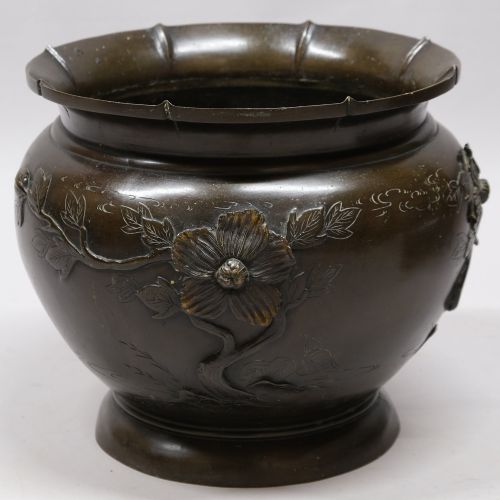
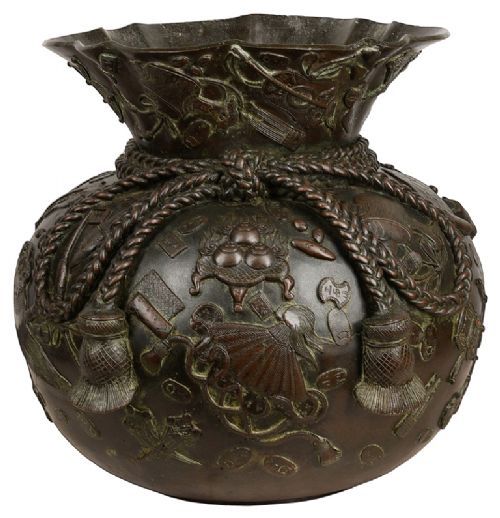
Japanese pieces from the Meiji period focus heavily on distinct bronze forms and surface textures.
How heavy are these bronze planters?
Weights vary significantly depending on the scale and thickness of the metal casting.
Some large examples exceed two kilograms, reflecting solid construction.