






Asian Brass Mounted Chest
These asian brass mounted chest examples offer striking storage solutions in wood and lacquer, combining practical utility with distinctive decorative presence.
Asian Brass Mounted Chest
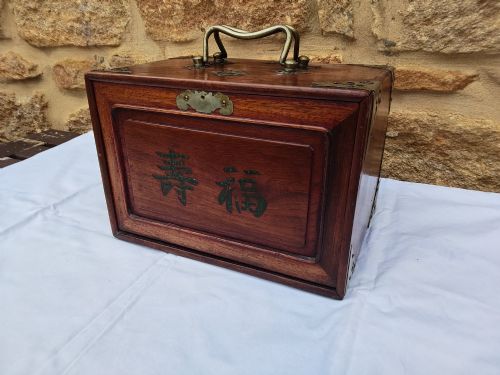
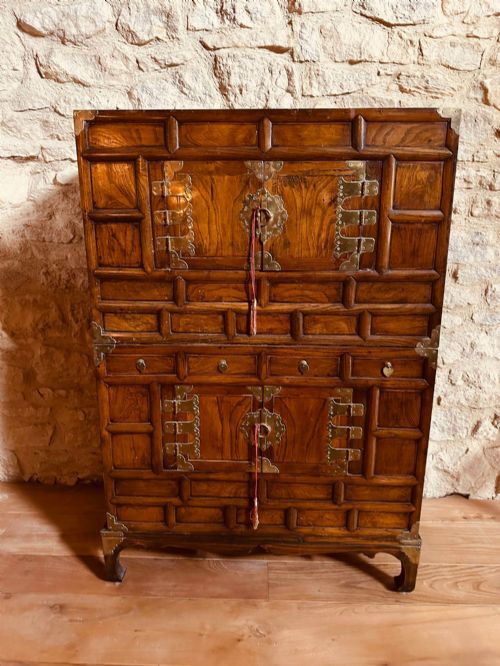
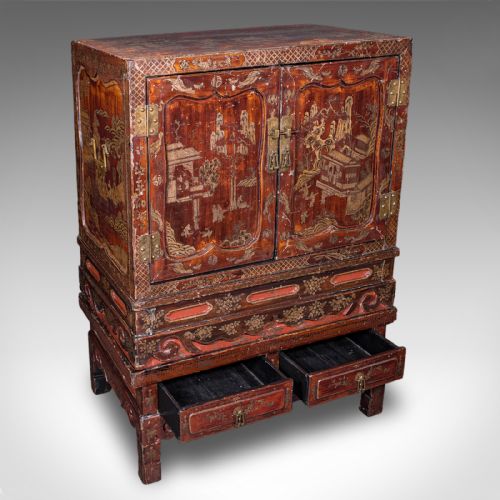
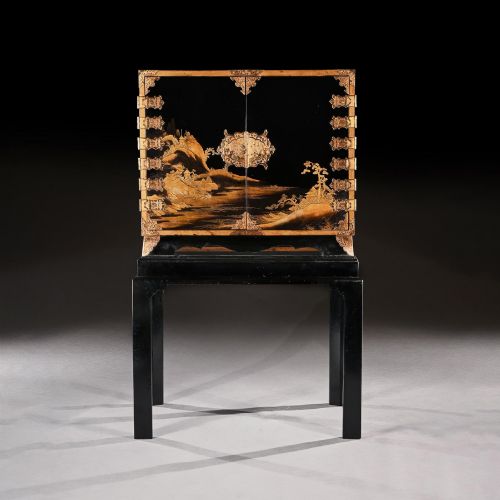
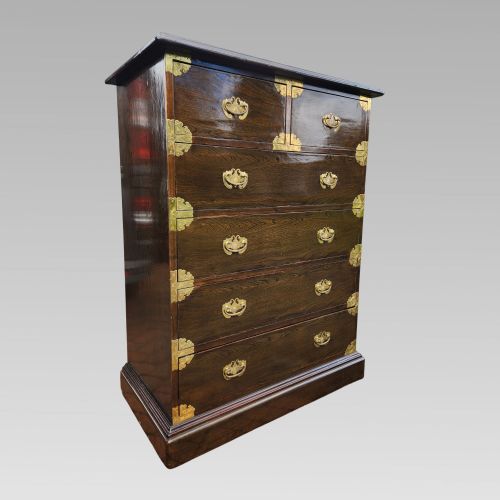
When you search for an asian brass mounted chest, you enter a diverse category spanning Korean tansu marriage trunks, Chinese camphor wood blanket boxes, and Japanese lacquer cabinets on stands. These pieces range from seventeenth century Edo period works to twentieth century elm and camphor productions.
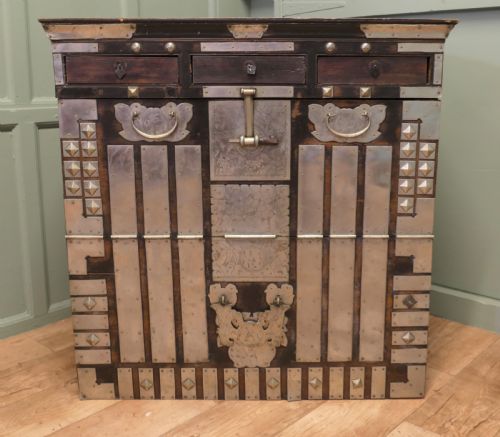
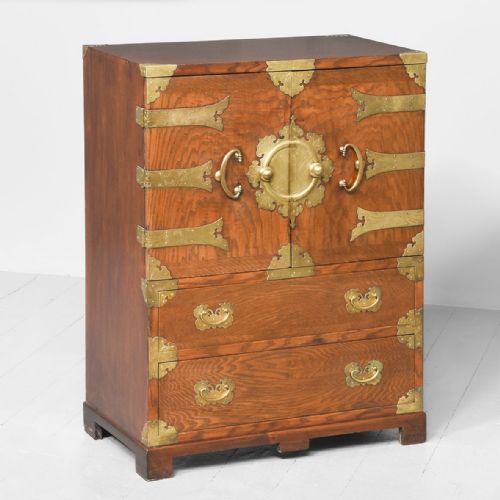
The most frequent examples encountered include nineteenth century Korean bandaji chests and Chinese side cabinets featuring pronounced metal hardware. Workshops across East Asia produced these items for domestic storage, utilising regional hardwoods and elaborate strapwork.
Forms vary significantly from low blanket boxes and floor cabinets to taller chests of drawers and cabinets mounted on dedicated stands. Each regional tradition employs specific construction methods, from the dovetailing of elm to the delicate application of lacquer.
Assessing quality and execution
Quality in these pieces rests upon the precision of the timber joinery and the integrity of the original surface finishes, whether polished wood or layered lacquer. Superior examples maintain crisp carving and intact metal hardware that integrates harmoniously with the primary structure.
The weight and elaboration of the brass mountings often indicate the workshop standard, with thicker, hand-forged elements distinguishing finer trunk and cabinet iterations. Preservation of original painted or lacquered surfaces substantially elevates the visual distinction of the piece.
Asian Brass Mounted Chest Retail Price Guide 2026
Typical asking prices for asian brass mounted chest among the pieces listed under this phrase on Sellingantiques today, from the lower quarter to the upper quarter. They describe what is for sale here now, not the wider market.
Camphor wood chests double as natural moth repellers because the timber retains its potent, aromatic scent for centuries.
The Asian Brass Mounted Chest Glossary
- Bandaji
- A traditional Korean storage chest featuring a hinged front flap, commonly associated with marriage furniture and heavy brass strapwork.
- Tansu
- A traditional Japanese mobile chest of drawers or storage cabinet, frequently constructed from elm and fitted with iron or brass hardware.
- Chinoiserie
- A European decorative style reflecting Chinese artistic influences, often applied to lacquered cabinets and stands dating from the Victorian era and earlier.
- Camphor wood
- A fragrant Asian timber utilised for blanket boxes and storage chests due to its natural insect repellent properties.
- Edo period
- A historical Japanese era spanning from the early seventeenth to the mid nineteenth century, known for refined lacquerwork and cabinetry.
Asian Brass Mounted Chest: Frequently Asked Questions
How do I identify a Korean tansu?
Korean tansu and bandaji chests are primarily constructed from elm or burr elm, distinguished by prominent brass plates, corner brackets, and circular lock plates on the front facade. They often feature drop-front flaps or multiple small drawers designed for household linen and garments.
The joinery relies on traditional pinning rather than modern adhesives, and the wood grain shows distinct figuring, particularly on nineteenth century examples.
What is the difference between a cabinet on stand and a floor chest?
Cabinets on stands elevate the main storage body upon carved or straight legs, a configuration seen in seventeenth century Japanese lacquerwork and twentieth century Chinoiserie pieces. This design lightens the visual mass of heavy wooden storage.
Floor chests, such as camphor wood blanket boxes and Korean side cabinets, rest directly on the ground or on low integral plinths, prioritising maximum internal volume.
How should I care for lacquered wood?
Lacquered surfaces require stable indoor humidity and protection from direct sunlight to prevent drying and cracking of the finish. Dusting should be performed gently with a dry, soft microfibre cloth without commercial cleaning sprays.
Maintaining moderate environmental conditions preserves the underlying wood and prevents the brass mountings from tarnishing too rapidly.
Where were camphor wood chests used?
Camphor wood chests served as blanket boxes and travel trunks in Chinese households, valued for the distinct aromatic quality of the timber that repelled moths. Their dense construction protected textiles from damp climates during storage.
Over time, these chests transitioned into domestic living spaces as decorative side tables and functional bedroom storage.