

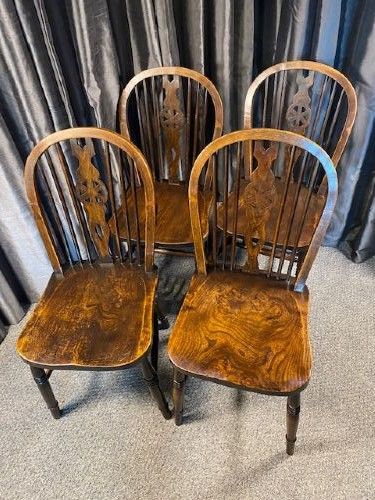
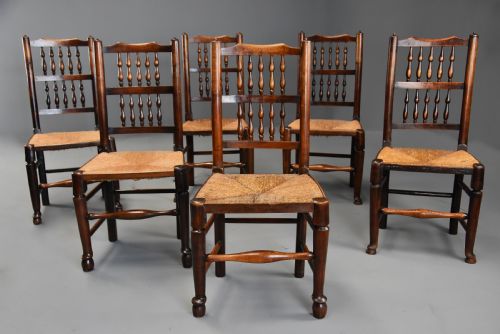

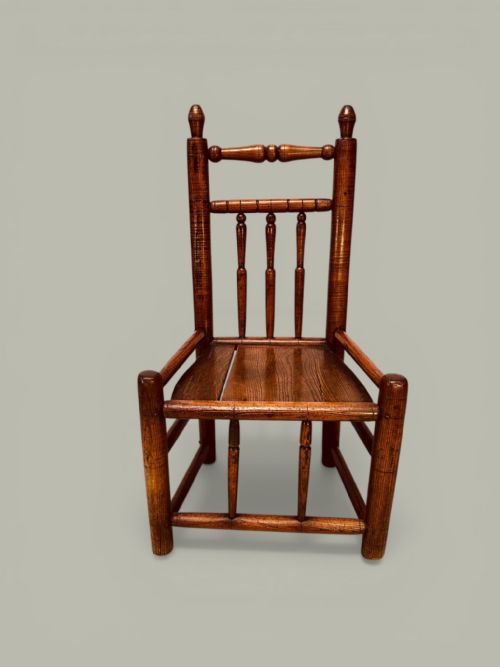


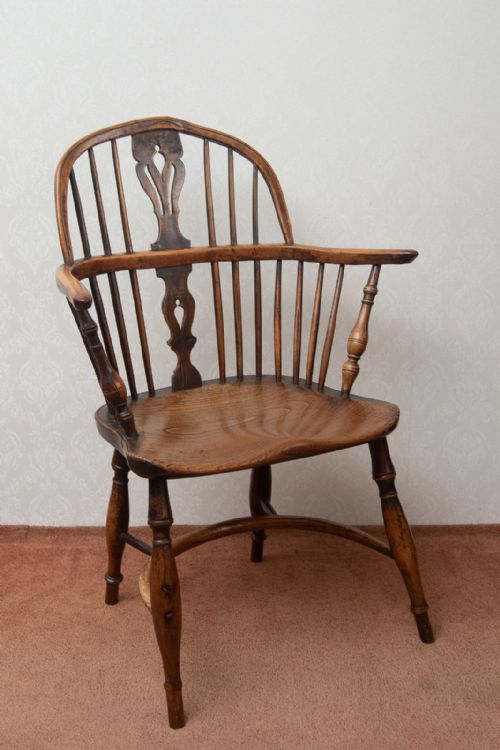


Ash Wood Side Chair
An ash wood side chair brings honest country vernacular character into a modern room, offering sturdy timber framing and traditional seating.
Ash Wood Side Chair
When you search for an ash wood side chair, you encounter robust country seating shaped by centuries of regional vernacular tradition. These pieces span from the seventeenth century through the Victorian revival and early twentieth century, reflecting practical domestic life rather than courtly fashion.
The most frequent examples on this page are spindle-back and ladder-back dining forms, alongside simpler turner's chairs and Windsor designs. They emerge from English, Irish, and Dutch country workshops, utilising local timber for everyday utility.
How they were made
These chairs rely primarily on solid ash frames, frequently combined with elm for seats or alder for structural components. Craftsmen shaped the timber using traditional turning and joining methods suited to unpretentious domestic furniture.
Seats utilise natural plant materials such as rush, straw, and plaited súgán, tied directly onto the wooden frames. Surface finishes range from plain polished wood to painted treatments and fabric pads added later.
Ash Wood Side Chair Retail Price Guide 2026
Typical asking prices for ash wood side chair among the pieces listed under this phrase on Sellingantiques today, from the lower quarter to the upper quarter. They describe what is for sale here now, not the wider market.
Early turners utilised green wood straight from the forest, letting the timber shrink tight around the joints as it dried.
What varies in quality
Quality in these vernacular pieces rests upon the integrity of the timber framing and the preservation of the original surface patina. Early examples display hand-turned components and balanced proportions that superior makers achieved through practiced local traditions.
Chairs that retain their original rush or plaited straw seats alongside uncompromised structural joinery sit at the higher end of the range. Later revivals and heavily restored frames demonstrate lesser distinction in their turning and surface wear.
The Ash Wood Side Chair Glossary
- Vernacular
- Everyday furniture made by local craftsmen for domestic use rather than following metropolitan court styles. These pieces prioritize practical utility and regional building traditions over formal ornament.
- Spindle back
- A chair back constructed with a series of slender turned wooden uprights fitted between the top rail and the seat. This construction provides lightweight strength and linear visual rhythm.
- Rush seat
- A seating surface woven from dried marsh rushes twisted into cords and hand-plaited across the chair frame. It offers a resilient, traditional base found extensively on country chairs.
- Turner's chair
- A heavy chair built entirely from turned wooden posts and spindles joined symmetrically. This early form dates back centuries and relies on lathe-turned elements for its primary structure.
Ash Wood Side Chair: Frequently Asked Questions
What is an ash wood side chair?
An ash wood side chair is an unpretentious country seat built without arms, utilising native ash timber for its frame. These pieces originate from regional vernacular traditions spanning the seventeenth to the twentieth century.
They function as dining or occasional seating, valued for their straightforward construction and honest use of natural materials like rush and elm.
How do I identify a 17th-century chair?
Seventeenth-century examples typically feature heavier turned components, such as robust posts and spindle arrangements characteristic of early turner's designs. The timber displays deep age-related patination and traditional pegged joinery.
Comparing the turning profiles and construction methods against later nineteenth-century revivals helps clarify the true period of manufacture.
What are rush and súgán seats?
Rush seats are woven from dried wetland grasses, while súgán seats use plaited straw or organic cordage. Both materials provide a traditional, flexible foundation tightly bound across the wooden seat rails.
These woven surfaces require gentle care and benefit from avoiding excessive moisture in domestic environments.
How should I live with country chairs?
Country chairs suit daily use around a kitchen or dining table, bringing texture and historical depth to modern interiors. Place them away from direct heat sources to protect the aged timber and woven seats.
Regular dusting with a dry cloth keeps the surface patina intact without stripping the character built up over generations.