

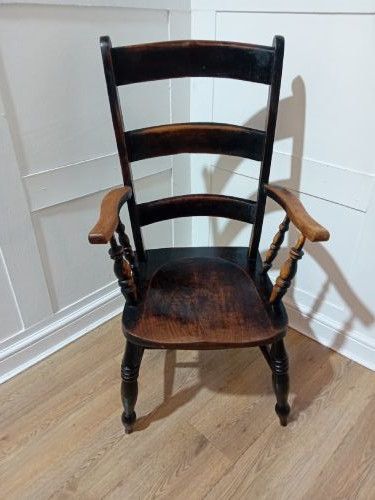


Turned Wood Ladder Back
Turned wood ladder back chairs are traditional seating pieces offering upright support and honest vernacular construction for everyday domestic use.
Turned Wood Ladder Back
Turned wood ladder back chairs comprise traditional seating forms shaped by local makers, appearing across domestic settings in several regional styles. These examples span the nineteenth century and the early twentieth century, showing standard vernacular development rather than courtly design.
The selection on this page centres on dining chairs, side chairs, armchairs, and rocking chairs. Common forms include kitchen chairs, fireside rocking chairs, and dining sets suited to practical domestic placement.
Origin descriptions cover English country, Victorian country, Dutch provincial, and American country styles. The materials deployed by makers include elm, ash, beech, oak, and mahogany, matched to rush or fabric seating surfaces.
How they were made
Construction relies heavily on local hardwoods turned on a lathe to create the distinctive horizontal slats and upright posts. Elm, beech, and ash provide the structural framework for these sturdy frames.
Seats are finished with woven rush or fabric inserts fitted tightly within the wooden rails. Original finishes survive on selected pieces, showing the early surface treatments applied by the makers.
Turned Wood Ladder Back Retail Price Guide 2026
Typical asking prices for turned wood ladder back among the pieces listed under this phrase on Sellingantiques today, from the lower quarter to the upper quarter. They describe what is for sale here now, not the wider market.
Makers sometimes turned a kitchen rocking chair with extra height so the user could reach higher shelves.
What varies in quality
Quality rests upon the proportion of the turnings and the structural integrity of the joints connecting the rails to the uprights. Pieces retain greater appeal when the timber maintains its original surface character without heavy intervention.
The balance between the decorative ladder slats and the supporting arm or leg posts defines the visual success of each individual chair. Regional variations in turning skill distinguish simpler vernacular examples from more ambitious regional pieces.
The Turned Wood Ladder Back Glossary
- Ladder back
- A chair design featuring a series of horizontal wooden slats between the upright rear posts. This form provides sturdy vertical support and has ancient roots in vernacular furniture making.
- Rush
- A marsh plant material woven tightly to create traditional seating surfaces. It offers a resilient and flexible base for daily domestic use.
- Vernacular
- Furniture made by local craftsmen for regional use rather than following high court styles. These pieces utilise local timbers and traditional joining techniques.
- Spindle
- A turned wooden rod used as a structural or decorative element within the back or underframe. Makers shaped these components using a lathe to achieve uniform profiles.
Turned Wood Ladder Back: Frequently Asked Questions
What is a ladder back chair?
A ladder back chair is a traditional seating form characterised by horizontal wooden slats fitted between vertical rear posts. This design provides sturdy upright support for dining and relaxation.
These chairs appear across various regional styles using local timbers such as elm, ash, and beech, often paired with woven rush seats.
How do I date a turned wood chair?
Dating relies on examining the timber species, turning profiles, and construction methods used in the frame. Nineteenth-century examples often display regional vernacular traits that differ from later production.
Evidence of original finish and wear patterns also helps establish the age and authenticity of the piece.
Where were ladder back chairs used?
These chairs served primarily as functional seating in kitchens, dining rooms, and fireside areas. Their robust construction suited daily domestic tasks.
Armchairs and rocking chairs provided comfort in living spaces, while side chairs and dining sets accommodated meals.
Are rush seats original?
Rush seating is a traditional material woven directly onto the frame to provide a flexible and durable platform. Many surviving pieces retain or have been fitted with traditional rush.
The condition of the weave often indicates the extent of past restoration work on the chair.