
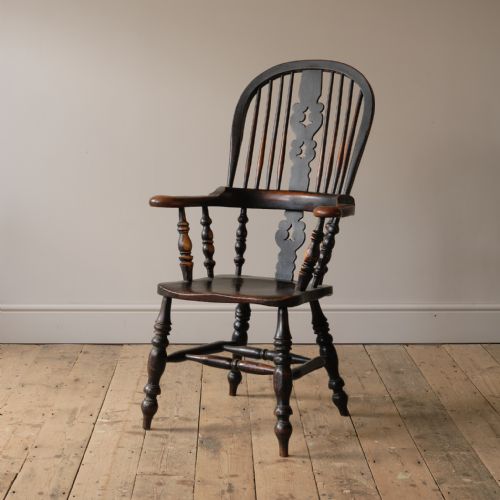
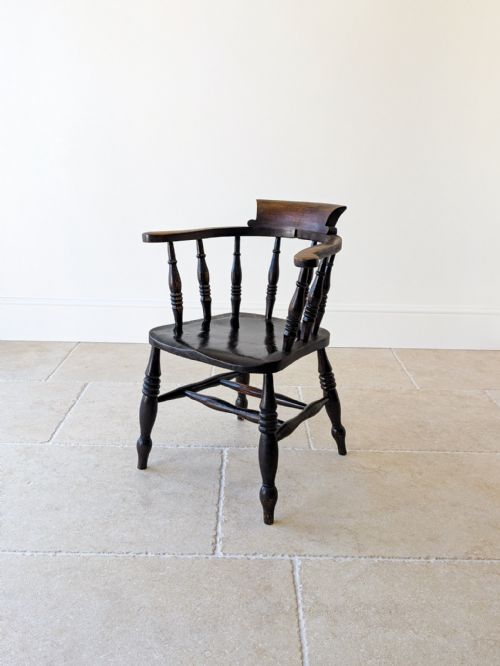
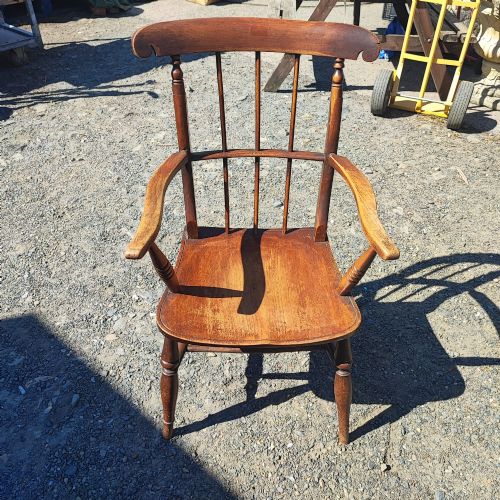
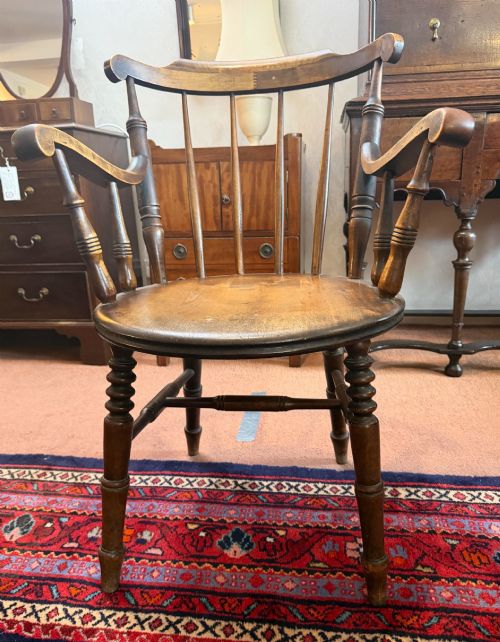
Ash Windsor Armchair
Ash windsor armchairs combine regional vernacular design with robust timber construction, offering a sturdy seat that ages with rich character.
What They Are
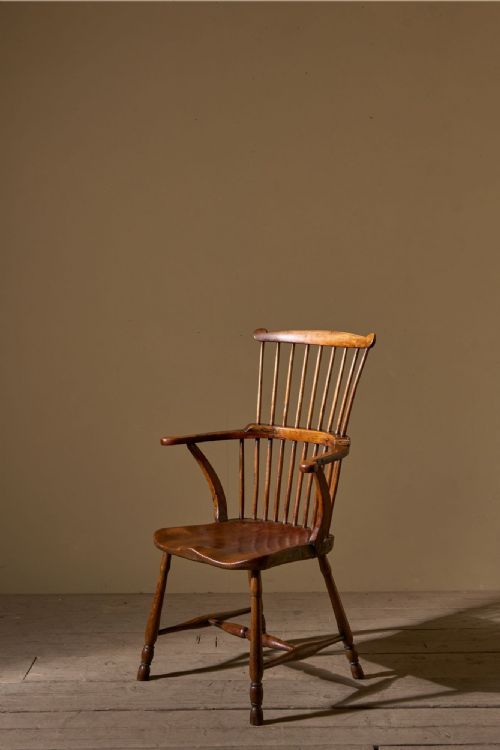
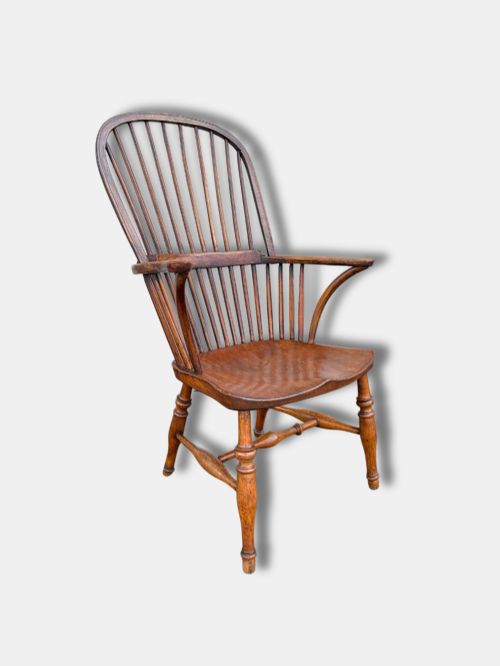
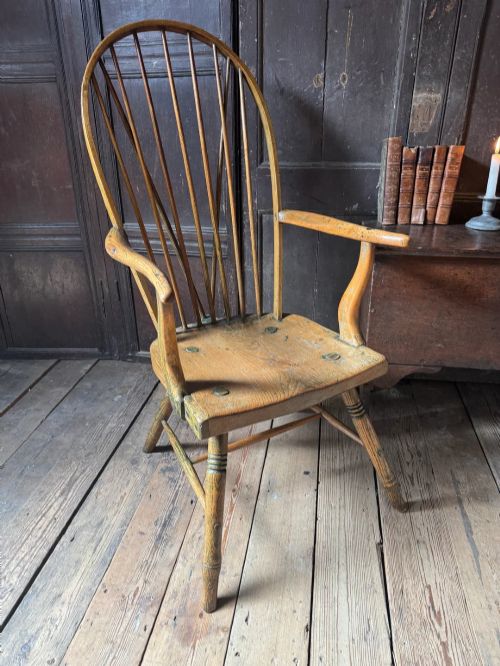
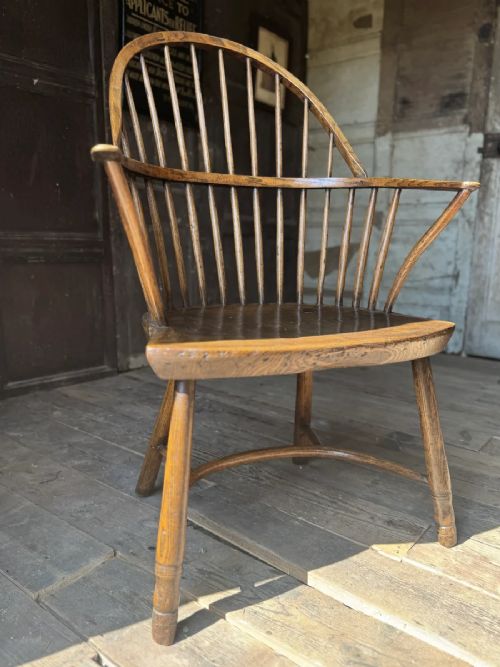
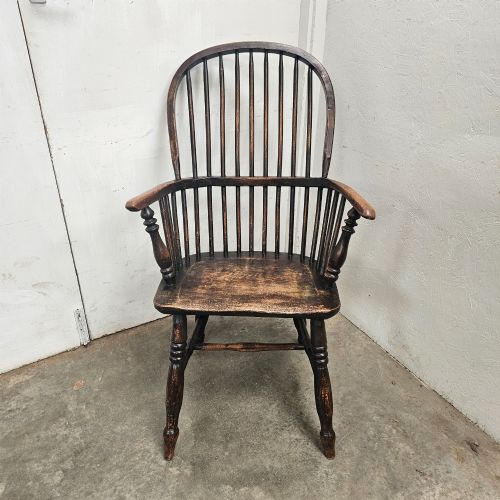
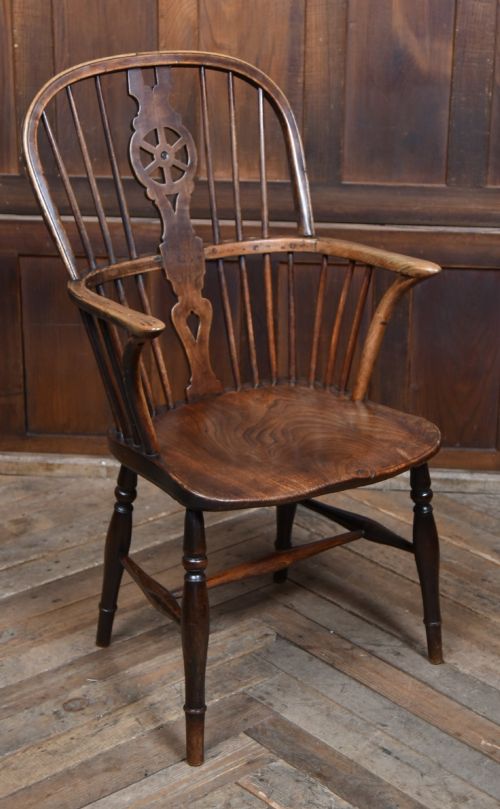
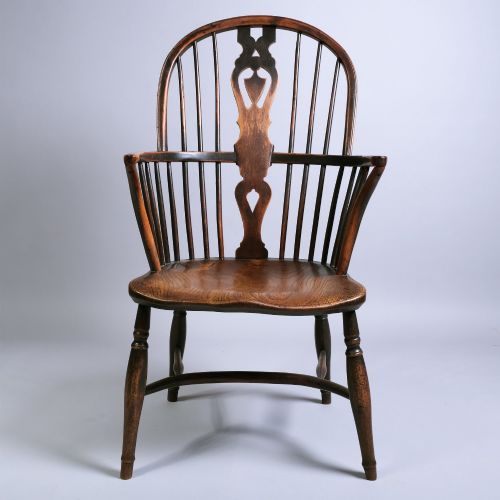
An ash windsor armchair is a traditional wooden seating form characterised by a solid shaped seat into which the legs, back sticks and arm supports are individually tenoned. When searching for an ash windsor armchair, you encounter pieces spanning the eighteenth century, the nineteenth century and the Victorian era, reflecting English country, Georgian country and Scottish vernacular traditions.
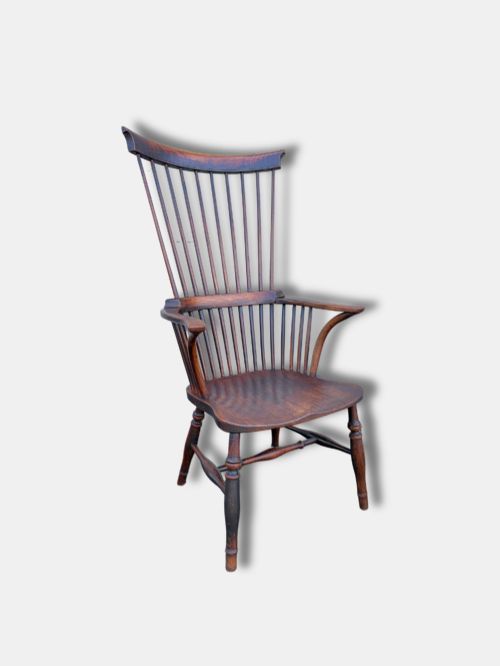
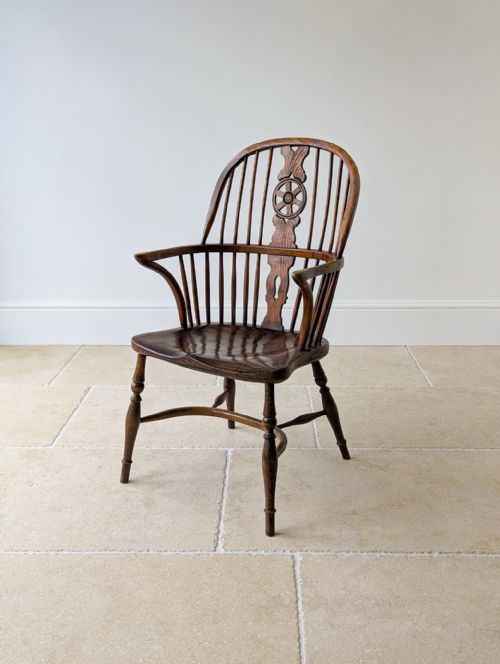
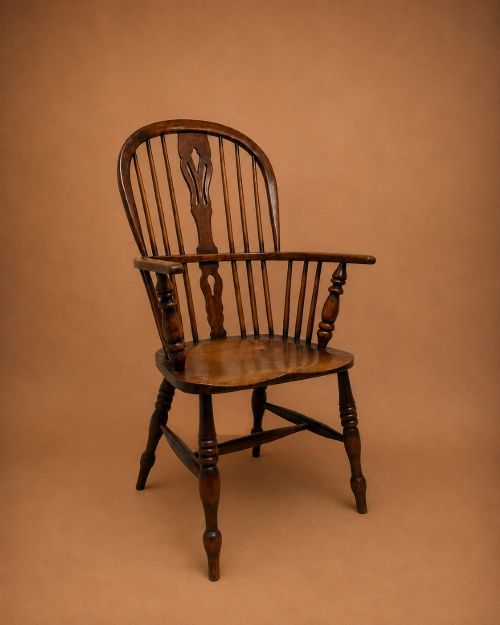
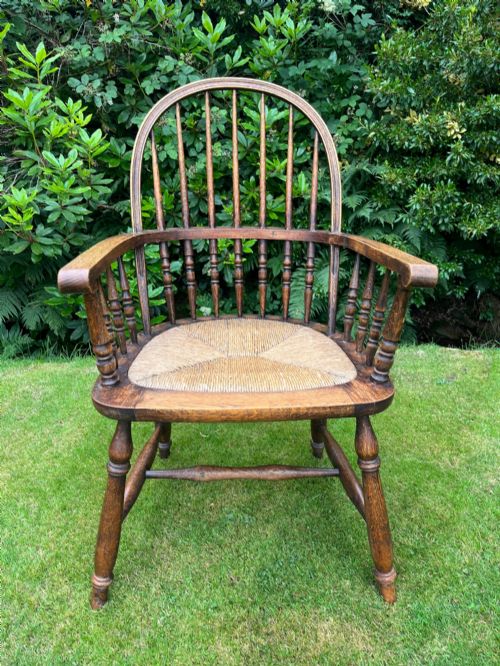
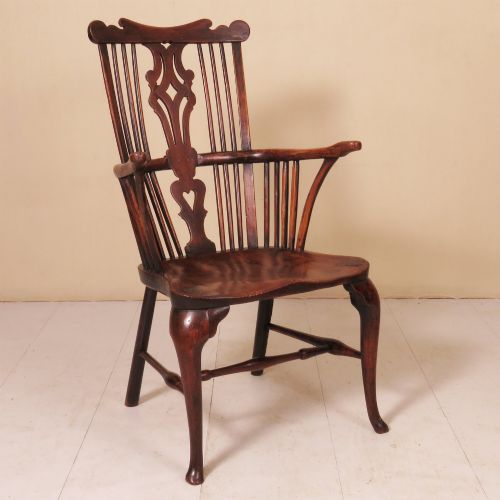
The most common formats on this page include hoop-back, comb-back, high-back and broad-arm variations, often shaped with structural elements like splats or spindle backs. These chairs served utility in domestic interiors and farmhouses, evolving regional characteristics depending on whether they originated in the Thames Valley, Scotland or other provincial workshops.
How They Were Made
Constructed primarily using ash and elm, these chairs often incorporate secondary timbers such as fruitwood or yew where available in regional workshops. Ash provides flexible strength for bentwood components like hoops and bows, while elm is selected for its interlocking grain to form solid, crack-resistant saddle seats.
Joinery relies on traditional methods where turned spindles and legs are driven into bored holes in the solid seat plank and secured with wedges. Steam-bending techniques shape the back bows and arm rails from green timber, allowing complex curves to set as the wood dries.
Retail Price Guide 2026
Typical UK retail prices for ash windsor armchair, calculated from the Sellingantiques database of over a million retail prices indexed since 2003. This retail price guide relies exclusively on Sellingantiques data; no external sources or auction records are used, so the figures do not describe the wider market.
Listings feature eighteenth-century and nineteenth-century examples constructed from ash, elm, yew and fruitwood.
What Varies in Quality
The distinction between ordinary provincial seating and the top of the range rests on the subtlety of the timber selection and the confidence of the turning. Master makers chose ash with striking grain patterns and elm seats with deep, sculptural adze work rather than flat, mechanical surfaces.
Proportion and stance dictate the visual success of the piece, with superior examples exhibiting well-raked legs, balanced arm scrolls and delicate spindle tapering. Chairs that retain an honest, undisturbed surface finish with deep patination demonstrate greater integrity than those altered by aggressive stripping.
Duncan McKellar of Fenwick·Fred Walker Rockley
The Ash Windsor Armchair Glossary
- Comb-back
- A Windsor chair style where the central vertical spindles extend upward to support a horizontal headrest resembling a hair comb.
- Broad-arm
- A chair design featuring wide, flat wooden armrests, sometimes shaped to accommodate a writing surface or extra comfort.
- Hoop-back
- A continuous bentwood rail forming the main back and arm structure of the chair, also known as a bow-back.
- Saddle seat
- A solid timber seat plank sculpted with depressions for ergonomic comfort.
- Patina
- The deep surface sheen and colour developed over decades of handling, exposure and use.
Frequently Asked Questions
How do I identify a Thames Valley Windsor?
Thames Valley windsor chairs frequently feature distinct cabriole front legs, carved arm terminals and pierced central splats, often incorporating yew wood alongside ash and elm.
These regional characteristics separate them from simpler provincial country chairs found in other parts of Britain.
Were these chairs used at dining tables?
While many nineteenth-century examples functioned as single fireside or elbow chairs, robust models were also made in sets for domestic dining use.
Their sturdy construction made them versatile seating options throughout the farmhouse or country home.
Why are elm and ash used together?
Elm possesses a twisted, interlocking grain that prevents splitting when carved into a thick saddle seat, making it the ideal timber for the base.
Ash offers high tensile strength and elasticity, which suits the turned spindles and steam-bent hoops that form the upper back.
How should I care for an antique wooden seat?
Keep the timber away from direct heat sources and sudden humidity shifts to prevent the dry wood from splitting or warping.
Feed the surface occasionally with traditional wax to maintain the protective finish and enhance the natural patina.