



Ash Country Arm Chair
An ash country arm chair brings tactile honesty and robust vernacular character straight from farmhouse kitchens into modern rooms.
Ash Country Arm Chair
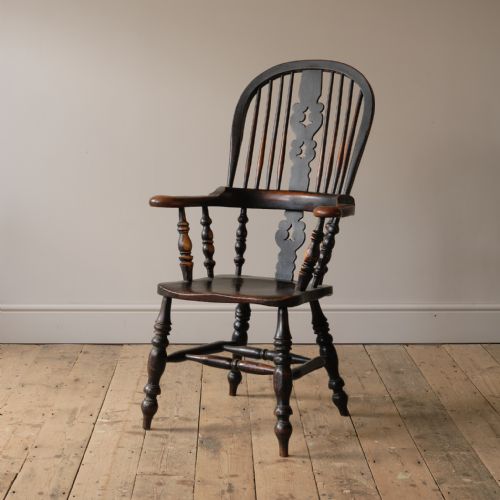
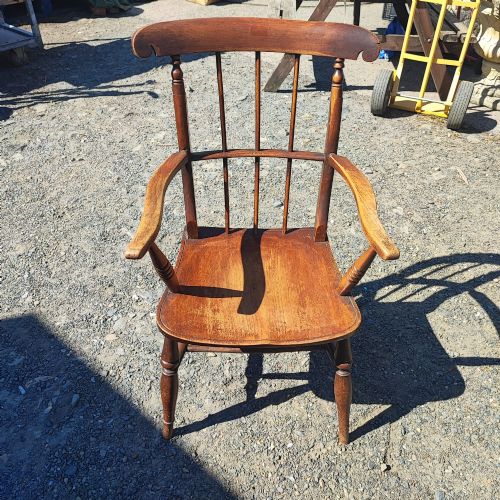
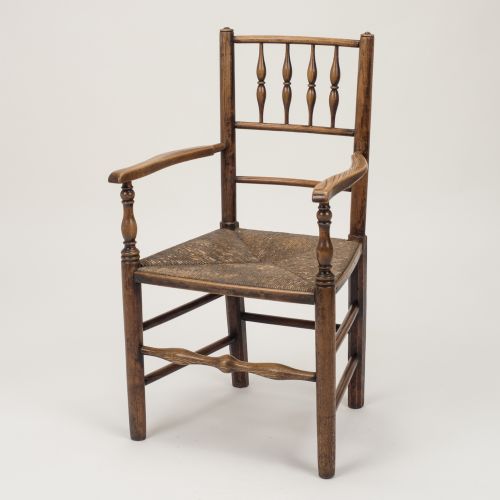
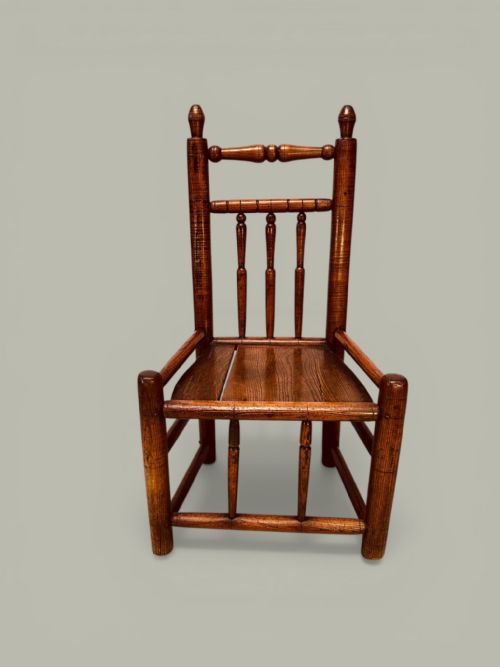
An ash country arm chair is a sturdy vernacular seat rooted in Georgian, Victorian, and nineteenth-century domestic traditions across rural England. These pieces take the form of high-backed Windsor chairs, spindle backs, ladder backs, and turner's chairs built for heavy daily use.
The version most commonly met on this page pairs a pale ash frame with a thick elm seat, often showing the generous proportions of Lancashire or West Country origins. Regional variations include low stick backs, comb backs, and broad arm designs fitted with rush or solid wood seating.
Collectors encounter these forms as working survivors of farmhouse and kitchen environments, shaped by local wheelwrights and country joiners rather than urban cabinet makers.
Materials and construction methods
Makers built these chairs by combining woods chosen for specific physical properties, notably tough ash for steam-bent frames and spindles alongside resilient elm for carved solid seats. Additional structural elements incorporated beech, fruitwood, and yew depending on regional timber availability and workshop traditions.
Traditional construction relied on green woodwork techniques, where turned components and steam-bent bows dried tightly into pre-bored mortise and tenon joints. Seats frequently accepted woven rush inserts secured around sturdy rungs, while painted surfaces preserved softer woods against wear in domestic settings.
Several miniature child and doll rocking chairs scale down full-size farmhouse seating with exact vernacular joinery.
Judging build quality and survival
Quality in these vernacular chairs rests upon the integrity of the original timber selection and the retention of uncompromised structural joints. Pieces featuring deeply sculpted burr elm seats and cleanly turned ash spindles demonstrate superior regional craftsmanship.
The finest examples retain their original surface patination, untouched paint layers, and minimal replacement parts across high-stress points like arm bow joints and leg stretchers.
The Ash Country Arm Chair Glossary
- Windsor chair
- A wooden chair constructed with a solid shaped seat into which all other components like legs, back spindles, and armbows are separately dowelled. This method provides immense stability without relying on a central frame.
- Comb back
- A Windsor chair variation where the top rail resembles the spine of a comb, holding a row of vertical spindles that rise above the arm bow. It represents an evolution of eighteenth-century primitive seating.
- Spindle back
- A chair style featuring a series of slender turned wooden uprights forming the backrest. These are commonly found on Lancashire and West Country farmhouse chairs.
- Broad arm
- A chair featuring an exaggerated, widened wooden armrest designed for writing or resting objects. This practical addition frequently appears on nineteenth-century Windsor designs.
- Vernacular
- Objects made by local artisans following regional traditions rather than formal architectural styles. These pieces prioritize function and local materials above contemporary fashion.
Ash Country Arm Chair: Frequently Asked Questions
How do I spot a genuine ash country arm chair?
Examine the timber closely for the characteristic grain and pale colour of ash combined with the darker, interlocking grain of an elm seat. Genuine examples show tool marks, pegged joinery, and natural wear consistent with centuries of agricultural use.
Check underneath the seat to confirm traditional wedged tenons and hand-turned spindles rather than modern metal fixings or uniform factory cuts.
Where were these country chairs made?
Local wheelwrights, bodgers, and village joiners manufactured these chairs across rural English counties including Cheshire, Lancashire, and the West Country. Workshops utilised local timbers felled within immediate woodland radiuses.
Regional distinctions emerge in the turning patterns of the legs and the shaping of the ladder backs or spindle arrangements.
How should I care for an antique rush seat?
Keep rush-seated chairs away from direct heat sources and damp environments to prevent the natural marsh fibres from drying out or degrading. Dust gently with a soft brush and avoid heavy liquid cleaners.
Using a breathable floor wax on the wooden frame preserves the finish without harming the delicate dried reed seating.