


Arts Crafts Sterling Silver
These arts crafts sterling silver items are handcrafted tableware and jewellery prized for their honest construction and tactile hammered surfaces.
Arts Crafts Sterling Silver
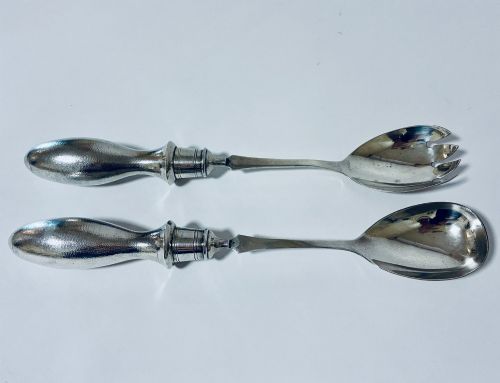
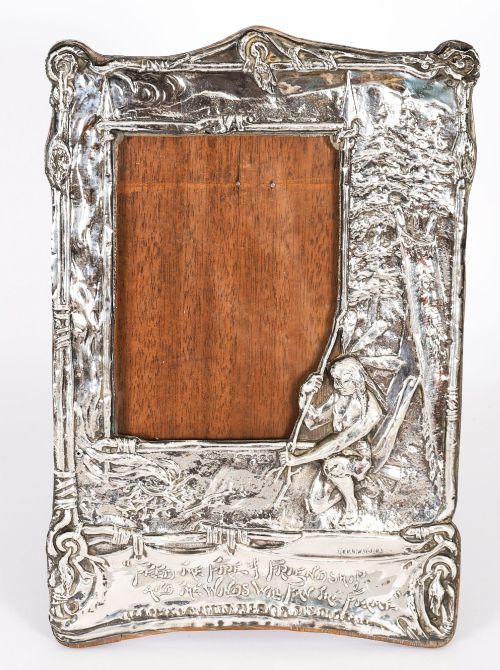
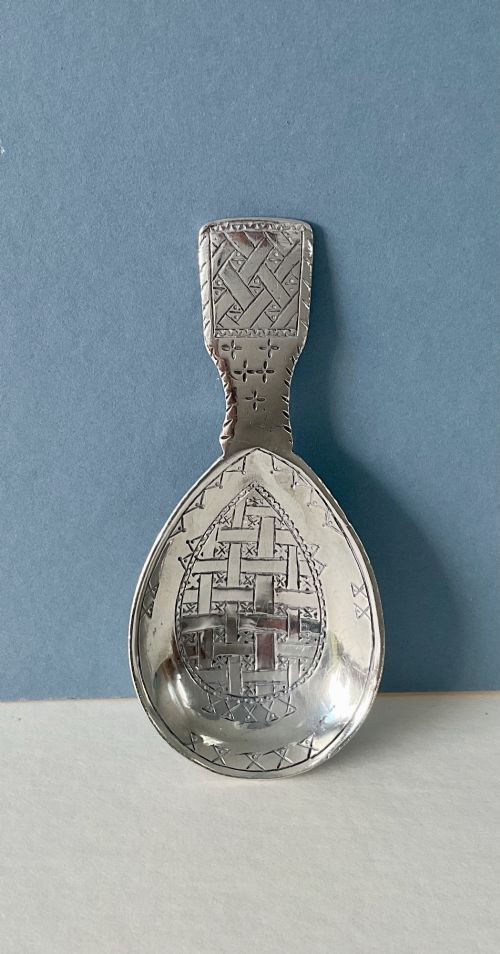
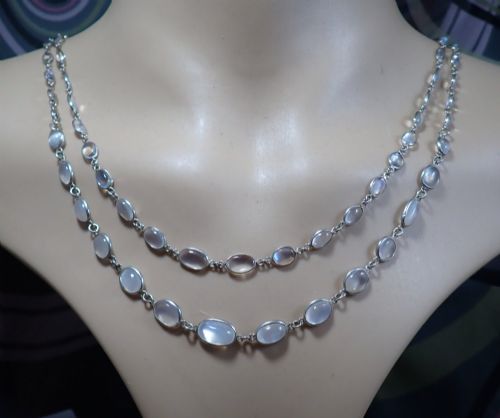
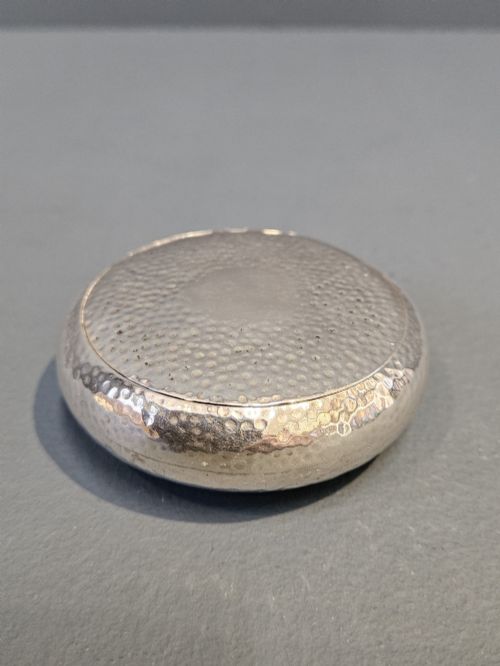
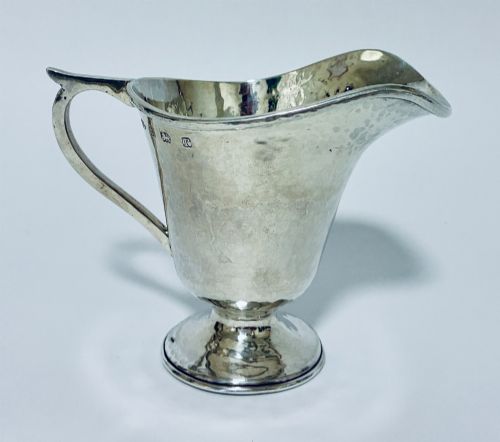
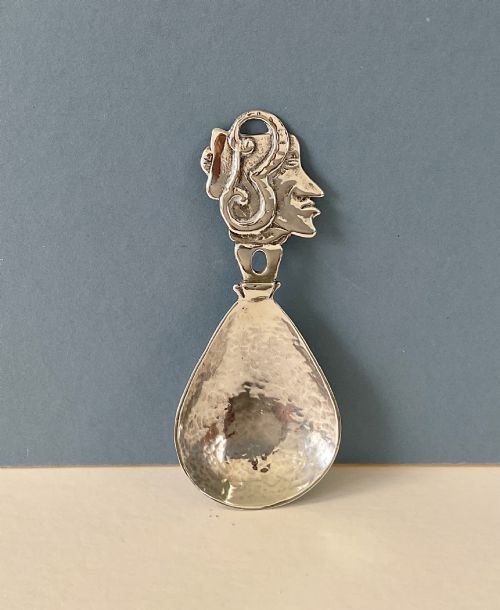
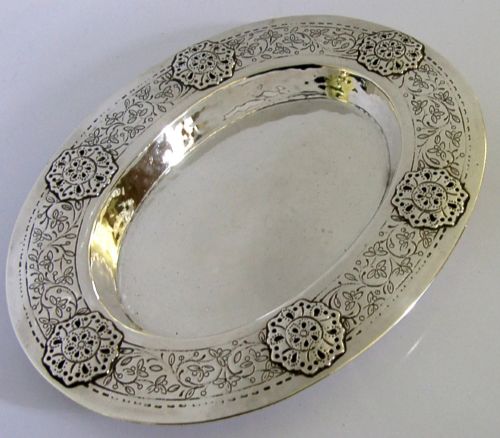
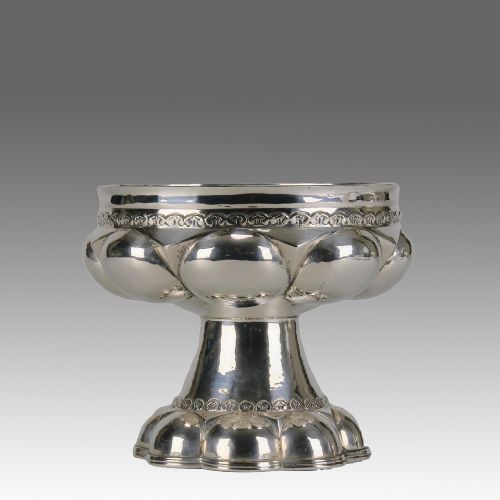
When searching for arts crafts sterling silver, collectors encounter a diverse array of domestic objects spanning from the late nineteenth century through to the mid-twentieth century. The selection ranges from functional table wares such as caddy spoons, cream jugs, quaichs and fruit bowls to personal ornaments including pendants, necklaces, brooches and napkin rings.
The objects stem predominantly from British workshops and guilds, with notable contributions from Scottish makers and continental silversmiths like Georg Jensen. Domestic serving pieces and small desk accessories appear frequently across the inventory, reflecting the movement's emphasis on hand-wrought items for everyday domestic life.
Stylistically, the pieces bridge traditional handcraft methods with early modernist design, often incorporating Celtic revival motifs or clean Scandinavian lines. Buyers find both simple utilitarian items and ornate pieces embellished with vitreous enamel or semi-precious stones.
How They Were Made
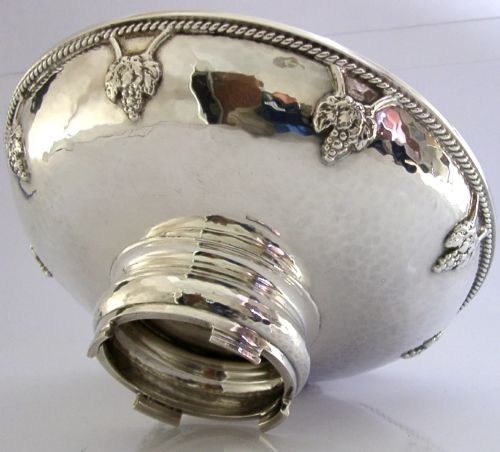
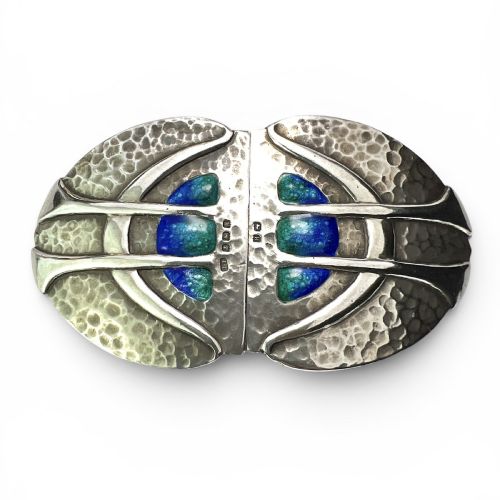
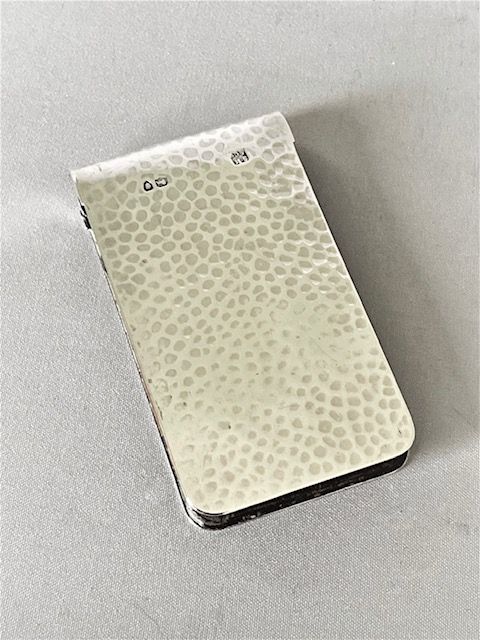
Makers utilised solid sterling silver, shaping vessels and flatware through manual raising and hammering techniques rather than machine stamping. This hand-wrought process left visible tool marks across the surface, giving each piece a distinct physical texture.
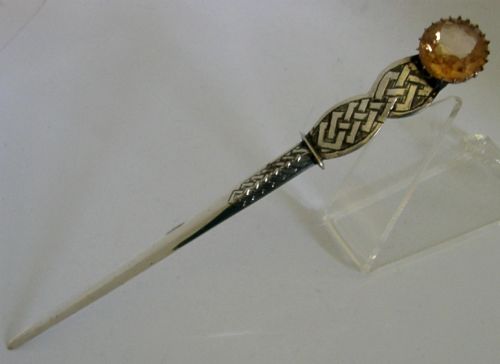
Many items incorporate decorative elements such as vitreous enamel, blister pearls, moonstones, citrines and amethysts set directly into the silver mounts. Workshops employed traditional smithing skills, with components frequently assembled by hand and finished with patination to highlight the hammered details.
Arts Crafts Sterling Silver Retail Price Guide 2026
Typical asking prices for arts crafts sterling silver among the pieces listed under this phrase on Sellingantiques today, from the lower quarter to the upper quarter. They describe what is for sale here now, not the wider market.
Listings feature items from the Edwardian era through to the 1960s, executed in sterling silver with enamel and semi-precious stones.
What Varies in Quality
The standard of execution in arts crafts sterling silver depends largely on the weight of the metal and the precision of the hand-hammered finish. Superior examples display a deliberate, even rhythm of planishing marks across the surface that enhances the form without distortion.
The integration of decorative stones and enamel work dictates the distinction between standard production items and masterworks. Pieces bearing clear hallmarks from prominent guilds or recognised designer-makers demonstrate superior craftsmanship in their structural integrity and balanced proportions.
R E Stone·Georg Jensen·A E Jones·Charles Edwards·William Hutton and Sons·Fleetwood Varley·James Fenton·Sampson Morden·Nathan and Hayes·Oliver Barker·George Hunt·Sandheim·Stanley G Morris·Burt·Cecil R Walker·Frances Charlotte Harling·W Comyns·Bernard Harrington·John Barrett
The Arts Crafts Sterling Silver Glossary
- Planishing
- The process of smoothing and shaping sheet metal with a polished hammer, leaving a distinctive pattern of small, flat facets across the surface. This technique hardens the silver while creating the characteristic texture seen on hand-wrought pieces.
- Quaich
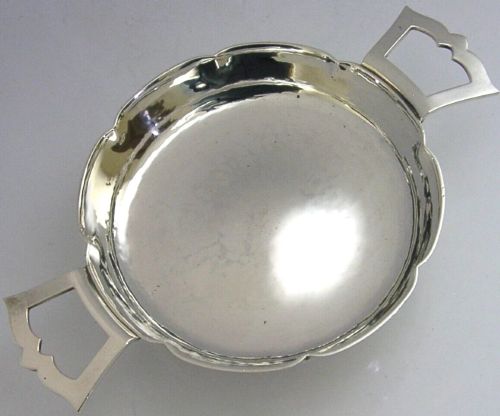
- A traditional Scottish two-handled drinking vessel, often rendered in sterling silver by arts and crafts silversmiths. These shallow bowls frequently feature flat lugs or handles.
- Cabochon
- A gemstone shaped and polished with a smooth, rounded domed top rather than faceted edges. Moonstones and amethysts are commonly cut this way in arts and crafts jewellery.
- Vitreous Enamel
- A material made by fusing powdered glass to a metallic substrate through firing at high temperatures. It provides vibrant, permanent colour to pendants, buckles and boxes.
- Tazza
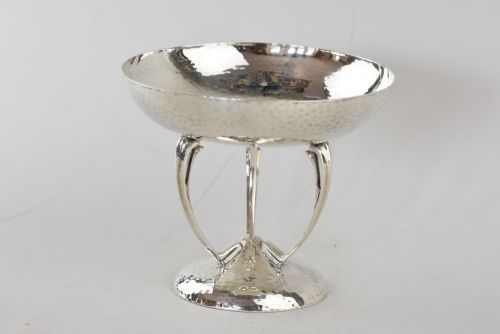
- An ornate pedestal cup or shallow bowl raised on a foot, used historically for serving fruit or small dishes. Arts and crafts examples often rest on three legs or a hammered foot.
Arts Crafts Sterling Silver: Frequently Asked Questions
What is a quaich used for?
A quaich is a traditional drinking vessel featuring two opposing handles, used historically for sharing a welcoming drink. In arts and crafts silver, these shallow bowls serve as decorative table pieces or presentation cups.
Collectors appreciate them for their connection to Scottish heritage and the heavy, hand-hammered sterling silver construction typical of the form.
How do I clean arts and crafts silver?
Cleaning requires a soft cloth and a mild silver polish designed to preserve antique finishes. Vigorous scrubbing must be avoided to protect delicate hammered textures and applied enamel.
Special care is needed around set stones like moonstones and citrines to prevent polish residue from lodging in the bezel settings.
How can I date my silver piece?
Dating relies on reading the assay office hallmarks stamped directly onto the sterling silver surface. These official marks include date letters, maker's marks and symbols indicating the town of origin.
Stylistic elements such as planished finishes and enamel work also help narrow down the period of manufacture to the early twentieth century.
Are these items made by hand?
Most pieces from this movement were shaped manually through hammering and raising techniques rather than industrial mass production. Silversmiths worked sheet silver by hand, resulting in individual tool marks on every item.
This manual approach means no two bowls, spoons or napkin rings are completely identical in their surface details.