
Arts Crafts Open Shelves
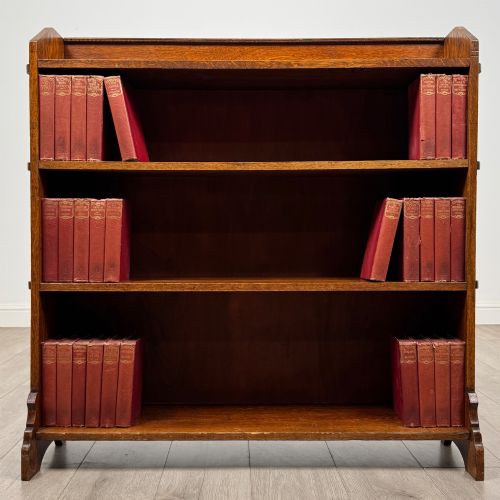
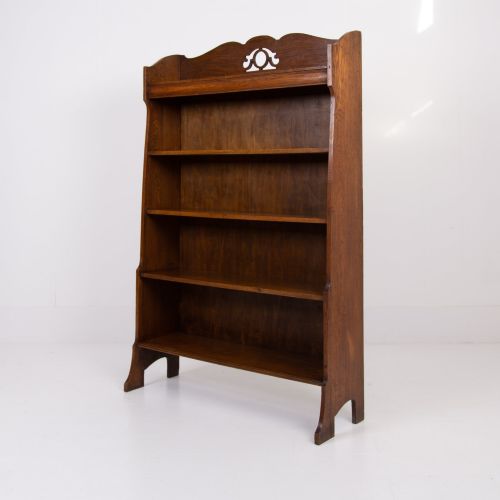
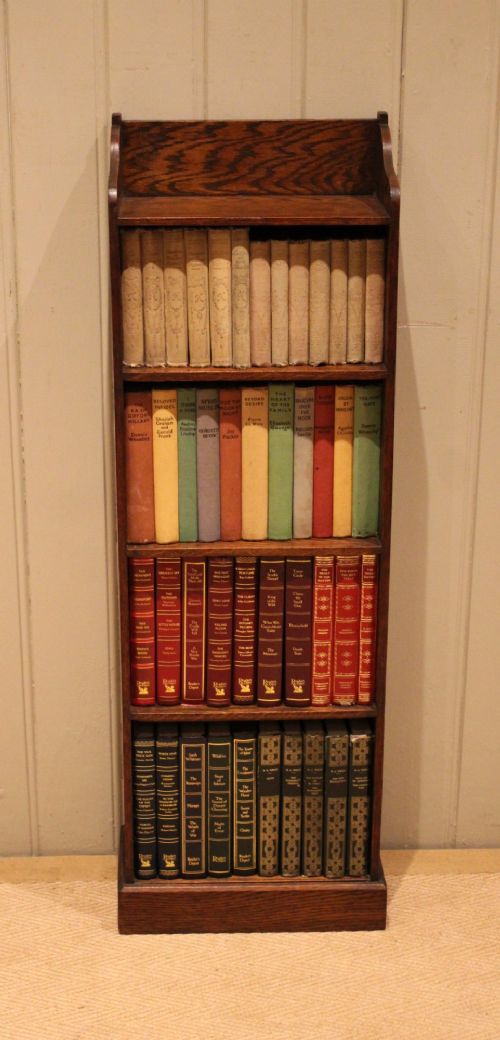
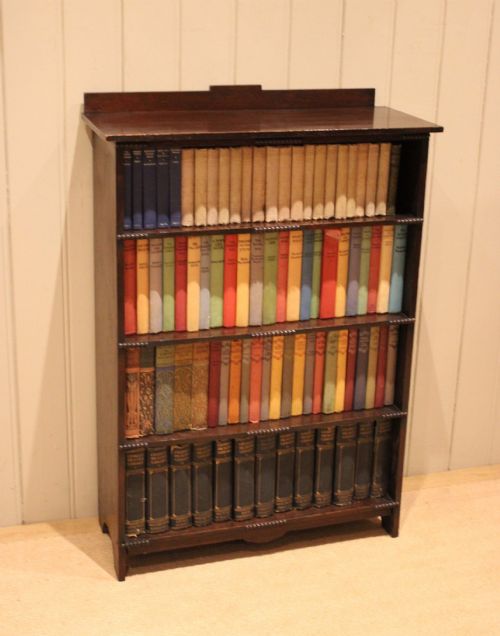
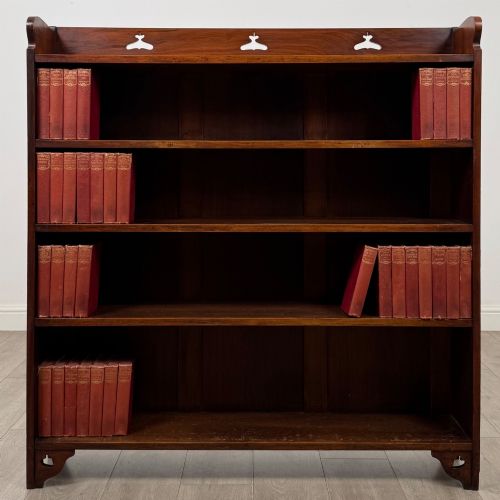
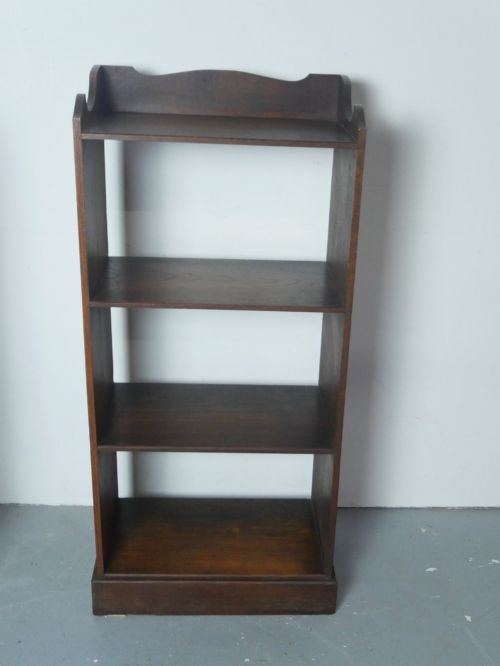
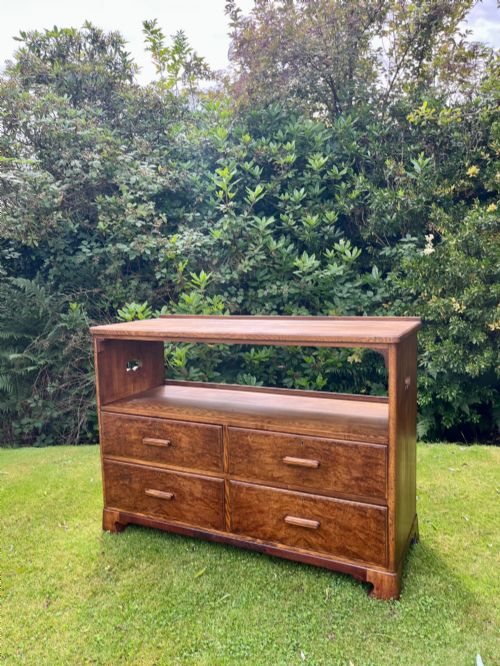
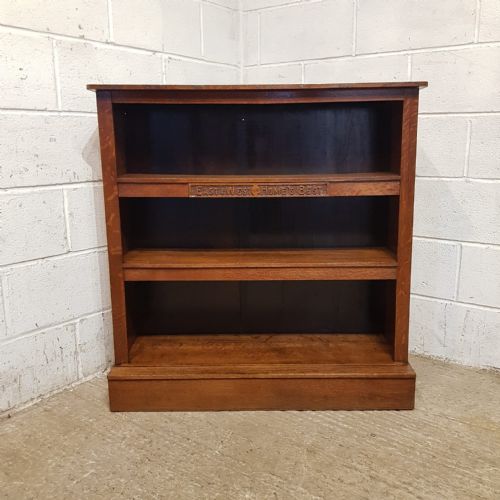
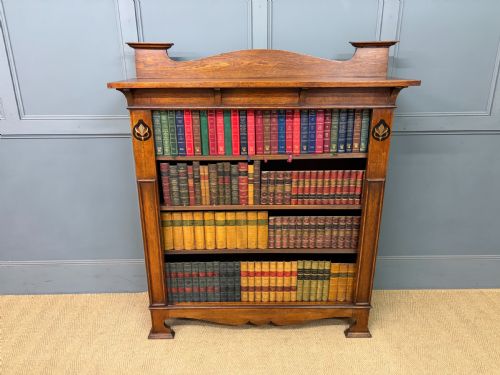
These arts crafts open shelves offer practical utility and honest joinery, designed to display volumes while showing the grain of the wood.
Arts Crafts Open Shelves
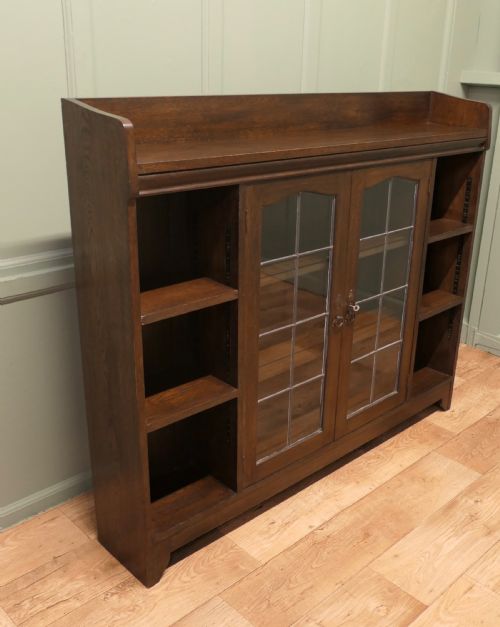
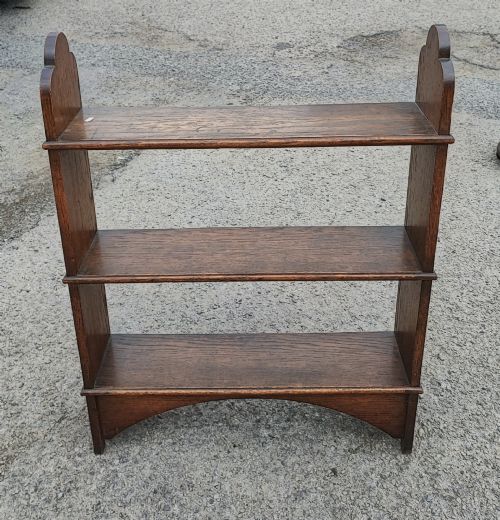
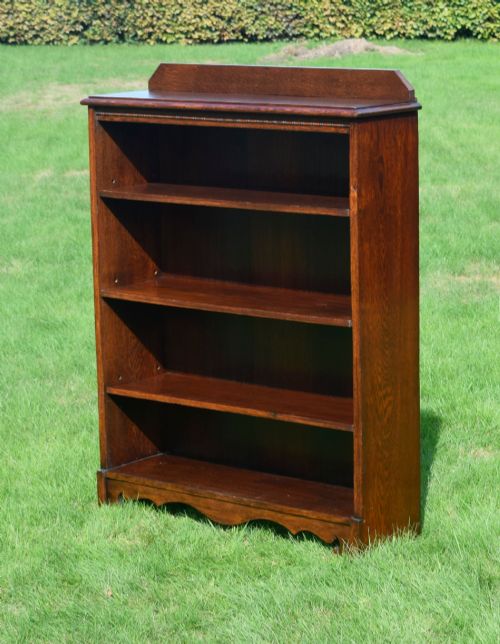
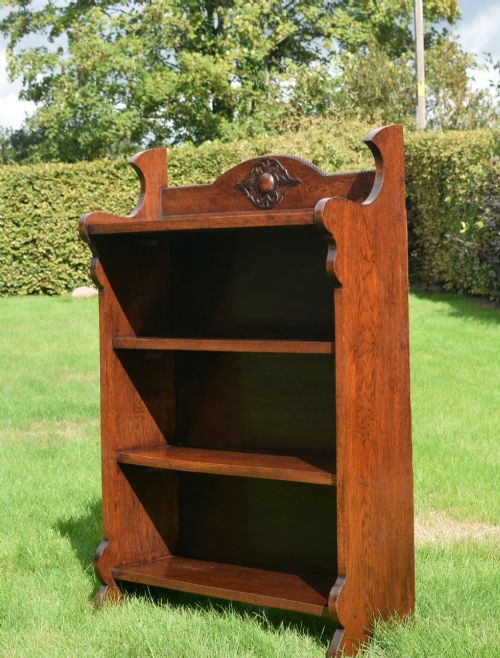
Arts crafts open shelves comprise freestanding bookcases, wall hanging shelves, and book troughs intended for domestic libraries and studies. The pieces span from the late nineteenth century through the Edwardian era into the nineteen-thirties, with production concentrated around nineteen-ten.
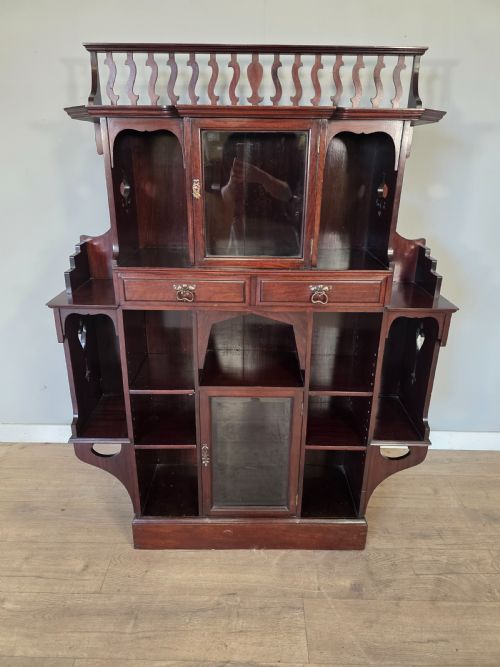
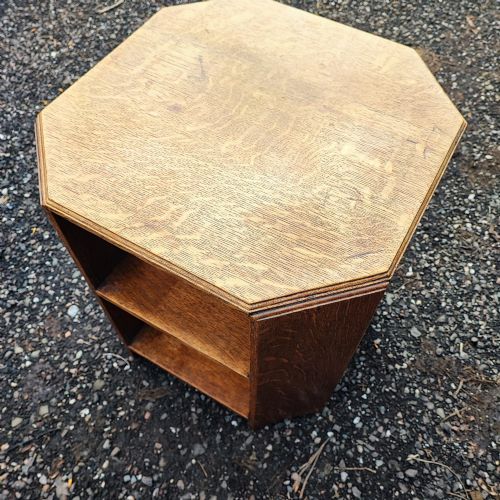
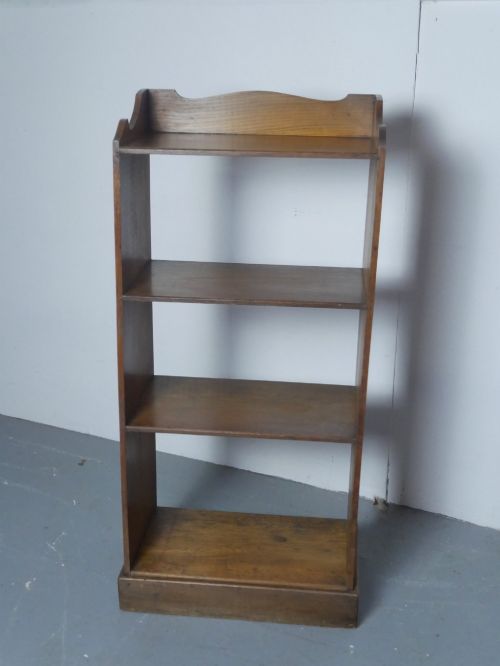
Solid oak dominates the form, though walnut, mahogany, elm, and satinwood also appear among the listings. Forms range from slim five-shelf units to small bedside cabinets and two-tier golden oak bookcases with decorative cut-outs.
Materials and construction methods
Cabinet makers utilised solid timber, particularly oak, chosen for its durable grain and finished with polished or faded surfaces. Construction often incorporates adjustable shelving and beaded edges, prioritising straightforward structural integrity over superfluous ornament.
Selected examples feature inlaid elm sections, pierced sides, or decorative cut-outs that reflect the manual skill of the workshop. Brass hardware sometimes accompanies the woodwork on associated side cabinets and bedside units.
Some slope-shelf troughs were built specifically for the fireside, keeping evening reading warm and close to hand.
Distinguishing build quality
Quality rests in the choice of timber and the proportion of the frame, where solid oak and figured walnut command attention over simpler utility boards. The crispness of cut-out details and the provision of height-adjustable shelves signal finer workshop execution.
Attribution to documented makers or specific retailers elevates an example, as seen in pieces associated with Heal's, Liberty and Co., Whytock and Reid, or E.A. Taylor for Wylie and Lochhead.
Liberty and Co.·Whytock and Reid·Wylie and Lochhead·E.A. Taylor
The Arts Crafts Open Shelves Glossary
- Golden oak
- A warm, honey-toned finish applied to oak timber. This tone appears frequently in pieces dating from nineteen hundred and the Edwardian period.
- Slope-shelf
- A bookcase design featuring an inclined surface for holding volumes open or at an angle. These typically serve fireside settings.
- Beaded edge
- A narrow rounded moulding run along the border of a shelf or upright. It provides a subtle decorative accent to otherwise plain boards.
- Pierced side
- An openwork pattern cut through the vertical panels of a bookcase. This technique lightens the visual weight of the furniture.
- Book trough
- A low, open receptacle designed to hold books upright on a table or floor. They frequently employ slope-shelf configurations.
Arts Crafts Open Shelves: Frequently Asked Questions
How do I date these shelves?
Dating relies on timber selection, style indicators, and recorded periods ranging from eighteen-eighty to nineteen-thirty. Edwardian pieces and items from nineteen-ten show characteristic simplicity of line.
Makers' marks or attributions also help narrow the decade of production for specific bookcases.
Are the shelves adjustable?
Many examples include height-adjustable shelves to accommodate varying book sizes. This feature appears in both nineteen-hundred and later nineteenth-century pieces.
Fixed shelving remains common in smaller bedside and wall-hanging formats.
What woods were used?
Oak is the primary material, found in solid form and golden tones. Walnut, mahogany, elm, and satinwood appear in specific pieces.
Secondary woods support internal structures where visible timber is not required.
Where should I place them?
Freestanding bookcases and side cabinets suit studies, living rooms, and bedrooms. Wall hanging shelves provide storage where floor space is limited.
Fireside book troughs sit neatly beside seating areas for immediate reading access.