

Arts Crafts Display Stand
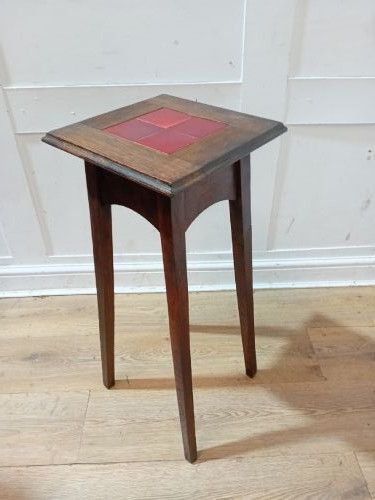
An arts crafts display stand brings functional form into a room, offering sturdy oak and mahogany timber for books or plants.
Arts Crafts Display Stand
When you search for an arts crafts display stand, you encounter pieces designed primarily to exhibit items or hold volumes, spanning plant stands, side tables, and open bookcases. These objects date from the nineteenth century through the early twentieth century, reflecting periods such as the Edwardian era and the 1920s.
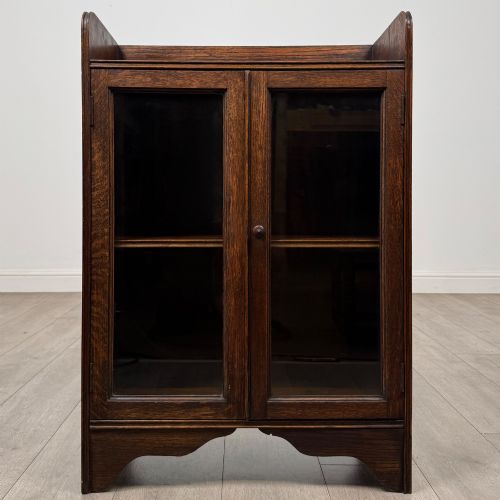
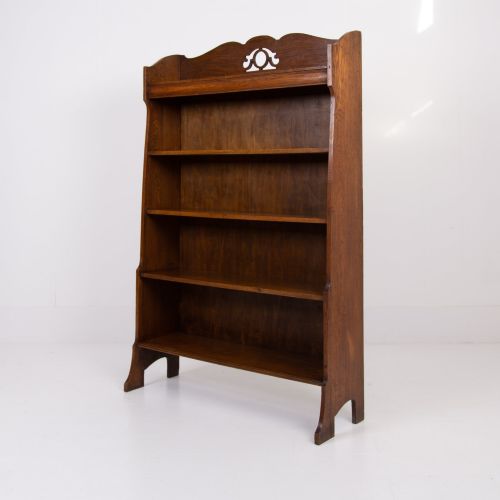
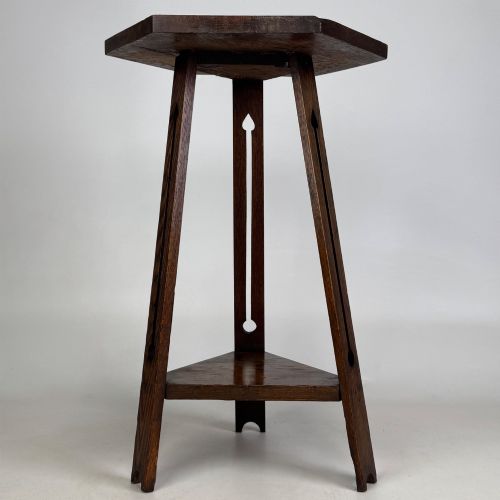
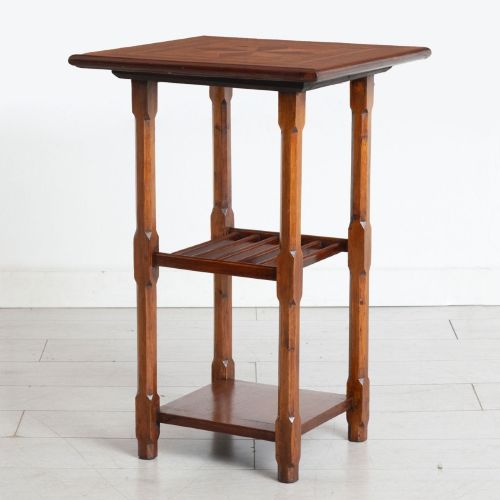
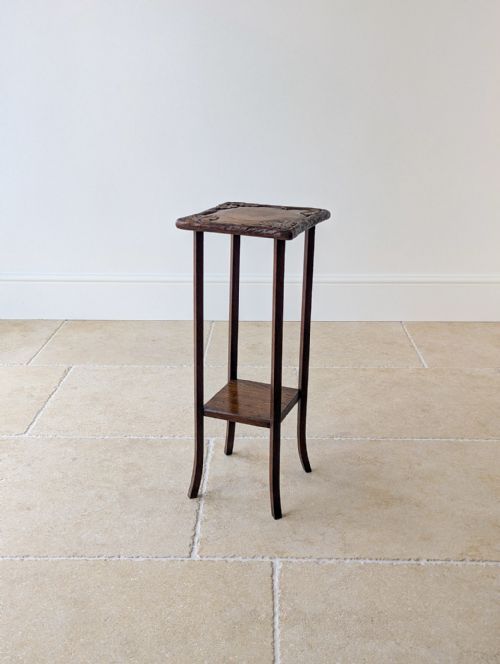
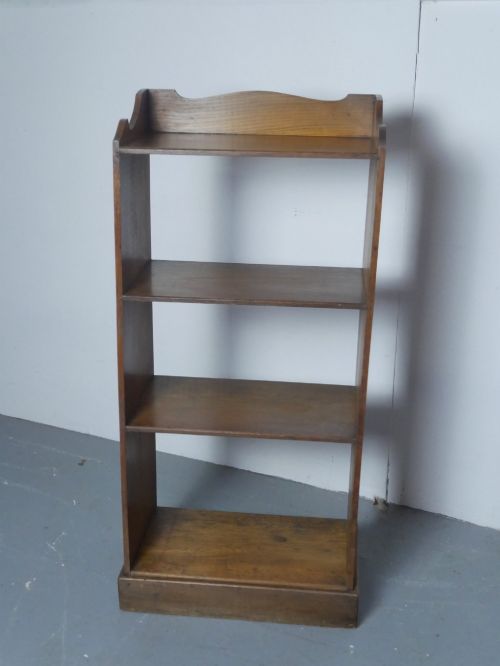
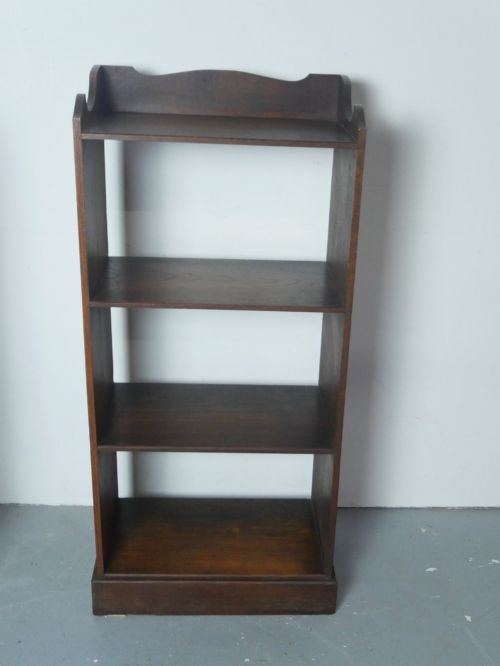
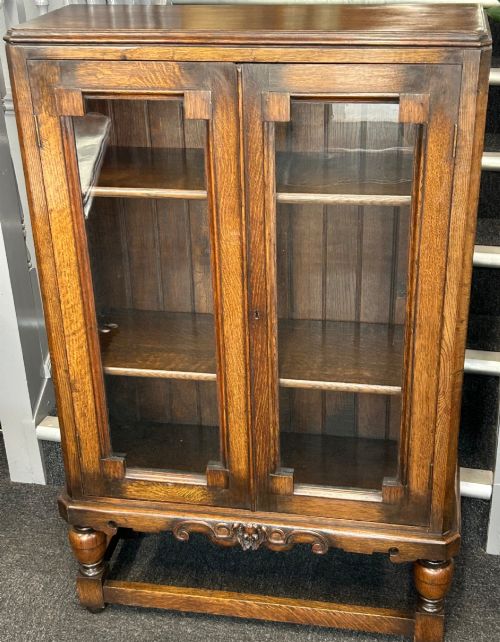
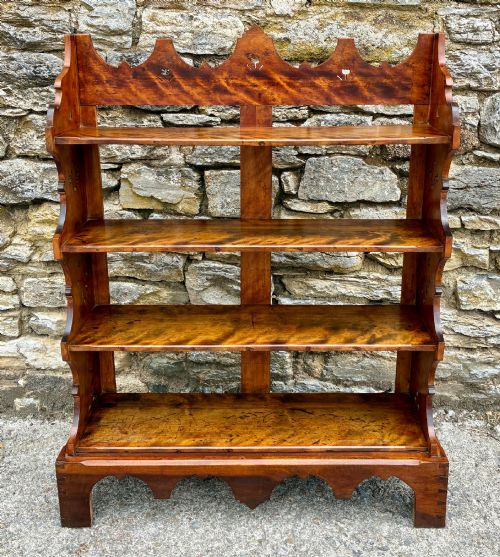
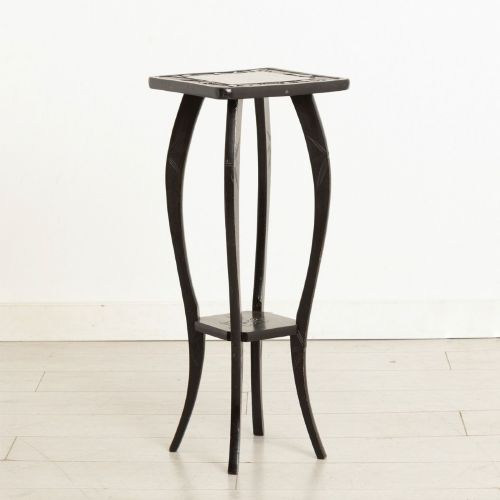
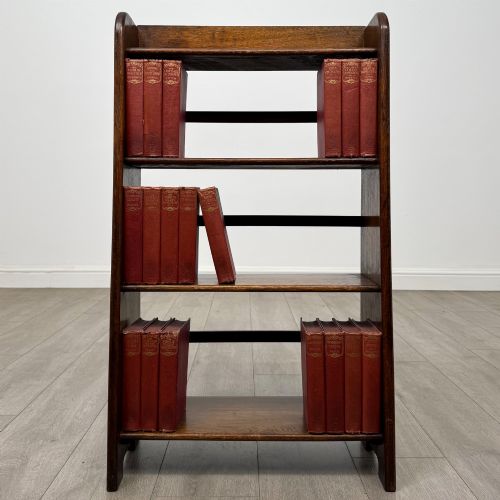
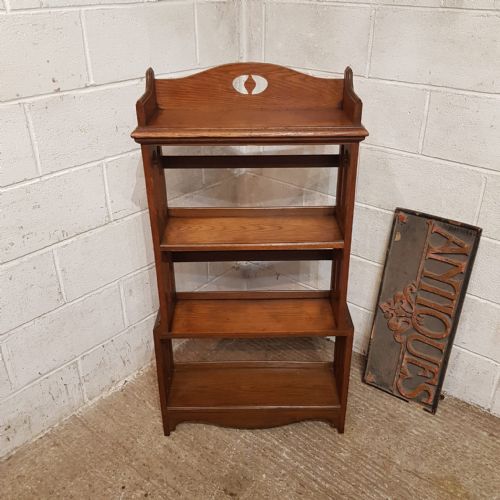
The version you are most likely to meet on this page is constructed from oak, often taking the form of a low open bookcase, a two-tier plant stand, or a side table. Makers applied simple lines and occasional decorative cut-outs, aligning with the ethos of the movement.
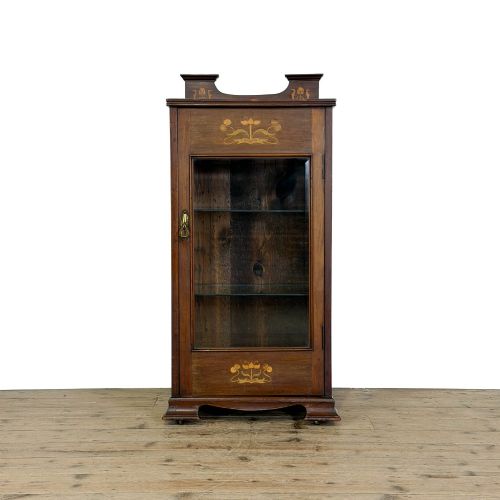
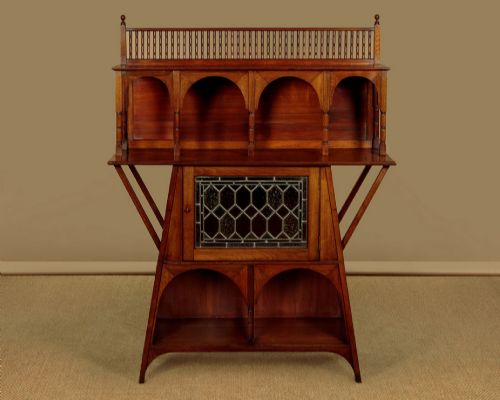
Forms extend beyond plain shelving to include side cabinets, hall seats, magazine stands, and specialised display tables. These variations served domestic needs for storage and presentation in period interiors.
Materials and construction methods
Makers relied heavily on solid oak and mahogany as primary timbers, occasionally turning to walnut, satinwood, beech, and ebonised wood. These woods provided the structural integrity needed for standing bookcases and multi-tiered plant stands.
Surface decoration frequently involved wood inlay, mother-of-pearl detailing, and brass fittings. Glazed doors appeared on cabinets, whilst hand-carved elements and lacquered finishes distinguished specific aesthetic movement pieces.
Some stands doubled as domestic stages for ferns that bravely survived Victorian drawing-room coal gas.
Assessing quality in construction and design
Quality rests in the selection of timber and the precision of the joinery rather than surface ornamentation alone. Solid oak examples with clean lines show greater structural honesty than heavily disguised pieces.
Provenance and workshop origin elevate certain items, particularly when associated with known makers or retailers. The integration of thoughtful decorative cut-outs or subtle inlay separates standard utility furniture from finer artistic output.
Liberty & Co.·Liberty of London·Lambs of Manchester·Shapland & Petter
The Arts Crafts Display Stand Glossary
- Oak
- A durable hardwood commonly utilised for furniture and bookcases of this period. Its pronounced grain gives character to plain structural designs.
- Jardiniere stand
- A tall pedestal or table designed to hold a plant pot or flower arrangement. These pieces often feature multiple tiers for display.
- Occasional table
- A small, movable table used for various domestic purposes. They appear frequently in multi-tier formats.
- Inlay
- A technique where contrasting materials are inserted into the wood surface to form patterns. Satinwood and mother-of-pearl were often employed for this purpose.
Arts Crafts Display Stand: Frequently Asked Questions
What is an arts crafts display stand used for?
These pieces functioned primarily to hold household plants, display decorative objects, or organise small collections of books within domestic spaces.
Their sturdy construction allowed them to serve as stable platforms in hallways, reception rooms, and parlours.
How do I identify an Edwardian piece?
Edwardian items typically display lighter proportions than their Victorian predecessors, often featuring straightforward oak construction without excessive ornamentation.
Look for honest joinery and practical forms intended for everyday middle-class homes.
Where should I place a plant stand?
Plant stands and jardiniere tables work well in corners or near windows where natural light supports greenery. Two-tier versions also accommodate small decorative items on the lower shelf.
Ensure the floor surface is even to keep taller pedestals stable.
What defines the movement's style?
The aesthetic emphasises craftsmanship, visible construction methods, and materials that highlight natural wood grain over applied decoration.
Pieces often reject industrial excess in favour of simpler, functional geometries.