

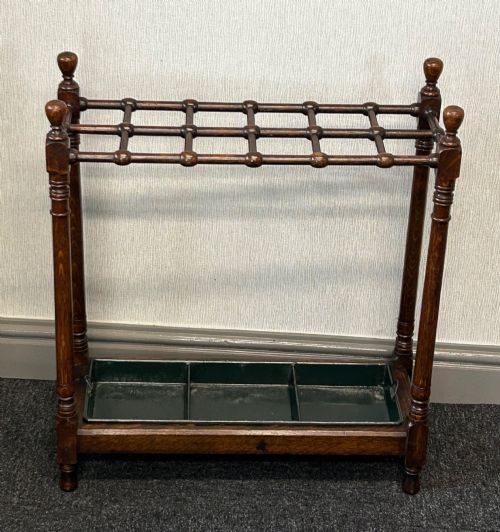
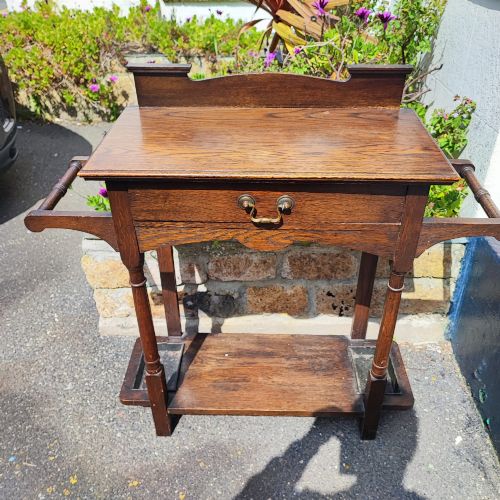


Arts and Crafts Umbrella Holder
These arts and crafts umbrella holder pieces are functional hall furnishings built to keep wet weather gear tidy, uniting utility with honest craft.
Arts and Crafts Umbrella Holder
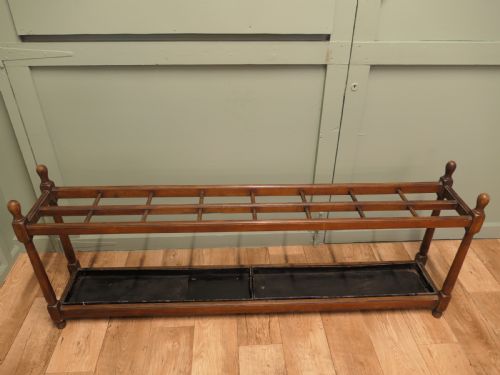
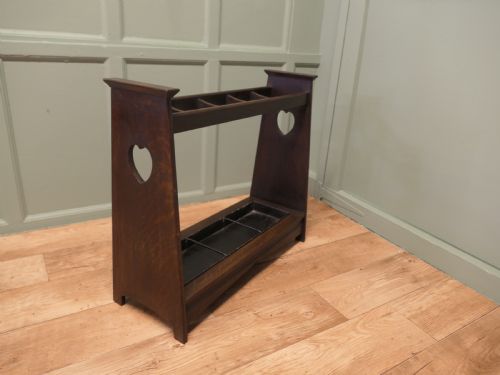
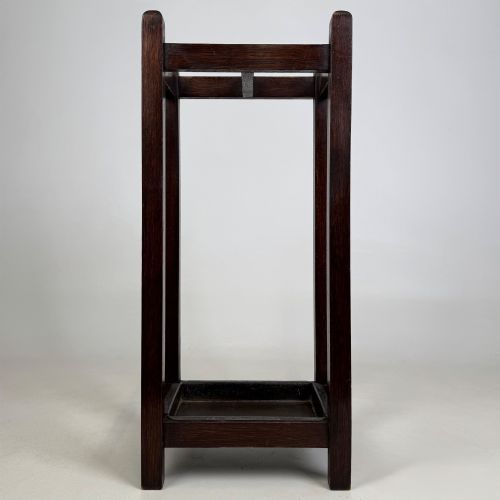
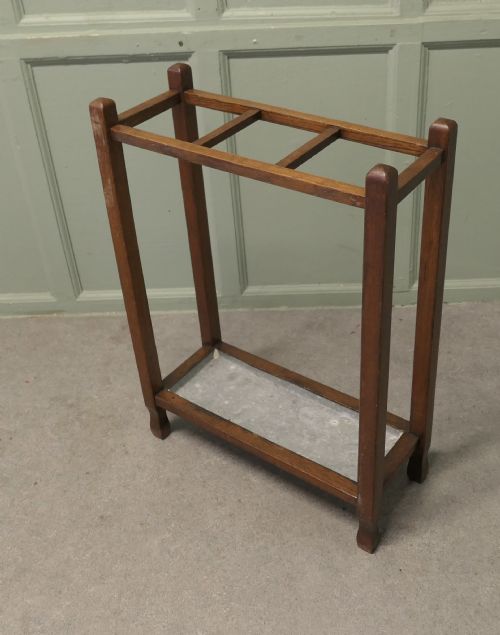
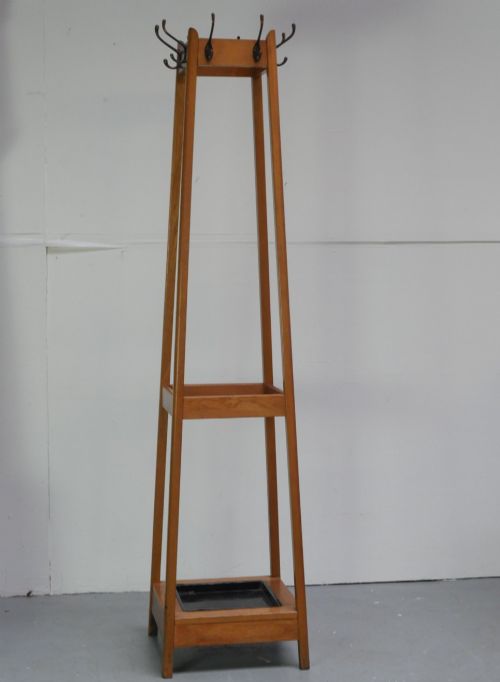
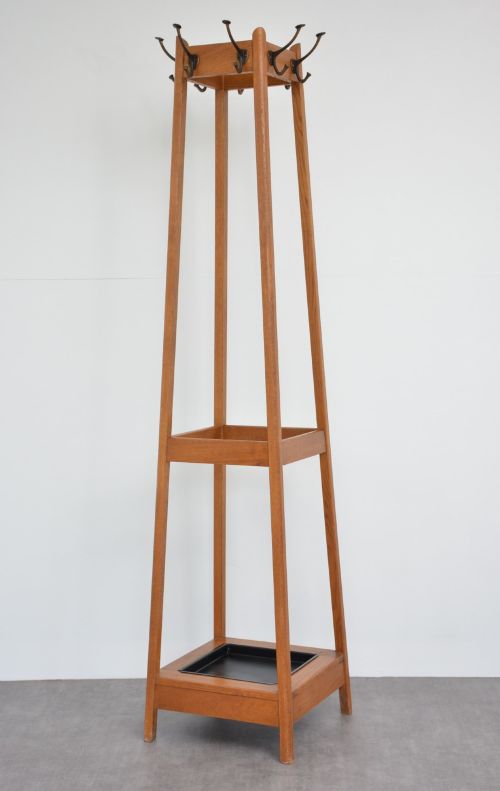
When you search for arts and crafts umbrella holder designs, you encounter hall stands, stick stands, and combined coat racks spanning the late nineteenth and early twentieth centuries. Oak remains the predominant timber, shaped into sturdy frames designed for the entrance hall of domestic properties.
Makers produced these umbrella holders in various configurations, including corner models and freestanding rectangular units. Alongside timber examples, metalwork versions appear frequently, constructed from copper, brass, and cast iron.
Materials and construction methods
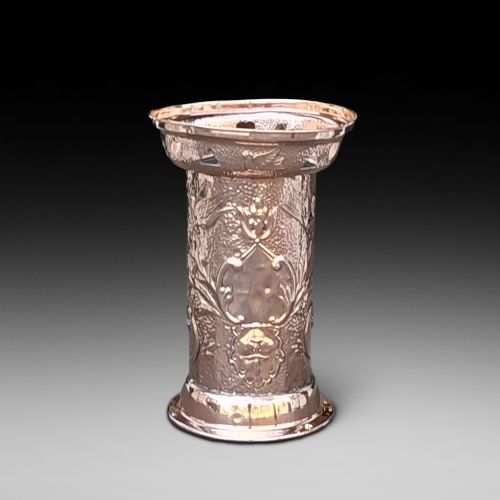
Makers utilised solid oak, mahogany, and maple for wooden frames, often pairing them with metal drip trays and mounts. Copper and brass panels provide reflective surfaces, sometimes decorated with repoussé work or hand-hammered textures characteristic of the movement.
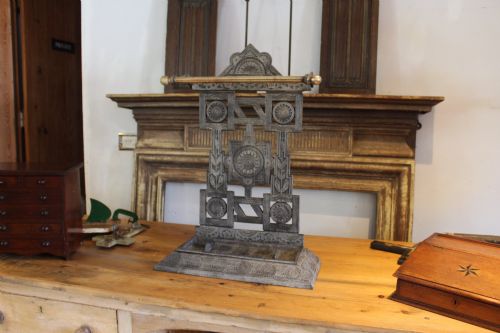
Cast iron and bronze elements offer structural strength and heavy weight to steady wet walking sticks and umbrellas. Studio pottery and faience inserts, such as Burmantofts ceramics, incorporate glazed earthenware sections to hold water.
Listings feature oak, copper, brass, iron, and ceramic materials across Victorian, Edwardian, and Art Nouveau periods.
Distinctions in standard and design
Quality rests upon the integrity of the joinery and the gauge of the metalwork employed in the construction. Examples bearing documented maker attribution or retail stamps display superior finishing compared to anonymous workshop output.
The sophistication of surface decoration, from hand-beaten copper panels to integrated ceramic liners, separates standard utility items from ambitious decorative pieces.
Liberty Design·Thomas Jeckyll·Heals of London·James Shoolbred·Burmantofts Faience·R.A. Lister
The Arts and Crafts Umbrella Holder Glossary
- Repoussé
- A metalworking technique where the metal is hammered from the reverse side to form a raised design in relief on the front. This method appears on many copper umbrella holders.
- Faience
- Toned tin-glazed earthenware used for pottery inserts and tile panels within hall furniture. Burmantofts produced notable examples of this ceramic ware.
- Hall stand
- A piece of entrance furniture combining coat hooks, a mirror, and a base section for umbrellas and sticks. These items organise hallway garments and accessories.
- Drip tray
- A metal base insert designed to catch moisture from wet umbrellas and protect surrounding timber flooring. They are commonly made from brass, copper, or galvanized iron.
- Arts and Crafts
- A design movement spanning the late Victorian and Edwardian periods emphasising handcraftsmanship and simple forms. It rejected mass production in favour of traditional construction.
Arts and Crafts Umbrella Holder: Frequently Asked Questions
What materials were used?
These holders incorporate solid oak, mahogany, and maple alongside metals such as copper, brass, cast iron, and bronze.
Ceramic and faience pottery sections also appear as water reservoirs within the frames.
How do I date them?
Dating relies on stylistic markers associated with Victorian, Edwardian, Art Nouveau, and Arts and Crafts design periods.
Construction details, timber patination, and maker stamps help narrow the production era between eighteen-eighty and nineteen-twenty.
Where were they placed?
These pieces sat in the reception hall or entranceway of domestic houses to receive wet umbrellas and walking sticks upon entry.
They often formed part of a larger hall furniture arrangement that included coat hooks and mirrors.
How do I care for the metal?
Copper and brass components benefit from gentle dusting to preserve their natural surface patination accumulated over decades of use.
Harsh chemical polishes should be avoided to protect the original hammered finishes.