




Arts and Crafts Ring
These arts and crafts ring selections bring together handcrafted metalwork and cabochon stones from the early twentieth century.
Arts and Crafts Ring
An arts and crafts ring embodies the hand-wrought ideals of a design movement that valued visible craft over factory polish. When you search for this phrase, you meet finger ornaments fashioned from sterling silver, gold, and pewter, often set with untreated gemstones.
The pieces on this page span several decades, reaching from Victorian precursors through Edwardian iterations into the nineteen-thirties. Alongside finger rings, the broader inventory contains silver napkin rings and jewellery sets that share the same design vocabulary.
Makers such as Liberty and Co and individual silversmiths shaped these objects with a distinct preference for organic motifs and honest construction. Each piece demonstrates how jewellers of the period adapted revivalist ideas into modern wearable forms.
How They Were Made
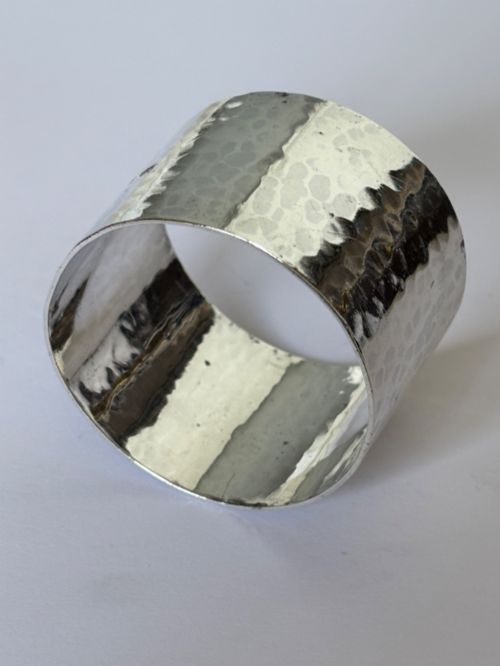
Metalsmiths relied on sterling silver, gold, pewter, and copper, shaping them by hand rather than casting them in mass moulds. Planishing hammers left subtle, rhythmic facets across the surfaces of bowls and napkin rings, showing the direct touch of the artisan.
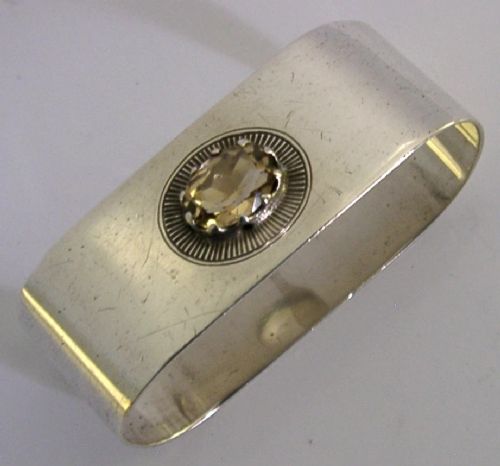
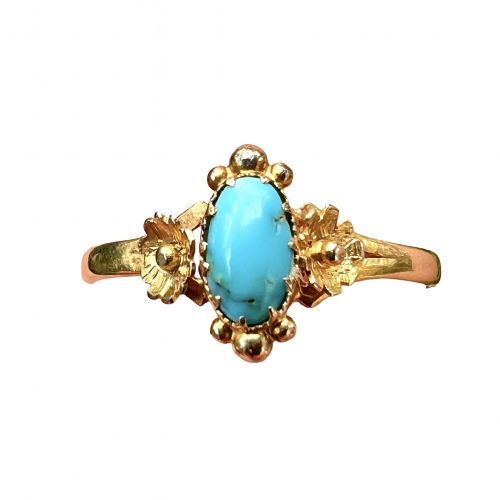
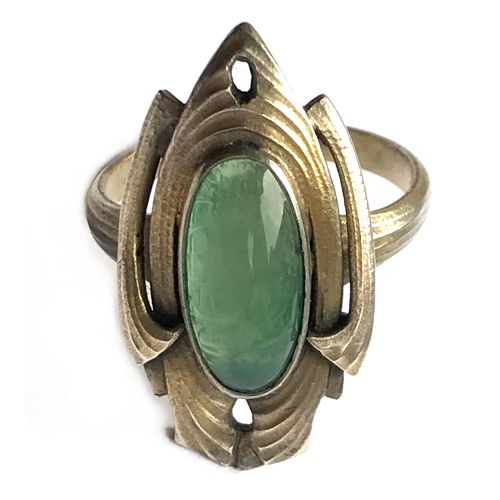
Stones like moonstone, turquoise, citrine, and quartz were left as cabochons with smooth, rounded domes rather than faceted brilliance. Enamel work added vibrant colour to silver grounds, creating contrast against the grey metal.
What Varies In Quality
The distinction between standard commercial output and workshop pieces lies in the crispness of the hand-beaten texture and the quality of the stone setting. A superior ring shows purposeful planishing marks that retain their depth without looking mechanical or accidental.
Makers identified with Guild workshops or specific designers achieved a balance of proportion where the metalwork frames the mineral specimen without dominating it. Stones selected for better pieces display distinct optical phenomena, such as the floating light within a sugarloaf moonstone.
Albert Edward Jones·Liberty And Co·Archibald Knox·Guild Of Handicraft·Zoltan White·MB Bryant And Co
The Arts and Crafts Ring Glossary
- Cabochon
- A gemstone shaped and polished with a rounded dome rather than cut with flat facets. This style was favoured for moonstones and turquoises in early twentieth-century jewellery.
- Planished
- A metal surface beaten with a small hammer to create a textured finish of shallow facets. This technique proves human labour and gives the silver a tactile depth.
- Parure
- A matched set of jewellery designed to be worn together, such as earrings, a ring, and a necklace. These suites share materials and decorative motifs.
- Pewter
- A malleable alloy of tin mixed with copper and antimony, used for napkin rings and decorative vessels. Tudric is a well-known trade name for this material.
- Citrine
- A transparent yellow variety of quartz used as a gemstone in silver settings. It provides warm tones that complement hammered white metal.
Arts and Crafts Ring: Frequently Asked Questions
How do I spot genuine arts and crafts jewellery?
Look for visible hammer marks, bezel settings that hold stones securely without modern claws, and designs inspired by nature. These pieces often carry clear hallmarks for Birmingham or London.
Maker attribution relies on registered sponsor marks stamped into the metal alongside standard assay office symbols.
What stones appear most often in these rings?
Moonstones, turquoise, and citrine dominate the surviving inventory from this design period. Jewellers selected these minerals for their natural colour and ability to be cut as smooth cabochons.
Translucent quartz and chalcedony also appear, occasionally paired with enamel accents.
Are these rings suitable for daily wear?
While sturdily constructed in solid silver or gold, antique rings require sensible care during physical tasks. Softer stones like turquoise and moonstone demand protection from hard impacts and harsh chemicals.
Prongs and bezels benefit from occasional checks by a jeweller to ensure stones remain firmly seated.
How do these rings differ from art nouveau pieces?
Arts and crafts design emphasises honest construction, hand-wrought textures, and simple geometric or medieval-inspired forms. Art nouveau leans heavily into whiplash lines and fluid, asymmetrical plant motifs.
Both movements overlapped chronologically, leading some workshops to blend these aesthetic approaches.