
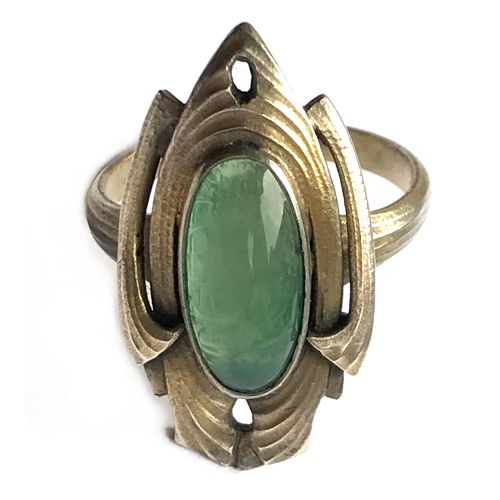


Oval Green Stone Ring
An oval green stone ring brings together rich verdant colour and historic craftsmanship, spanning decades of fine jewellery design.
Oval Green Stone Ring
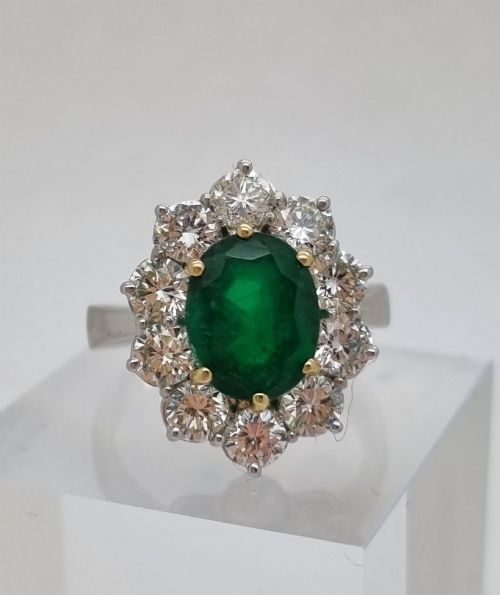
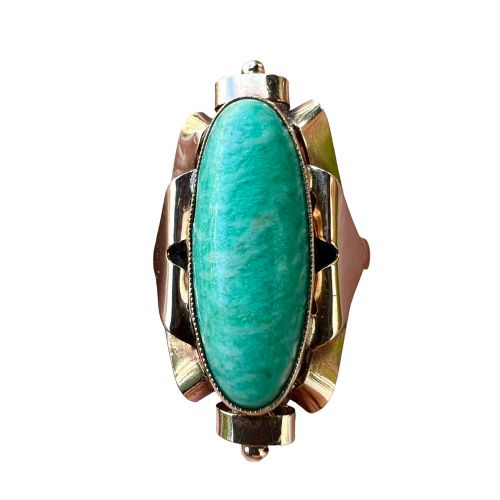
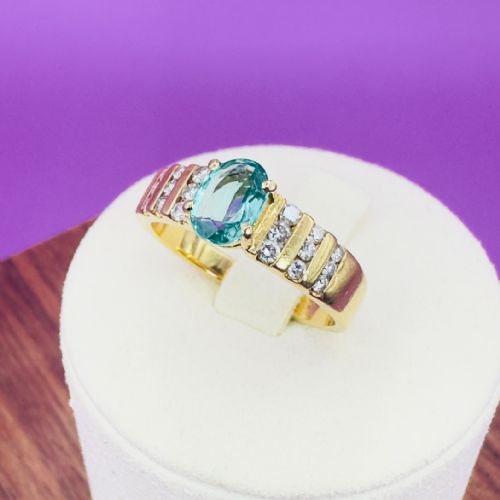
An oval green stone ring is a finger ornament featuring a central green gem shaped in a smooth curve, often surrounded by smaller diamonds or set alone on a precious metal band. When searching for an oval green stone ring, buyers encounter pieces from distinct historical eras including Edwardian, Art Nouveau, and Art Deco periods, alongside mid-century designs. These range from substantial cocktail rings to delicate cluster settings.
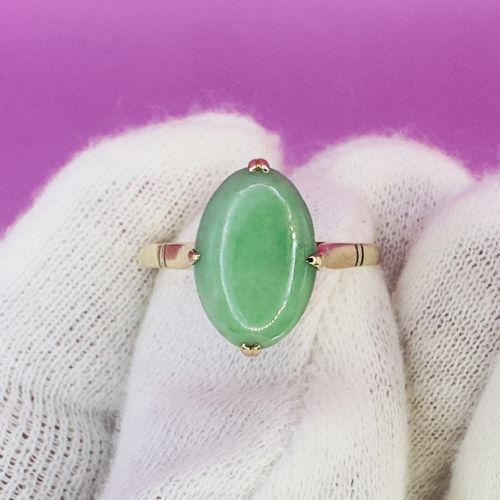
The stones themselves vary considerably across the selection, encompassing emerald, jade, jadeite, aventurine, and chalcedony. Settings deploy yellow gold, white gold, silver gilt, and platinum to support the central green mineral. Cluster configurations dominate the forms, accompanied by solitaire and halo arrangements.
How they were made
Metals such as 18ct gold, 9ct yellow gold, platinum, and silver gilt form the structural bands and settings of these pieces. Goldsmiths utilised these robust materials to securely hold softer stones or mount heavy cluster formations.
Gemstones receive specific cuts tailored to their material properties, notably cabochon shaping for jade and faceted cutting for emeralds and diamonds. Jewellers arranged supporting diamonds around central green stones in cluster and halo layouts using traditional claw or bezel techniques.
Listings feature gold, platinum, and silver gilt alongside emerald, jade, jadeite, aventurine, and chalcedony across several decades.
What varies in quality
The distinction between tiers rests upon the choice of central material and the complexity of the surrounding work, such as the carat weight and clarity of accompanying diamonds. Heavier gold or platinum mounts and substantial gemstone sizes elevate the significance of a piece.
Artistry in the setting execution and the depth of colour in the green stone define the higher end of the range. Period-specific detailing, from Art Deco symmetry to Art Nouveau fluid lines, adds design merit.
The Oval Green Stone Ring Glossary
- Cabochon
- A gemstone shaped and polished with a smooth, rounded surface rather than faceted. This style is frequently seen on jade and other opaque green stones.
- Cluster ring
- A ring design featuring a prominent central stone surrounded by a cluster of smaller gems, usually diamonds. This arrangement maximises visual impact on the finger.
- Platinum
- A dense, durable, and naturally white precious metal used in fine jewellery manufacture. It provides secure settings for high-value gemstones.
- Silver gilt
- Silver that has been coated with a thin layer of gold. This technique offers the appearance of solid gold while utilising a silver base.
Oval Green Stone Ring: Frequently Asked Questions
What stones are used in these rings?
The green stones include emerald, jade, jadeite, aventurine, and chalcedony. Many pieces also incorporate diamonds alongside the primary green gem.
Settings vary from translucent quartz-based minerals to crystalline emeralds and dense jadeite.
How do I identify the period?
Periods are identified through specific design motifs and material combinations, such as geometric platinum settings for Art Deco or fluid silver gilt lines for Art Nouveau. Hallmarks and metal standards also assist in dating.
Edwardian pieces often use lighter gold and platinum filigree, while mid-century examples show bolder cluster formations.
Are these rings suitable for daily wear?
Suitability for daily wear depends on the hardness of the specific green stone and the security of the setting. Harder minerals like jade and platinum-mounted diamonds withstand frequent use better than softer stones.
Antique and vintage pieces benefit from careful handling and occasional professional inspection of the claws.
What is a cluster ring?
A cluster ring groups multiple smaller stones tightly around a larger central gem to create a larger visual presence. In these pieces, diamonds typically encircle an oval green centre stone.
This configuration was particularly popular during the Edwardian and Art Deco eras.