
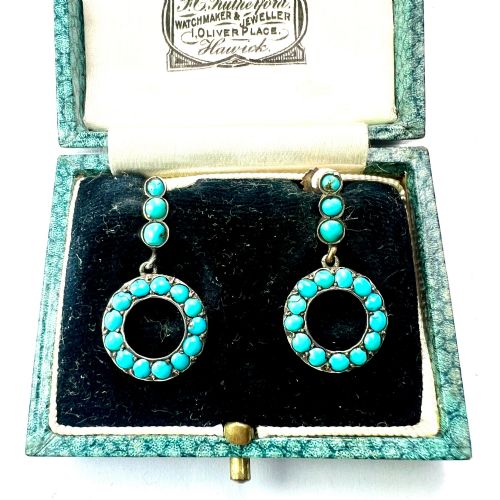
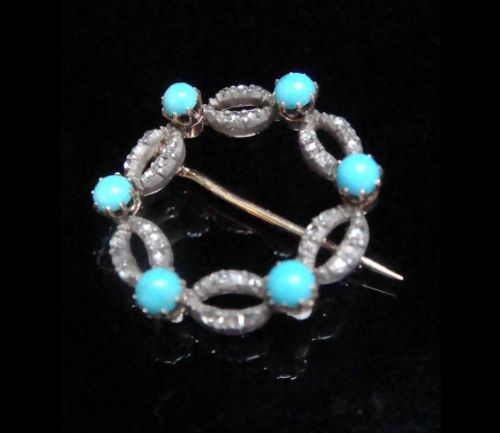
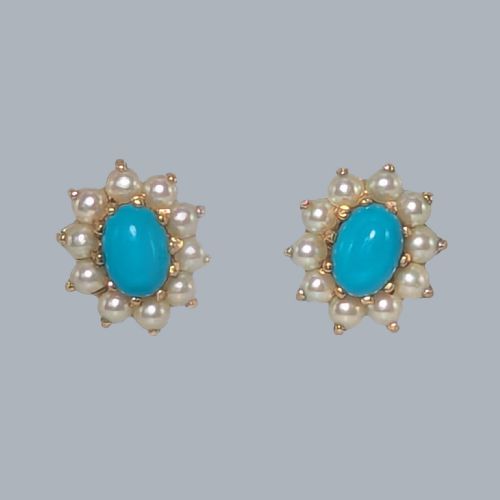


Antique Gold Turquoise Cluster
These antique gold turquoise cluster pieces combine bright robin-egg blue stones with warm gold, offering vibrant colour for daily wear.
Antique Gold Turquoise Cluster
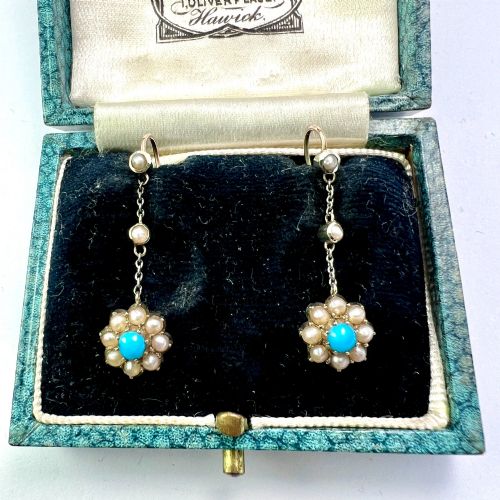
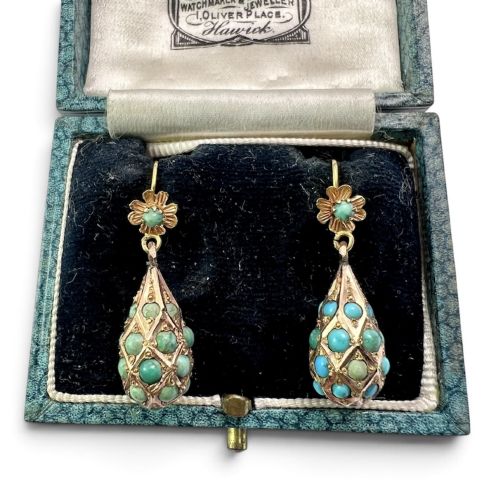
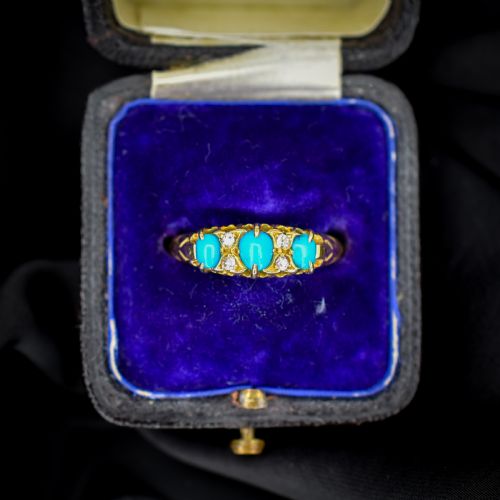
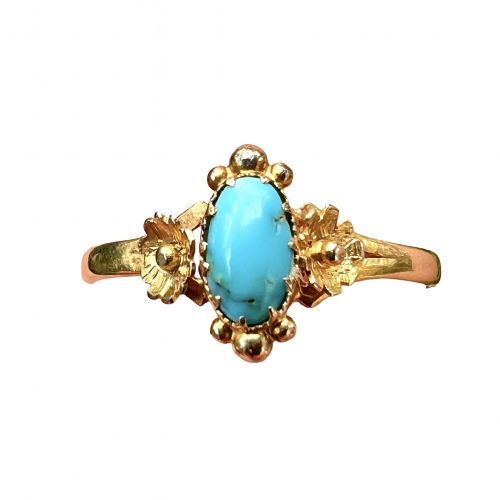
An antique gold turquoise cluster brings together rings, earrings, pendants, brooches, and full jewellery suites featuring central turquoise stones surrounded by accents. The pieces span Georgian, Victorian, Edwardian, and mid-century periods, showing great variety in form from flower motifs to navette designs.
The most common examples on this page are Victorian and Edwardian rings and earrings. These pieces frequently pair turquoise with pearls, diamonds, and gold mounts ranging from nine to eighteen carat.
Buyers also encounter distinctive Arts and Crafts pendants and multi-piece parures. Each item showcases the enduring appeal of turquoise set against warm yellow gold and silver.
How they were made
Goldsmiths worked with nine carat, fifteen carat, and eighteen carat yellow gold, often combining gold with silver settings to enhance the brilliance of mounted diamonds. Stones were meticulously shaped into smooth cabochons or drops, then secured in closely clustered arrangements.
Craftsmen incorporated split pearls and rose-cut diamonds to frame the turquoise centrepieces. Detailed wirework, star settings, and scroll motifs completed the construction of these enduring items.
Listings feature gold purities ranging from nine carat up to eighteen carat, alongside silver-topped mounts.
What varies in quality
Quality rests on the uniformity and natural state of the turquoise stones. Stones that retain an even, bright robin-egg blue colour without heavy matrix discolouration indicate superior selection.
The fineness of the metalwork also separates standard pieces from exceptional examples. Delicate granulation, secure claw or collet settings, and well-balanced proportions demonstrate skilled workmanship.
Dorrie Nossiter
The Antique Gold Turquoise Cluster Glossary
- Cluster
- A jewellery design featuring a central stone surrounded by a border of smaller gems. This arrangement maximises visual impact and light reflection.
- Cabochon
- A gemstone shaped and polished with a smooth, rounded surface rather than faceted. This cut suits opaque stones like turquoise by highlighting their natural colour.
- Navette
- A boat-shaped gemstone setting or ring face that tapers to points at both ends. It creates an elongated silhouette on the hand.
- Parure
- A matching set of jewellery designed to be worn together, typically comprising earrings, a necklace, and a brooch or ring. Complete sets are treasured by collectors.
- Rose-cut
- An antique diamond cut featuring a flat base and a domed crown with triangular facets. It produces a soft, starry shimmer rather than modern brilliance.
Antique Gold Turquoise Cluster: Frequently Asked Questions
Are these clusters suitable for daily wear?
Many buyers wear these rings and earrings daily, but older pieces require care. Turquoise rates softer than diamond on the hardness scale, meaning it can scratch against harder surfaces.
Remove rings before heavy manual work or swimming. Storing pieces separately prevents abrasion from other jewellery.
How do I date a turquoise cluster?
Dating relies on examining the metal hallmarks, setting techniques, and overall design motifs. Victorian pieces often feature closed-back settings or rich fifteen carat gold, while Edwardian designs favour lighter lace-like platinum and silver-on-gold work.
Comparing the cut of accompanying diamonds, such as rose cuts, also helps narrow the period of manufacture.
What causes turquoise to change colour?
Natural turquoise can alter its hue over decades due to absorption of skin oils, cosmetics, and environmental moisture. Some stones turn slightly greener as they age, which many collectors accept as a sign of authenticity and natural origin.
Keeping jewellery away from direct sunlight and harsh chemicals slows down this gradual transformation.