
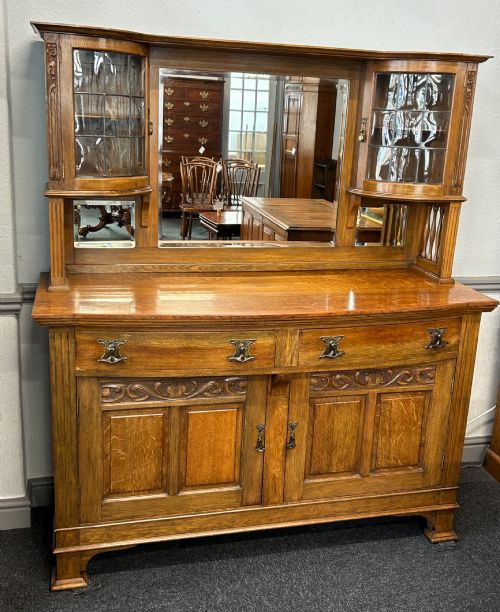
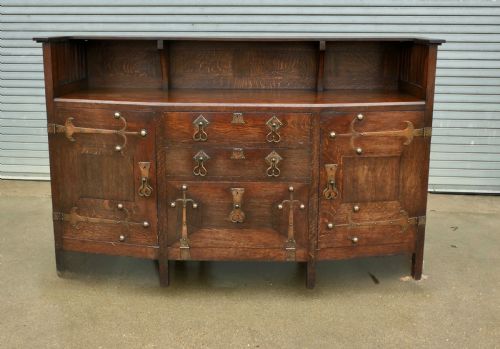
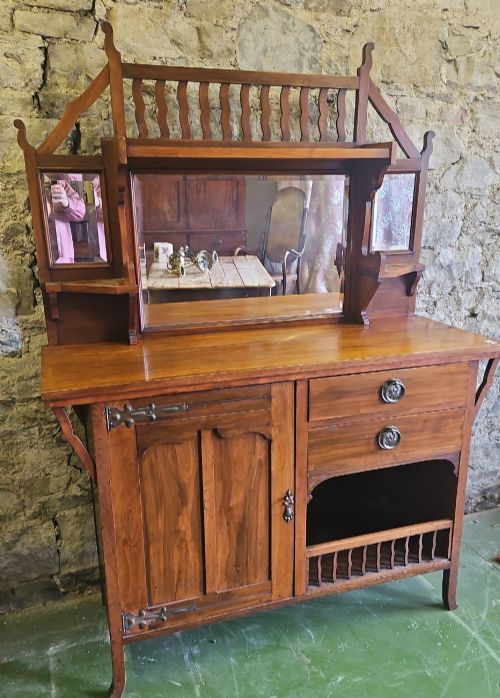


Arts and Crafts Oak Server
These arts and crafts oak server pieces are substantial timber furniture items designed for storage and display, offering honest craftsmanship for the home.

Arts and Crafts Oak Server
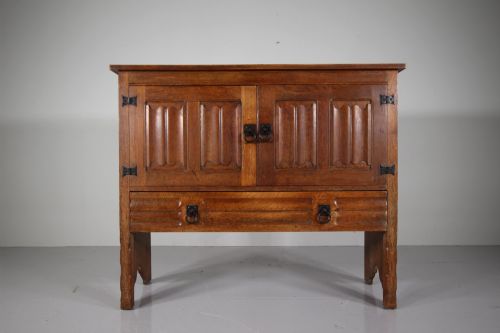
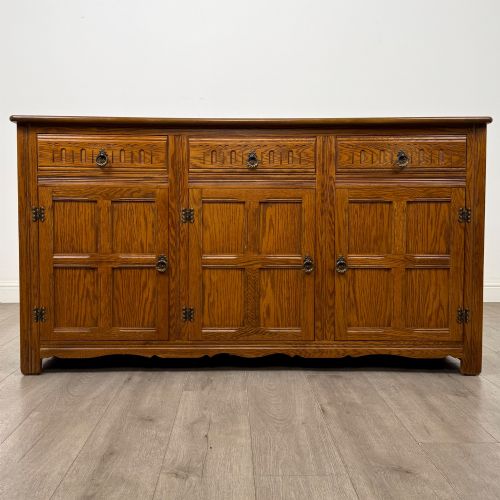
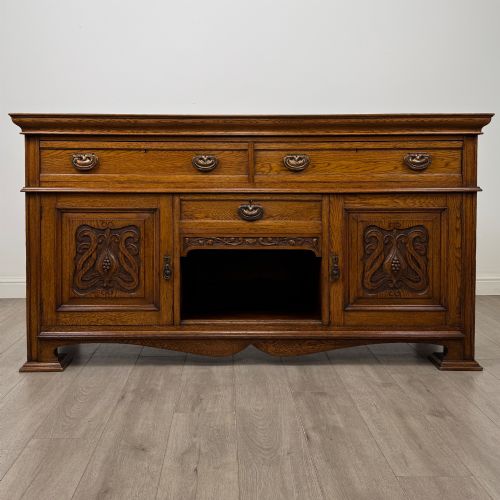
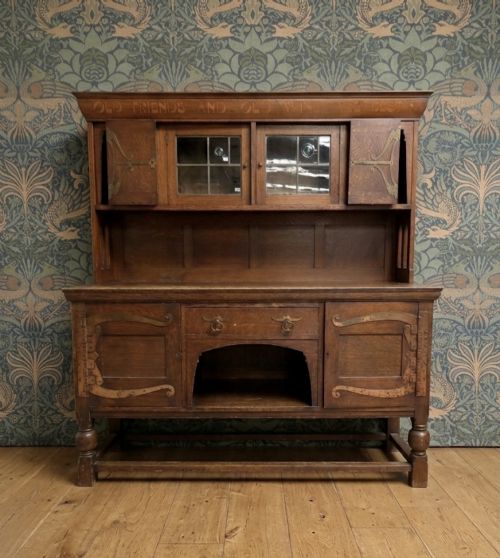
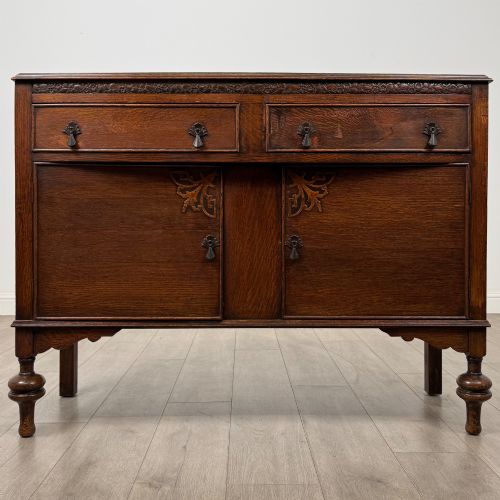
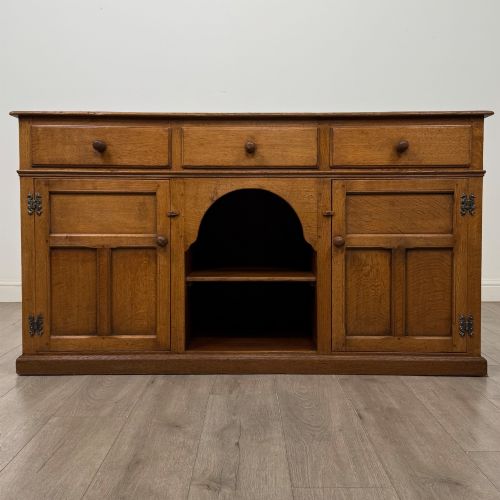
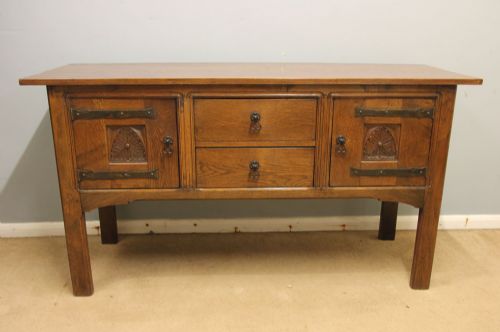
An arts and crafts oak server typically appears as a sideboard, dresser base, or credenza dating from the late nineteenth century through to the Edwardian period. These pieces originate primarily from British workshops, though continental examples occasionally surface alongside standard domestic forms.
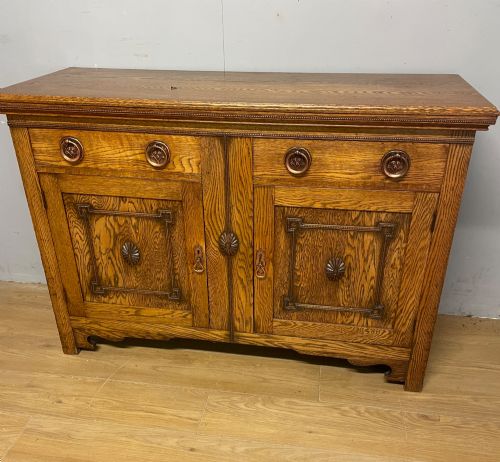
Buyers encounter variations ranging from simple two-door golden oak sideboards to tall mirrorback cabinets and low console tables. The core function remains utilitarian storage, uniting practical cupboards and drawers with the robust character of solid timber.
Materials and Construction
Construction relies heavily on solid oak, frequently finished to highlight the natural golden grain or quarter-sawn figure of the wood. Workshops utilised traditional joinery methods, assembling carcases with visible tenons and sturdy panelled doors.
Metalwork played a defining role in the aesthetic, incorporating brass, iron, or copper hinges, drop handles, and escutcheons. Selected examples integrated leaded glass panels or subtle marquetry inlay to accent the primary timber structure.
One unexpected archive entry swapped massive dining furniture for a tiny silver pastry server decorated with acorns.
Quality Variations
Distinctions in quality rest upon the integrity of the timber selection, the crispness of hand-carved details, and the weight of the hardware. Pieces carrying documented attribution to notable designers or specific regional schools display superior proportion and structural refinement.
Simpler vernacular items show competent joinery without decorative flourish, whereas high-end cabinetwork demonstrates meticulous attention to grain alignment, custom metal fittings, and integrated hardware designed specifically for the piece.
Ambrose Heal for Heal & Son·Liberty·Leonard Wyburd·Shapland and Petter·T Simpson and Son
The Arts and Crafts Oak Server Glossary
- Dresser base
- The lower section of a traditional dresser, featuring cupboards and drawers without the upper plate racks. It functions effectively as a sideboard in modern dining spaces.
- Mirrorback
- A sideboard superstructure incorporating an integrated mirror panel set into a wooden frame. This feature reflects light and was popular during the late Victorian and Edwardian eras.
- Quarter-sawn oak
- Timber cut radially to the tree rings, producing characteristic medullary ray flecks across the surface. This cut offers increased stability and visual texture.
- Secessionist
- A stylistic movement related to Arts and Crafts that embraced geometric abstraction and simplified structural forms. It appears in continental European cabinetwork.
- Escutcheon
- A protective plate surrounding a keyhole, frequently forged from brass or copper on these pieces. It serves both a functional and a decorative purpose.
Arts and Crafts Oak Server: Frequently Asked Questions
How are these servers used?
These pieces function as dining room storage for crockery, linen, and cutlery while providing a surface for serving food or displaying decorative objects.
In contemporary interiors, they adapt readily to living spaces or hallways as general storage consoles.
How do I care for oak furniture?
Maintain the timber by dusting with a dry cloth and occasionally applying natural beeswax to nourish the dry grain.
Keep pieces away from direct heat sources and strong sunlight to prevent the timber from splitting.
How do I date a piece?
Examine the construction methods, hardware styles, and timber preparation to determine the period of manufacture.
Earlier examples from the 1880s and 1890s tend to display heavier Gothic influences, while Edwardian versions often embrace lighter golden oak finishes.