

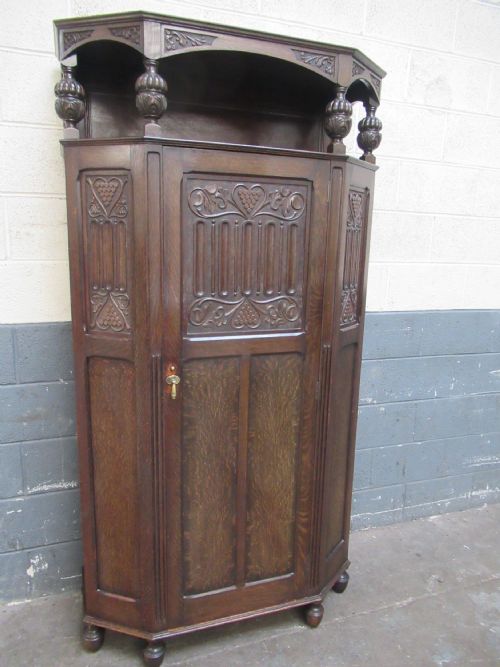


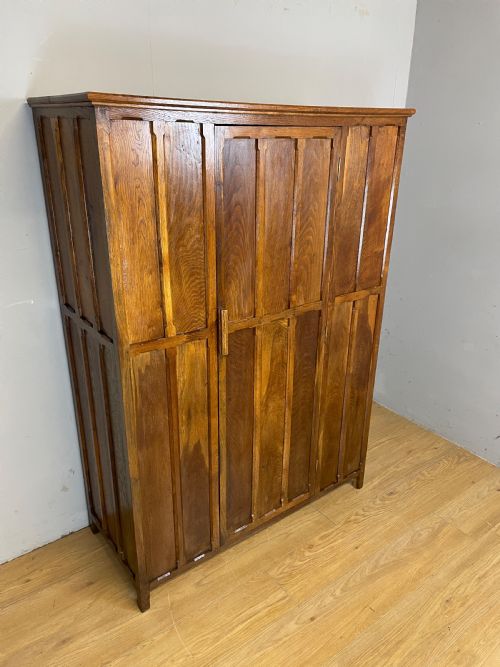
Arts and Crafts Oak Armoire
These arts and crafts oak armoire pieces bring honest construction and sturdy timber into the bedroom, offering generous storage with genuine historic character.
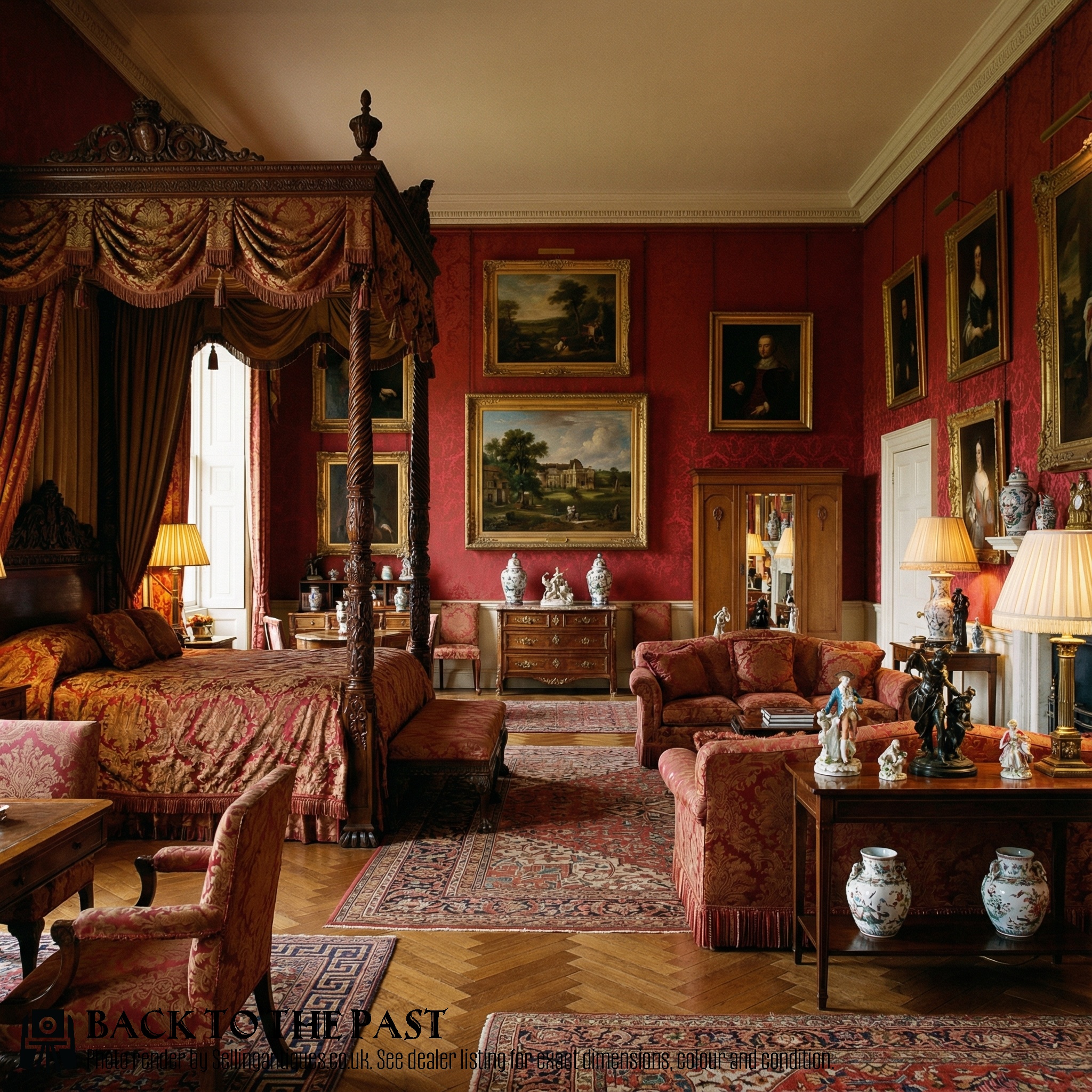
Arts and Crafts Oak Armoire
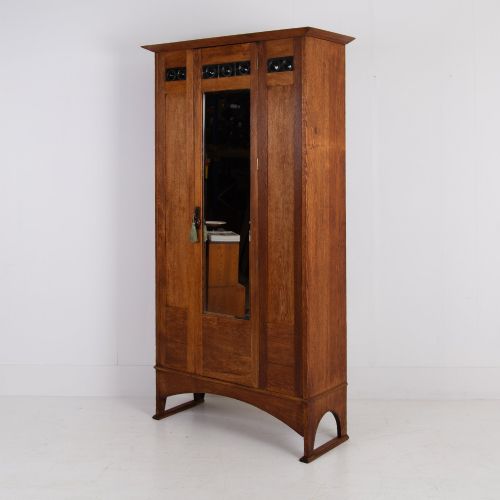
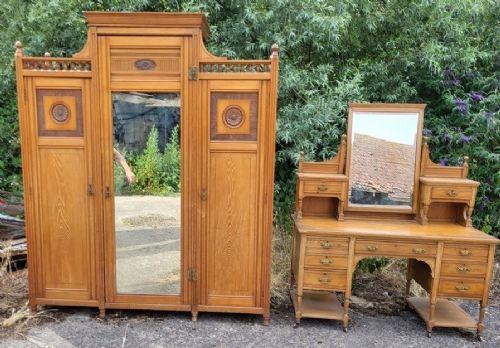
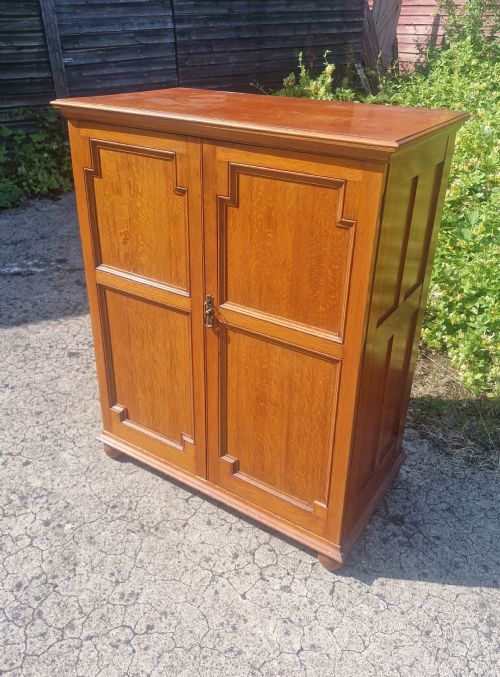
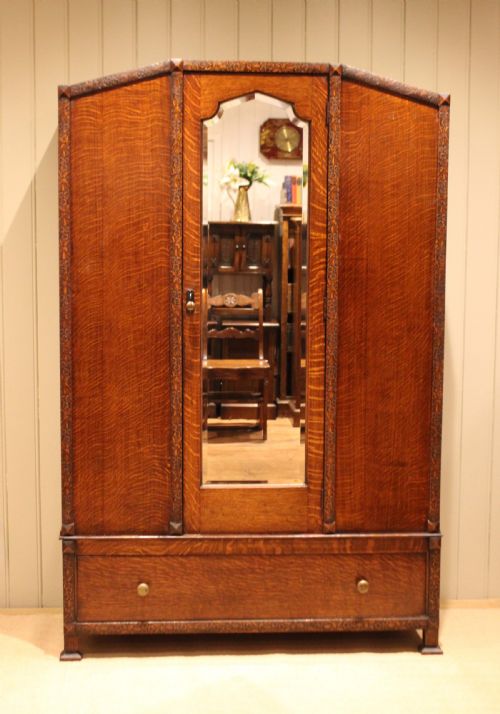
An arts and crafts oak armoire stands as a robust storage piece built primarily during the late nineteenth and early twentieth centuries. These wardrobes and cupboards reflect a period that valued honest construction over ornate surface decoration.
How they were made
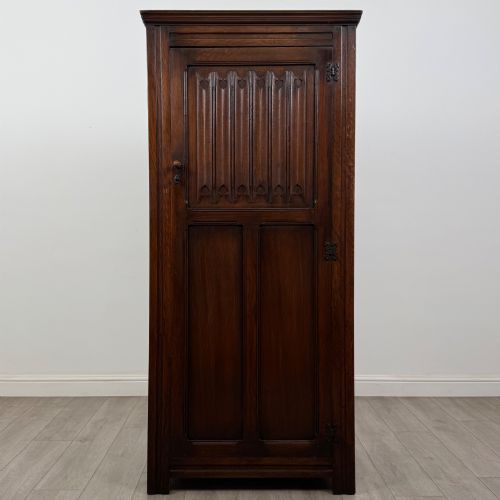
Makers relied heavily on solid oak, utilising its natural strength and distinct grain to build durable frames. Panels were frequently hand-jointed to accommodate the natural movement of the timber over time.
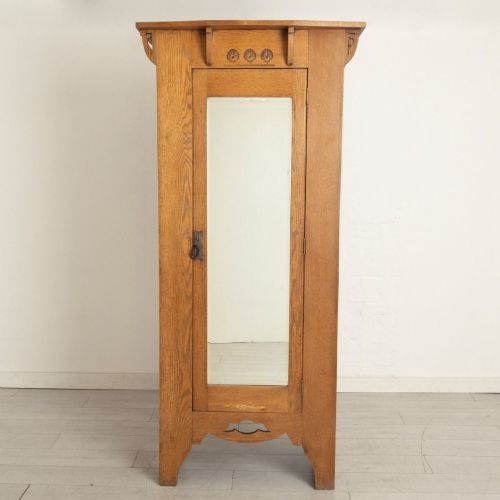
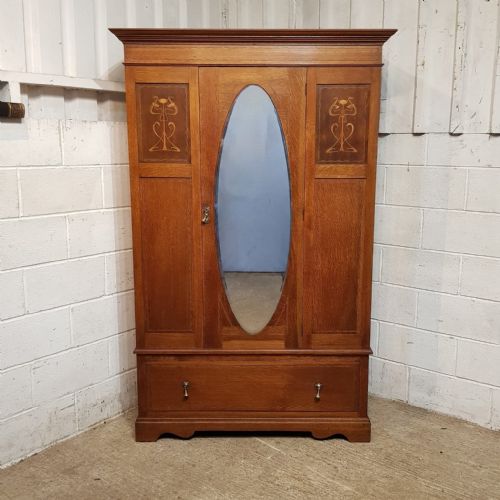
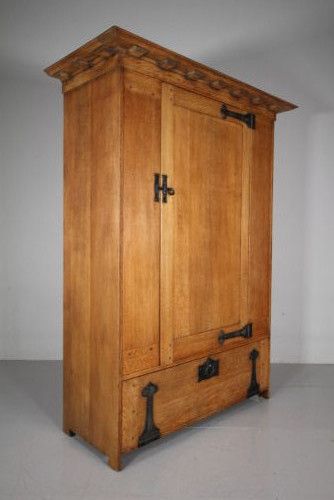
Metalwork played a key functional and decorative role, with wrought iron hinges and brass handles securing the doors. Glass mirrors and fitted interior compartments appear regularly across the surviving examples.
One notable cabinet found its way here after starting life as a closed bed front in rural Brittany.
What varies in quality
Quality reveals itself in the weight of the solid timber and the precision of the joinery rather than applied ornamentation. Finer pieces demonstrate thoughtful proportions and careful selection of oak boards for the main panels.
Hardware and secondary materials also set examples apart, distinguishing standard workshop production from pieces bearing maker stamps or labels. The integration of wrought iron fittings and original bevelled glass mirrors points to higher workshop standards.
Heals·Shapland and Petter·Maple and Co
The Arts and Crafts Oak Armoire Glossary
- Solid Oak
- Timber milled straight from the oak tree rather than constructed from veneered layers. This heavy material forms the structural core of nearly all pieces found in this category.
- Wrought Iron
- Iron beaten into shape by hand while hot, commonly used for structural hinges and strapwork. It provides both mechanical strength and a distinct tactile texture.
- Edwardian
- Pertaining to the reign of King Edward VII, spanning the early years of the twentieth century. Furniture from this era often combines traditional joinery with lighter domestic proportions.
Arts and Crafts Oak Armoire: Frequently Asked Questions
How do I date an arts and crafts oak armoire?
Dating relies on examining construction methods, hardware styles, and any accompanying maker stamps or labels found inside the piece.
Earlier examples from around nineteen hundred often feature hand-wrought ironwork and solid timber backs, while later pieces from the nineteen-twenties incorporate different internal fittings.
Are these wardrobes easy to dismantle for moving?
Many larger examples of the period were designed to be taken apart for transport, utilising pegged joints or bolted sections.
Checking the interior for knockdown fixings will reveal whether the piece can be separated into manageable components for relocation.
What is the difference between a gentleman's wardrobe and a standard armoire?
A gentleman's wardrobe typically includes a combination of hanging space, sliding trays, and smaller drawers housed behind doors.
Standard armoires tend to focus primarily on full-length hanging space or larger shelved compartments for general clothing storage.
How should I care for the oak surface?
Maintenance requires little more than occasional dusting with a dry cloth and the sparing application of traditional beeswax to nourish the timber.
Keeping the wood away from direct heat sources prevents the solid panels from drying out and splitting over time.