

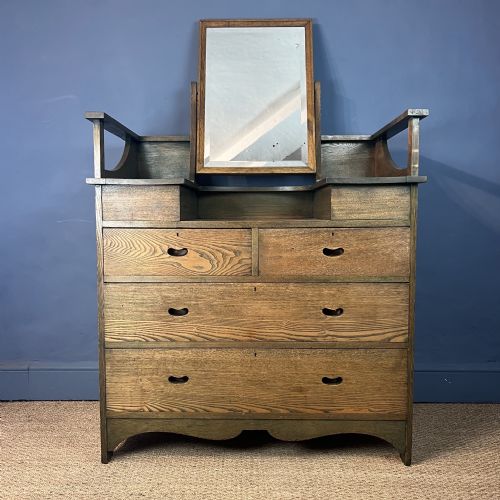
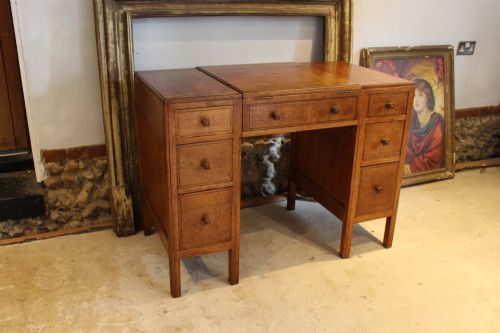


Arts and Crafts Dressing Chest
An arts and crafts dressing chest combines utility with honest construction, offering fitted mirrors and surface space for a bedroom.
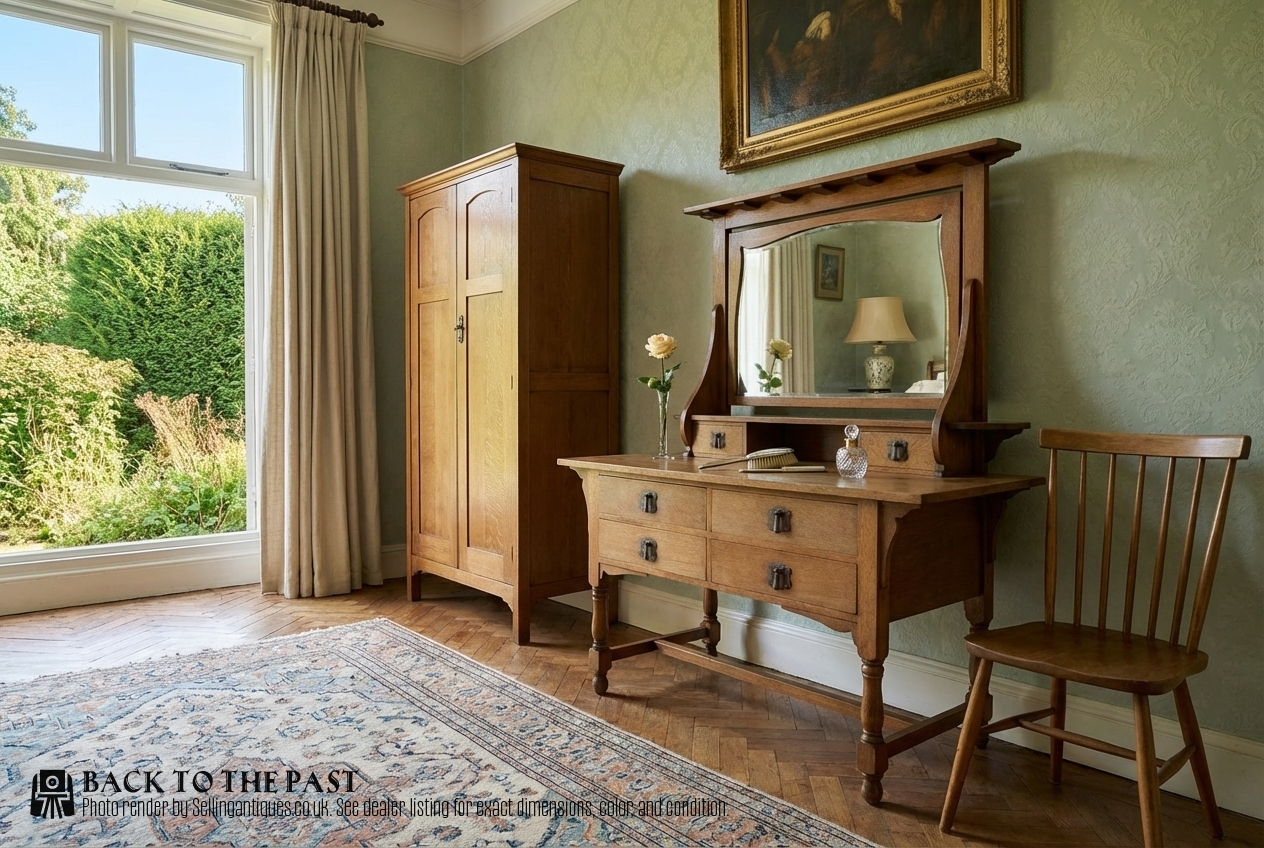
Arts and Crafts Dressing Chest
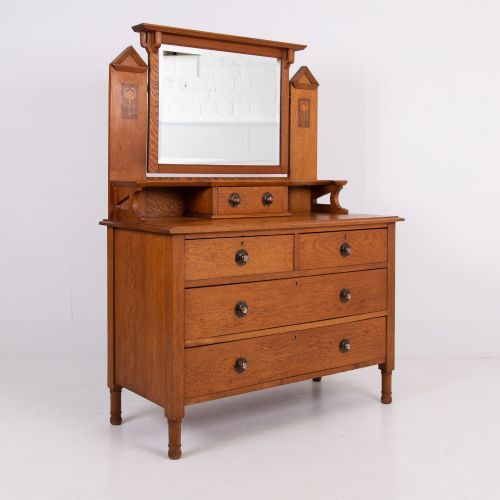
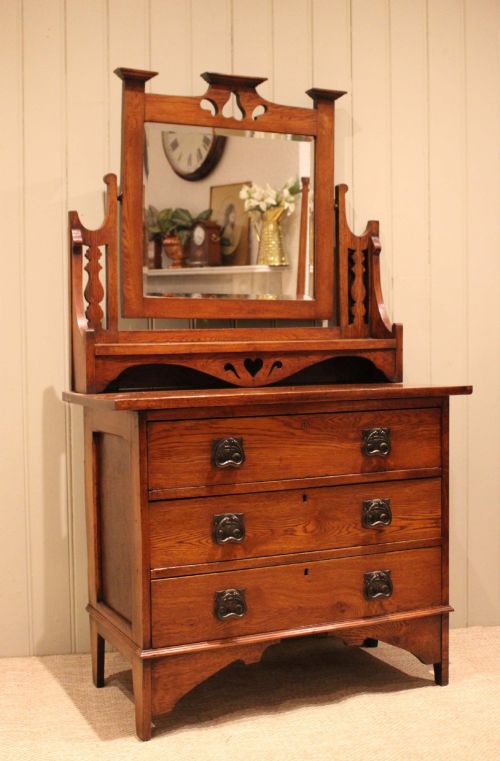
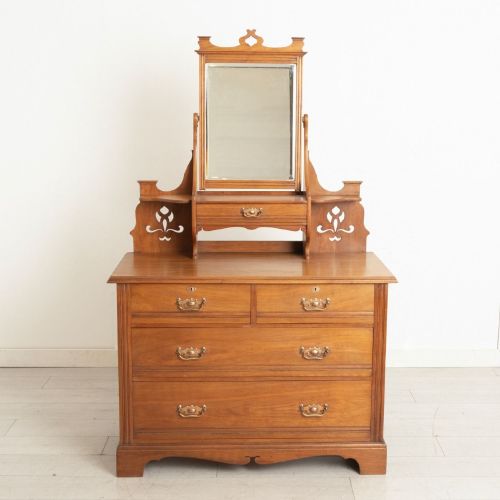
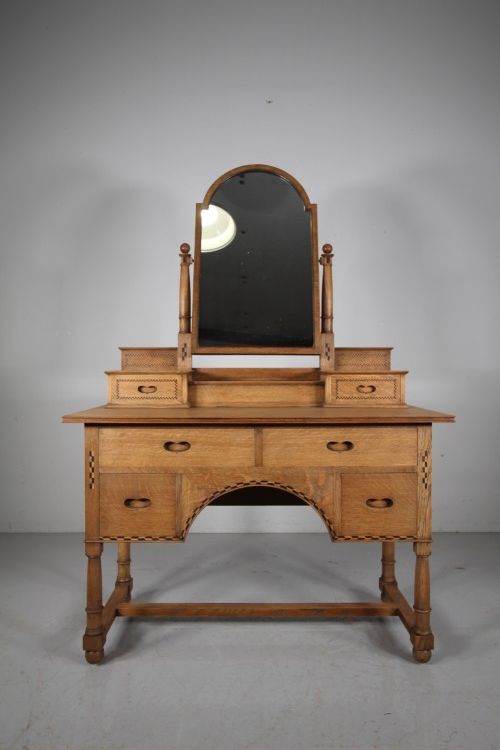
An arts and crafts dressing chest is a form of bedroom furniture designed for personal grooming, typically combining a chest of drawers with an attached mirror and small trinket drawers. Buyers searching this phrase encounter practical timber furniture created from the late nineteenth century through to the interwar period.
The pieces appearing here stem primarily from the Edwardian era and the early decades of the twentieth century. Forms range from standalone dressing tables and dressing chests to complete bedroom suites involving matching wardrobes and washstands.
Originating within the wider reform movement in design, these items reject excessive ornamentation in favour of visible construction and functional simplicity. Oak serves as the predominant timber, occasionally supplemented by ash or satin walnut.
How they were made
Cabinetmakers constructed these chests predominantly from solid oak, utilising ash and satin walnut for alternative regional interpretations. Timber selection prioritised visible grain and natural warmth over uniform veneer finishes.
Metalwork plays a functional role in the construction, incorporating brass and copper for handles, hinges, and occasional strapwork. Glass forms the pivoting mirror plates, while materials such as marble, iron, and wood inlay appear on specific examples to provide contrasting texture.
Arts and Crafts Dressing Chest Retail Price Guide 2026
Typical asking prices for arts and crafts dressing chest among the pieces listed under this phrase on Sellingantiques today, from the lower quarter to the upper quarter. They describe what is for sale here now, not the wider market.
Listings feature oak, ash, and satin walnut furniture alongside copper, brass, and glass elements across several decades.
What varies in quality
The distinction between standard production and top-tier examples rests upon the execution of joinery and the prominence of the maker. Labelled pieces from established London and provincial firms demonstrate superior hand-finishing and thoughtful proportions compared to anonymous workshop output.
Material selection and decorative restraint also separate the grades. Finer pieces integrate subtle wood inlay, hand-hammered copper fittings, and green stained ash surfaces, reflecting the artistic ambitions of the Cotswold School and specific designers.
George Walton·Heal and Sons·Shapland and Petter·Wright and Hunter·Harris Lebus·Liberty·Robson and Sons
The Arts and Crafts Dressing Chest Glossary
- Cotswold School
- A twentieth-century design and craft movement focused on traditional hand-tooling and simple vernacular forms. It influenced furniture makers working in solid timber.
- Dressing chest
- A low chest of drawers fitted with an upright mirror and small accessory boxes. It served as a functional precursor to the modern dressing table.
- Newlyn
- A style associated with the Cornish art colony known for metalwork. Pieces bearing this association incorporate hand-beaten copper elements.
- Wood inlay
- The technique of inserting contrasting pieces of wood into a recessed surface to form decorative patterns. It adds subtle visual detail to drawer fronts and splashbacks.
Arts and Crafts Dressing Chest: Frequently Asked Questions
What is an arts and crafts dressing chest?
An arts and crafts dressing chest is a piece of bedroom furniture featuring drawers and an integrated mirror, designed during the late nineteenth and early twentieth centuries. These items emphasise straightforward joinery and natural timber grain over applied decoration.
They reflect a design philosophy that valued utility and traditional craftsmanship. Most examples utilise solid oak with original brass or copper hardware.
How do I date an arts and crafts dressing chest?
Dating relies on stylistic markers, construction methods, and occasional maker labels found inside drawers. Pieces from the Victorian period tend to be heavier, while Edwardian and 1930s examples often exhibit lighter proportions and simpler lines.
Hardware styles also provide clues, as hand-hammered copper and specific brass handle designs correspond to distinct periods of manufacture. Surviving paper labels or stamps from firms help confirm the exact decade.
Where should I place a dressing chest in my bedroom?
These chests function well against a bedroom wall where natural light can strike the mirror. Pairing the chest with a low stool allows it to serve its original grooming purpose.
Because many examples feature finished backs or honest timber construction, certain pieces can also sit within a larger bedroom suite arrangement alongside matching wardrobes.
How do I care for the oak wood?
Maintain the timber by keeping the surface clean with a dry or slightly damp cloth, avoiding modern silicone sprays that can build up over time. Periodic application of natural wax preserves the finish and protects the grain.
Position the chest away from direct heat sources and strong sunlight to prevent the timber from drying out or warping.