


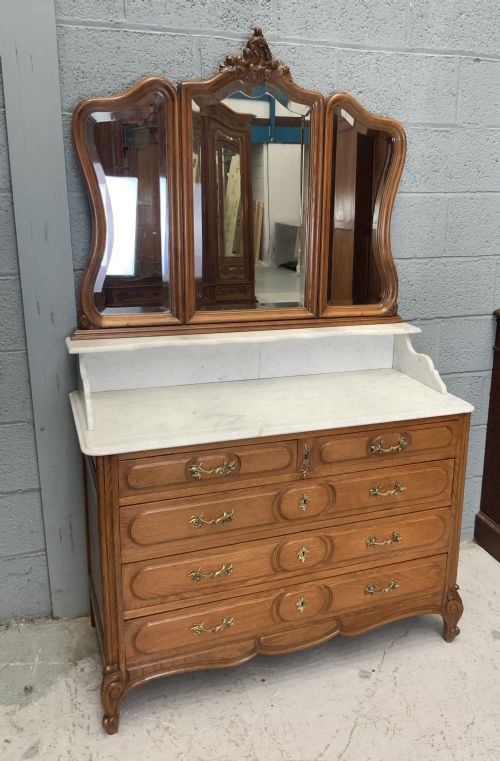
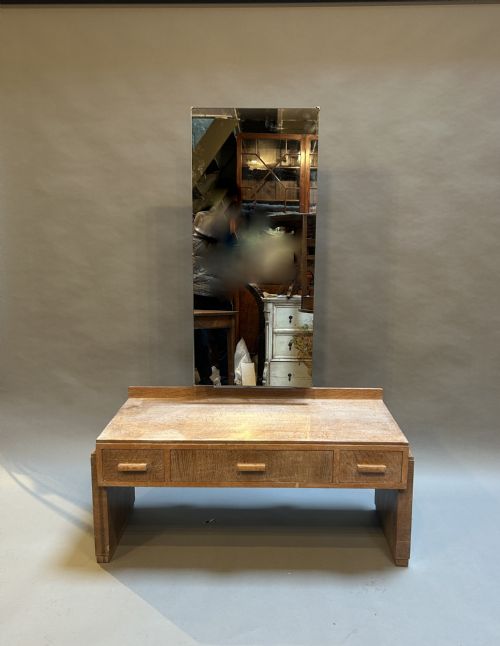


Oak Chest with Mirror
An oak chest with mirror combines practical drawer storage with a fitted looking glass, spanning Victorian, Edwardian, and Arts and Crafts designs.
Oak Chest with Mirror
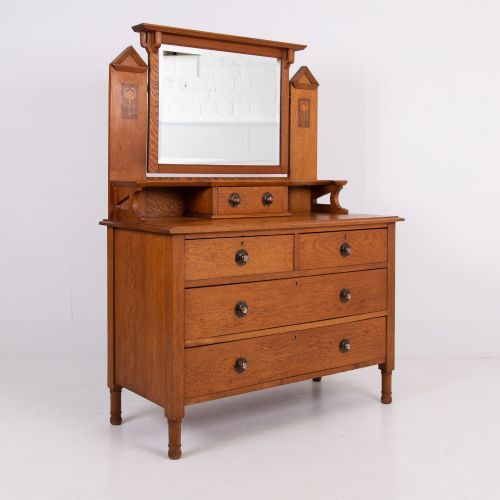
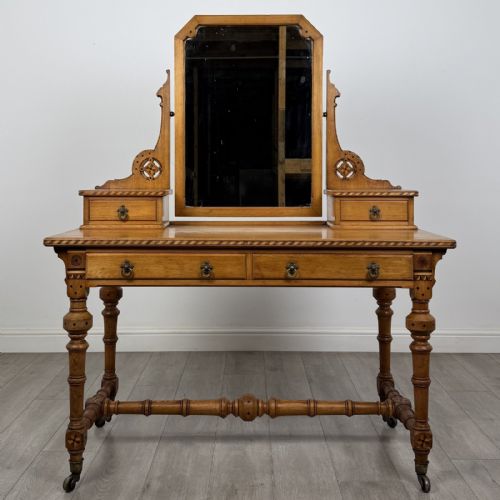
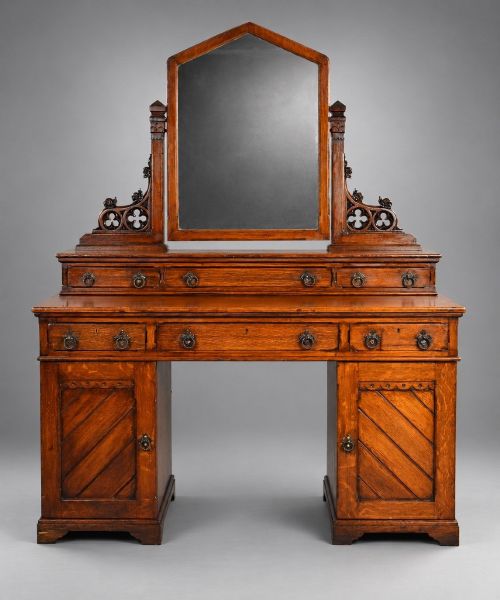
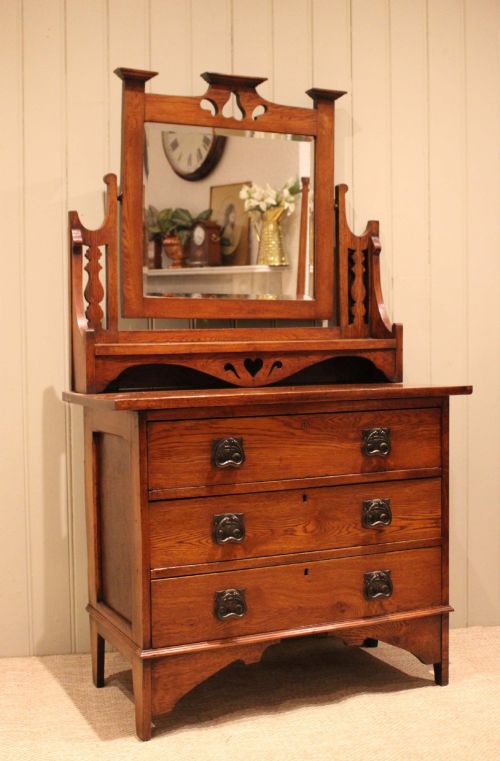
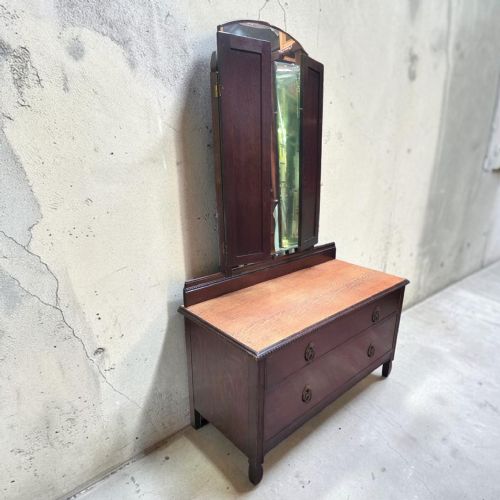
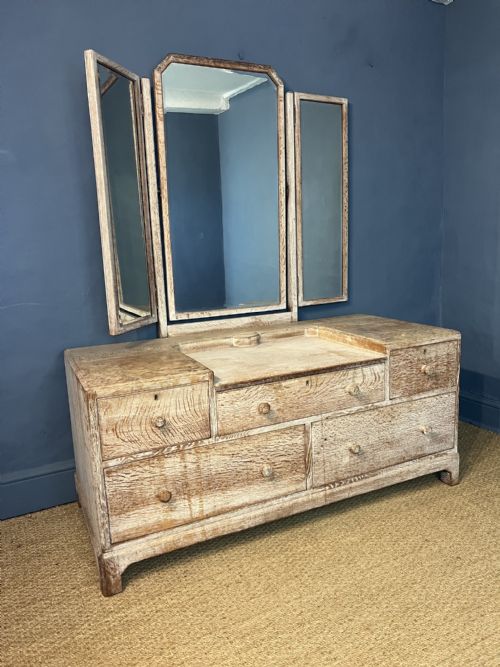
An oak chest with mirror combines the utility of bedroom storage with an integrated looking glass, frequently catalogued as a dressing chest, dressing table, or washstand. These pieces predominantly date from the Victorian, Edwardian, and 1930s periods, reflecting domestic needs of the late nineteenth and early twentieth centuries.
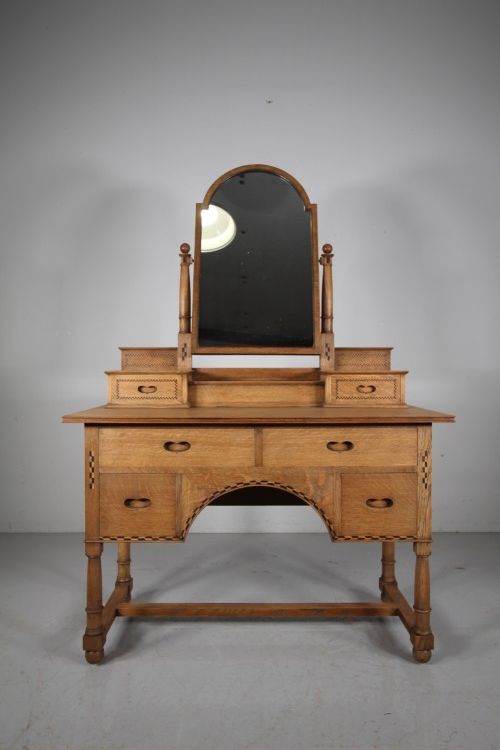
The most common formats on this page feature an upright wooden chest of drawers surmounted by either a swing mirror or a fixed plate, occasionally accompanied by flanking jewel drawers. Makers applied various regional aesthetics to these forms, ranging from plain utility builds to distinctive Arts and Crafts and Cotswold School interpretations.
Buyers also encounter related configurations such as dressing stands and washstands incorporating glass plates, as well as specialised cabinets. The timber body is principally solid or veneered oak, sometimes accented with contrasting wood inlay or brass hardware.
Materials and construction methods
Joiners and cabinet makers constructed these pieces primarily using solid oak and oak veneers, selected for durability and distinctive grain patterns. Workshops occasionally incorporated secondary timbers alongside walnut elements, while decorative brass handles, hinges, and mirror brackets provide functional contrast.
Surface ornamentation relied on traditional woodworking techniques such as hand carving, dovetail joints in the drawer construction, and delicate wood inlay. Glass formed the silvered mirror plates, held securely within wooden frames that pivot on adjustable side pivots or stand fixed to the superstructure.
Oak Chest with Mirror Retail Price Guide 2026
Typical asking prices for oak chest with mirror among the pieces listed under this phrase on Sellingantiques today, from the lower quarter to the upper quarter. They describe what is for sale here now, not the wider market.
Some chests feature secret compartments behind the swing mirror, perfect for hiding love letters or small valuables from curious houseguests.
Distinctions in craftsmanship and design
Quality in an oak chest with mirror is determined by the integrity of the timber selection, the crispness of any hand carving, and the sophistication of the joinery. Workshop attribution also plays a role, with labelled pieces by known makers demonstrating superior structural refinement.
The sophistication of the hardware, the clarity of the original mirror glass, and the balance of proportions between the lower chest and the upper mirror frame separate standard production items from masterworks of the Arts and Crafts or Cotswold School movements.
Heals·Wright and Hunter of Belfast·George Walton·Harris Lebus of London
The Oak Chest with Mirror Glossary
- Dressing chest
- A lower chest of drawers fitted with an attached mirror, designed for bedroom use and grooming. This form bridges the gap between a standalone chest and a dressing table.
- Arts and Crafts
- A design movement prioritising traditional craftsmanship, visible construction, and simple forms over mass-produced ornamentation. Pieces from this style often feature exposed joinery and hand-wrought metal fittings.
- Swing mirror
- A looking glass hung within a movable frame on vertical pivots, allowing the user to alter the angle of reflection. It typically sits atop the chest on small supports or jewel drawers.
- Wood inlay
- A decorative technique where pieces of contrasting timber are fitted into recessed portions of the oak surface to create patterns. It adds visual detail without disrupting the plane of the wood.
- Cotswold School
- A twentieth-century English craft movement rooted in the Arts and Crafts tradition, emphasising honest construction and local materials. Furniture from this circle exhibits exceptional hand-finished quality.
Oak Chest with Mirror: Frequently Asked Questions
How do I date an oak chest with mirror?
Dating relies on examining construction methods, hardware types, and stylistic indicators such as Edwardian proportions or Arts and Crafts carving details. The presence of original maker labels or stamps also helps establish a precise era.
Secondary woods, drawer dovetailing, and the bevelling on the mirror glass provide further clues to whether a piece originates from the Victorian period, the 1920s, or later.
Are the mirror plates usually original?
Many pieces retain their original glass, which can exhibit light foxing or spotting due to age. Replacements do occur when older silvering degrades beyond utility.
Examining the backboards and the silvering behind the glass helps determine if the mirror plate has been swapped out during the history of the furniture.
Can I dismantle the mirror from the base?
Most mirrors detach from the main chest via screws or wooden brackets to facilitate transport and placement. This construction allows the upper superstructure to be removed safely.
Care is required when handling the glass components and securing the mounting hardware back into the original oak screw holes during reassembly.
Where should I place it at home?
An oak chest with mirror functions well in a bedroom, dressing room, or hallway, providing both surface display and practical drawer space. Its vertical presence suits walls with adequate clearance beneath picture rails.
Positioning the piece away from direct sunlight protects the oak finish and prevents premature fading of the timber and the surrounding wood inlay.