

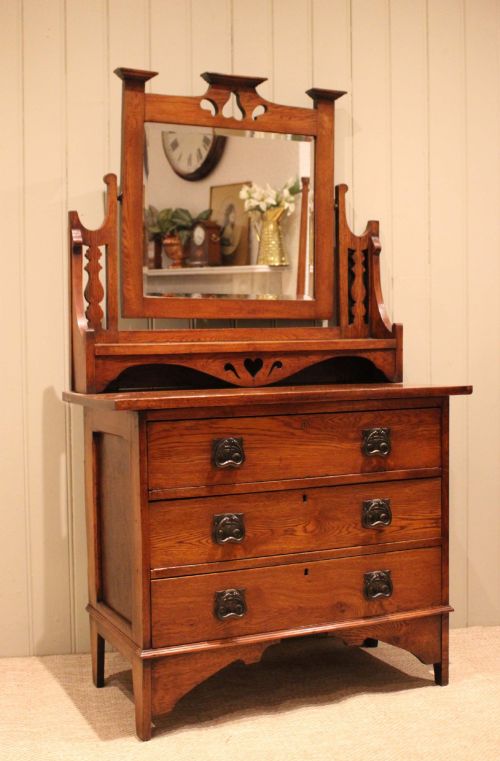
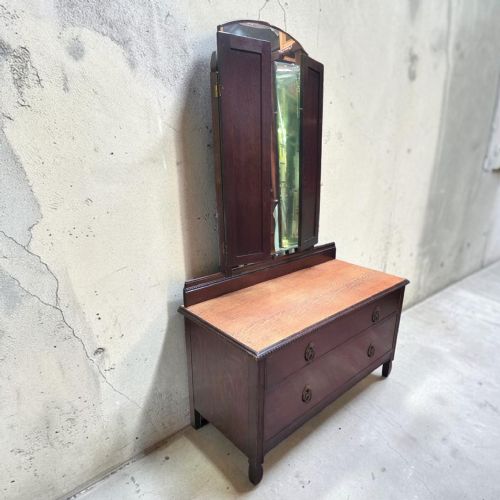
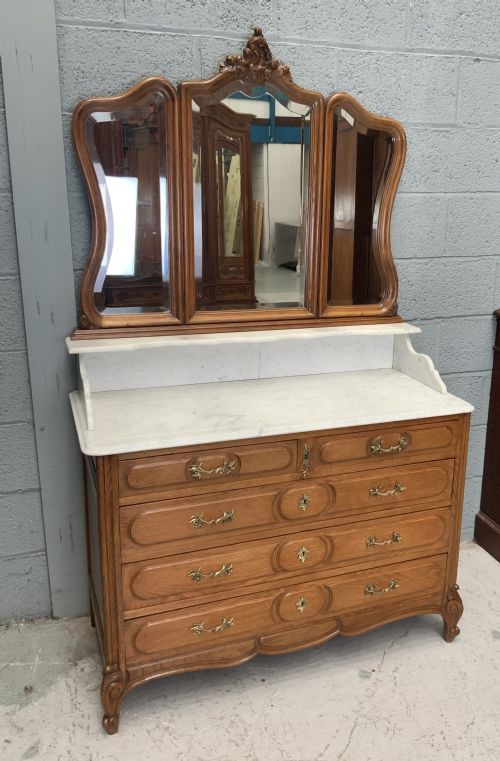


Oak Chest of Drawers Mirror
These oak chest of drawers mirror pieces combine timber storage and adjustable glass, appearing largely in Edwardian, Victorian and later periods.
Oak Chest of Drawers Mirror
When you search for oak chest of drawers mirror, you are looking at bedroom furniture designed for grooming and storage, combining timber drawers with mounted glass. The pieces found here span dressing chests, dressing tables, and washstands originating across the Victorian, Edwardian, and Art Deco eras.
You are most likely to meet Edwardian and Arts and Crafts examples on this page, alongside occasional bedroom suites and miniature furniture. These functional items served bedrooms by holding garments while providing a surface and reflection for daily toilette.
How they were made
Construction relies heavily on solid oak, frequently paired with glass mirror plates and brass or metal hardware. Cabinetmakers utilised dovetail joints for drawer construction and integrated decorative elements such as copper, ebony, marble, ceramic, and marquetry.
Stylistic details range from carved ornamentation and barley twist turnings to inlaid motifs associated with Arts and Crafts workshops. Finishes highlight the natural grain of the oak whilst protecting the timber through polishing or waxing.
Oak Chest of Drawers Mirror Retail Price Guide 2026
Typical asking prices for oak chest of drawers mirror among the pieces listed under this phrase on Sellingantiques today, from the lower quarter to the upper quarter. They describe what is for sale here now, not the wider market.
Arts and Crafts styling dominates the recorded items, appearing alongside Art Deco suites, French Provincial washstands, and miniature compactum wardrobes.
What varies in quality
Quality in these pieces is dictated by the crispness of the carving, the selection of figured oak timber, and the sophistication of the hardware. Pieces from notable workshops demonstrate superior joinery and more ambitious integration of mirror supports and drawer configurations.
The distinction between standard domestic output and finer studio work lies in the refinement of the secondary materials, such as brass fittings, inlaid details, and the overall structural proportion of the dressing chest.
Shapland and Petter·Wright and Hunter·George Walton·Harris Lebus·B Cohen and Sons
The Oak Chest of Drawers Mirror Glossary
- Dressing chest
- A low chest of drawers fitted with an attached mirror, designed for bedroom use. It provides both drawer storage and a surface for grooming.
- Triple mirror
- A mirror assembly featuring a large central plate flanked by two adjustable smaller wings. This configuration allows the user to view angles from the side during dressing.
- Barley twist
- A type of turned furniture leg or support resembling a spiral rope. It gained popularity during revival periods such as the Jacobean revival.
- Marquetry
- The art of applying decorative pieces of veneer to a structure to form intricate designs. It appears on select Art Deco and revival bedroom furniture.
- Arts and Crafts
- A design movement valuing handcraftsmanship, simple forms, and honest construction. Pieces from this style often feature exposed joinery and subtle metal accents.
Oak Chest of Drawers Mirror: Frequently Asked Questions
What is an oak chest of drawers mirror?
It is a bedroom furniture piece combining a wooden chest of drawers with an integrated or swing mirror. These items served as functional dressing stations in Victorian and Edwardian homes.
They range from compact washstands and miniature items to large Arts and Crafts dressing chests featuring triple or oval glass plates.
How do I date an oak dressing chest?
Dating relies on observing stylistic markers, construction techniques, and materials. Pieces displaying clean geometric lines, exposed joinery, and specific hardware often point towards the Arts and Crafts movement or Edwardian period.
Heavier carved ornament and darker finishes frequently align with Victorian manufacturing, while marquetry and streamlined geometry suggest later Art Deco production.
Are the mirrors original?
Many pieces retain their original bevelled or plain glass mirrors, secured within timber frames and pivoting on brass or metal brackets. Due to the fragile nature of glass over a century, some mirrors may have been replaced during the lifetime of the furniture.
Checking the silvering behind the glass and the fixings helps determine whether the mirror plate matches the age of the base chest.
How do I care for antique oak furniture?
Maintaining these pieces involves keeping them away from direct heat sources and strong sunlight to prevent the oak from drying out or splitting. Regular dusting with a soft, dry cloth preserves the polished surface.
Application of traditional wax polish helps nourish the timber grain without building up heavy residues that dull the original finish.