
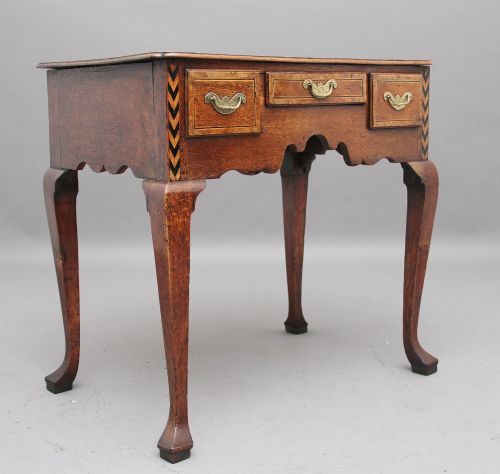


Inlaid Oak Dressing Table
An inlaid oak dressing table brings honest craftsmanship and striking grain into a bedroom, offering practical surface space alongside subtle decorative marquetry.
Inlaid Oak Dressing Table
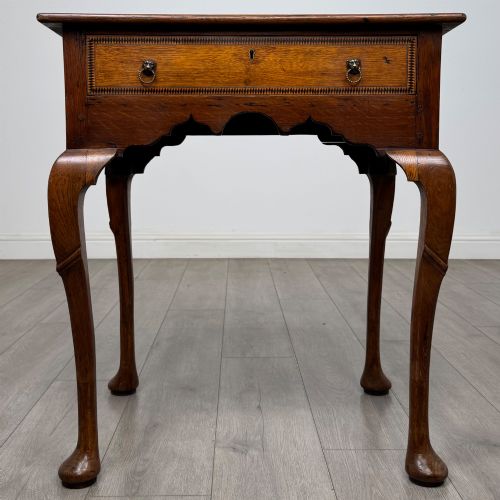
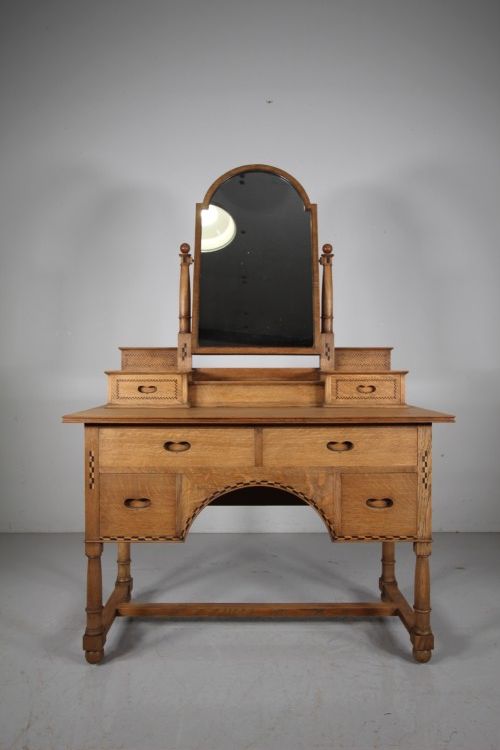
An inlaid oak dressing table combines robust timber with contrasting wood inlay, providing a functional surface for personal grooming and morning routines. When you search this phrase, you encounter forms ranging from early lowboys adapted for the bedroom to tall Edwardian chests with pivoting mirrors.
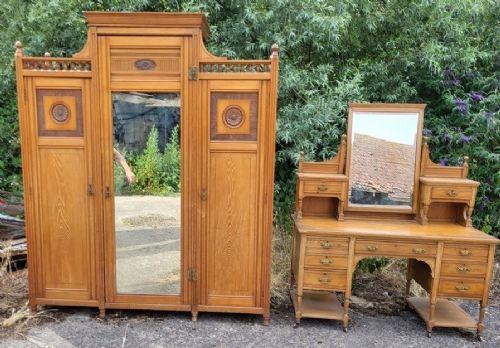
The examples gathered here span several centuries, with particular strength in the Arts & Crafts and Victorian periods. Makers often paired the hearty grain of English or Welsh oak with delicate boxwood and ebony marquetry to soften the heavy timber.
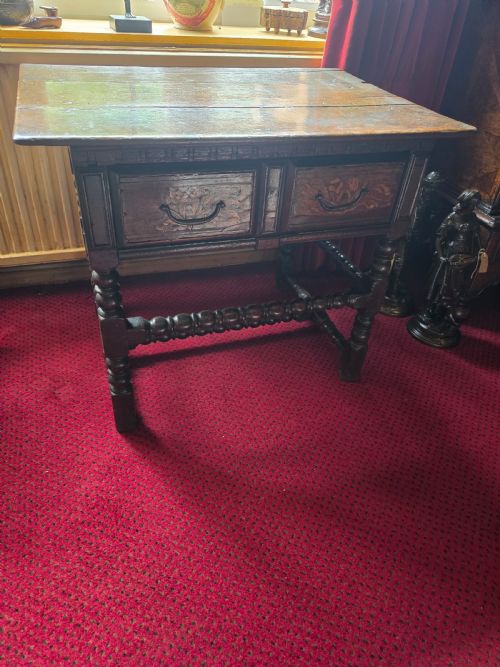
Alongside dedicated dressing tables, the selection includes related lowboys and side tables that served similar domestic functions in earlier households. These pieces demonstrate how bedroom furniture evolved from simple boarded chests into specialised furniture suites.
How they were made
Cabinetmakers built these pieces using solid oak for the primary carcass and framing, sometimes introducing ash for secondary structural parts or drawer linings. The wood was selected for its quarter-sawn medullary rays, which added visual depth to the flat surfaces.
Marquetry and wood inlay required precise hand-cutting of contrasting timbers like boxwood and ebony to create geometric or floral motifs. Brass handles and glass mirror plates were fitted to complete the functional aspects of the dressing chest.
Some Edwardian dressing tables hide secret compartments behind small drawers for storing hidden love letters.
What varies in quality
The standard of an inlaid oak dressing table depends heavily on the crispness of the cabinetmaking and the finesse of the marquetry. Superior pieces exhibit tight joinery, carefully matched wood grain across the drawer fronts, and securely set inlay that sits flush with the oak surface.
Provenance and maker attribution elevate certain examples, particularly those bearing labels from known workshops like Shapland & Petter or Wright & Hunter. The integrity of the original brass hardware and the clarity of the attached glass mirror also distinguish finer specimens from later adaptations.
Shapland & Petter·Wright & Hunter of Belfast·B Cohen & Sons
The Inlaid Oak Dressing Table Glossary
- Lowboy
- A small oak or walnut table with drawers, typically standing on four legs, used in 18th-century homes as a dressing table or side table. These precursors often double as low dressing surfaces.
- Marquetry
- The art and craft of applying pieces of veneer to a structure to form decorative patterns, utilising contrasting woods like boxwood and ebony. This technique defines the visual character of Arts & Crafts and Edwardian surfaces.
- Quarter-sawn
- A method of milling timber where the log is quartered lengthwise, producing boards with straight grain lines and prominent medullary rays. This cut minimises warping and enhances the decorative figure of oak.
- Arts & Crafts
- A design movement emphasising handcraftsmanship, traditional joinery, and simple forms inspired by medieval and vernacular traditions. Pieces from this style often feature exposed construction and subtle stylistic inlays.
Inlaid Oak Dressing Table: Frequently Asked Questions
How do I care for an oak dressing table?
Keep the wood conditioned using traditional beeswax rather than modern silicone sprays, which can build up a cloudy residue over time. Position the piece away from direct heat sources and strong sunlight to prevent the oak from drying out and the inlay from lifting.
Regular dusting with a soft, dry cloth protects the delicate marquetry details. Take care when placing glass perfume bottles or metal items directly onto the oak surface to avoid marking the polish.
Were these tables used daily?
These pieces served as essential morning stations for hair styling, washing, and applying cosmetics in period bedrooms. Their drawers provided secure storage for personal items, brushes, and linens.
Over decades of domestic use, the surfaces adapted to accommodate changing fashions in grooming and interior decoration. Their durable oak construction ensured they survived generations of daily handling.
How can I tell the period?
Examine the construction methods inside the drawers, looking at how the sides connect to the front and whether the drawer bottom is bevelled or plain. Hand-cut dovetails and pegged joints generally point towards earlier centuries, while machine-cut elements suggest later Victorian and Edwardian manufacturing.
The style of the inlay work and the presence of original brass handles provide further clues. Arts & Crafts pieces display stylized natural motifs, whereas 18th-century lowboys rely on simpler proportions and minimal decoration.
Are the mirrors original?
Many dressing tables retain their pivoting mirrors supported by upright arms, though glass plates were frequently replaced if they suffered damage. Look for slight silvering imperfections or dark spots at the edges of the glass, which often indicate age.
The framing around the mirror should match the primary oak timber and inlay style of the dressing chest beneath it. Check the mounting brackets to ensure the pivot mechanism aligns with the period of the main table.