
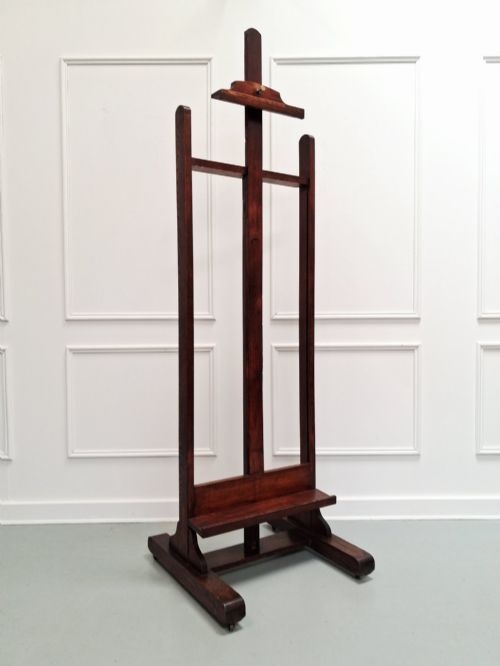
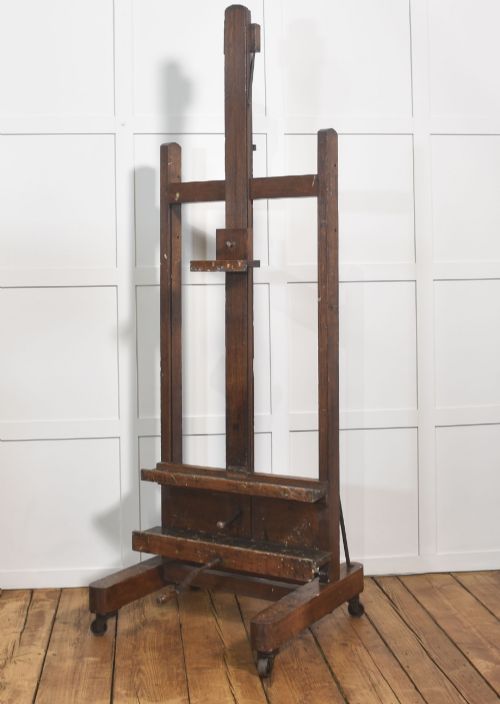
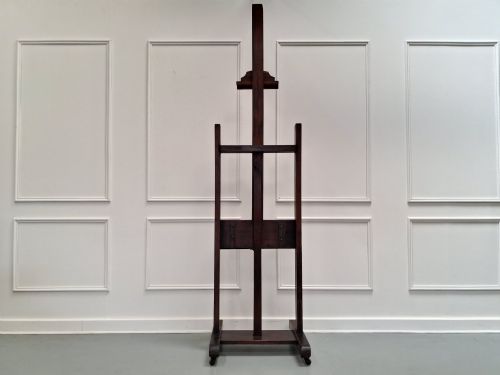
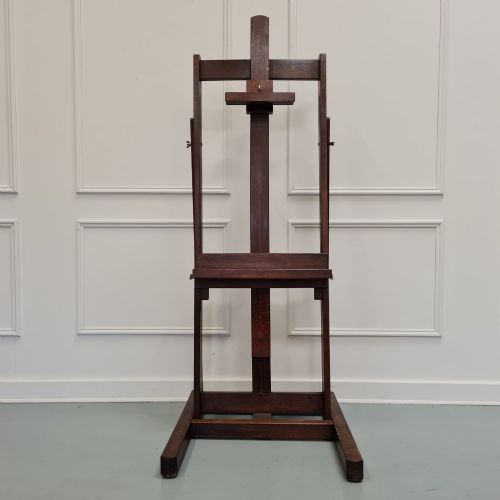


Artist Display Easel
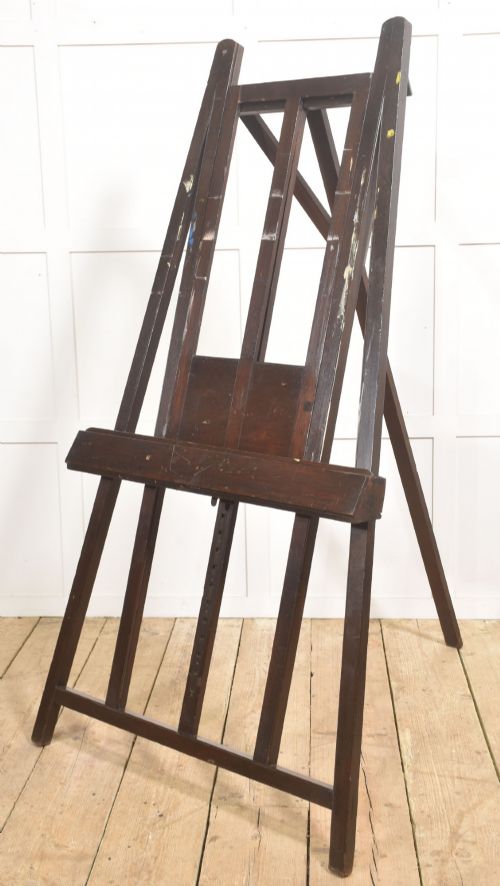
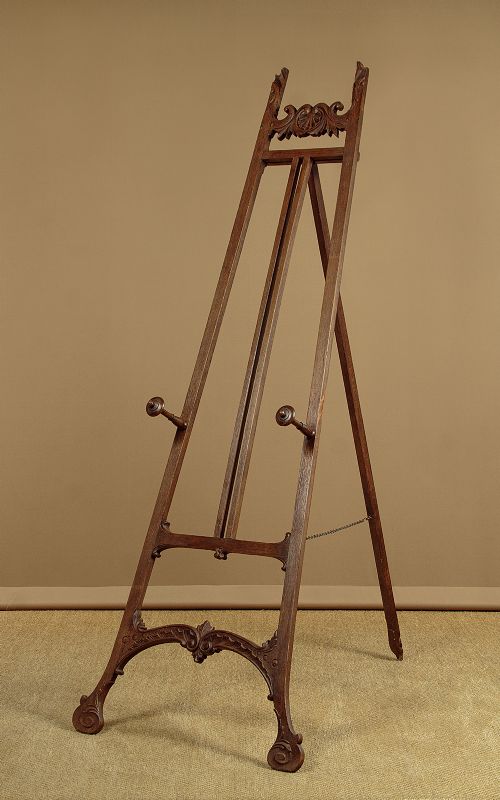
An artist display easel is a functional piece of studio equipment designed to support canvases during work or exhibit finished works.
Artist Display Easel
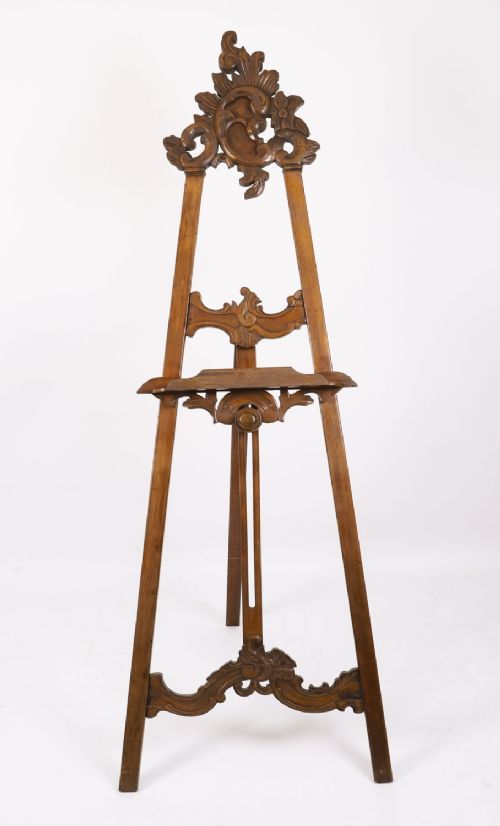
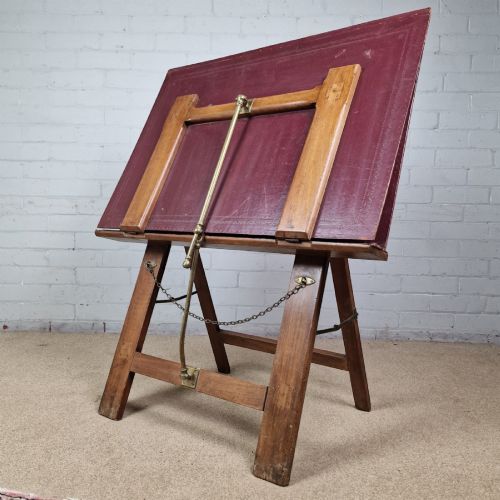
When you search for an artist display easel, you encounter a selection of historic supports spanning the nineteenth and early twentieth centuries. These pieces encompass large studio models alongside compact tabletop versions, folio stands, and specialised gallery displays.
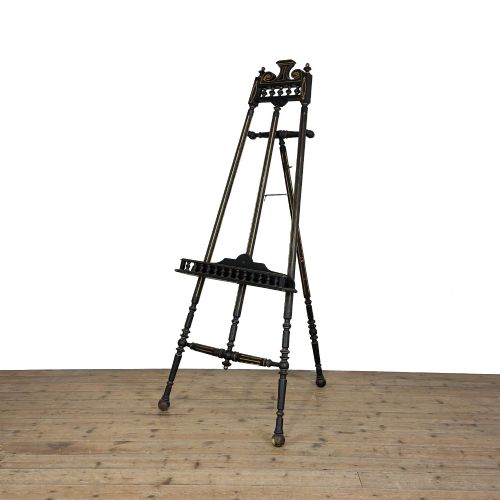
The objects derive from English, French, and Italian workshops, reflecting diverse regional tastes in timber and construction. You will find robust oak studio pieces sitting alongside refined mahogany specimens and decorative bamboo or ebonised examples.
Many of these designs serve a dual purpose, functioning as practical working tools for painters or as elegant furniture for displaying framed pictures and folios in a domestic setting.
Materials and construction
Makers relied primarily on hardwoods such as oak, mahogany, walnut, and rosewood, supplemented by pine and ebonised wood. Metal components, including brass and cast iron, provided structural strength and mechanical adjustment mechanisms for height and tilt.
Joinery techniques varied from sturdy pegged joints on heavy studio models to delicate decorative inlays of ivory on Italian gallery pieces. Surfaces were finished with traditional polish or wax, highlighting the natural grain of the timber.
Distinctions in quality
Quality rests on the complexity of the mechanical adjustment systems, such as smooth-running rack and pinion gears or robust metal winding handles. Simpler static display stands rely on the precision of their pegged height adjustments and the stability of their base.
Windsor and Newton·Reeves & Sons Ltd
The Artist Display Easel Glossary
- Studio easel
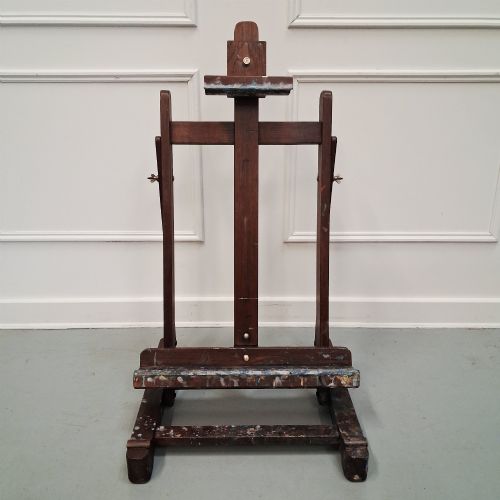
- A large, heavy-standing timber frame fitted with mechanical adjustments to support substantial canvases during the painting process. These pieces usually feature wheeled bases for mobility around a work space.
- Folio stand
- A low rack or stand designed for holding large portfolios of prints, drawings, or architectural plans. They typically feature folding sides and a webbed base.
- Gallery easel
- A decorative display stand intended for exhibiting finished artworks rather than supporting active painting. They often incorporate elaborate carving or exotic timber veneers.
- Ebonised
- Timber treated with a dark finish to imitate the appearance of ebony. This technique was particularly popular during the Victorian and Aesthetic periods.
- Adjustable
- A mechanism allowing the central shelf or mast of the easel to move vertically to accommodate different canvas sizes.
Artist Display Easel: Frequently Asked Questions
How do I adjust the height?
Most historic studio easels utilise a system of wooden pegs, sliding brackets, or metal winding handles to raise and lower the central canvas support. Turning the handle or shifting the peg relocates the shelf along the vertical mast.
Heavier nineteenth-century models often employ rack and pinion gearing operated by a side crank, allowing smooth vertical movement under the weight of a large painting.
Can these hold heavy canvases?
Large studio easels constructed from dense hardwoods like oak or mahogany possess the structural strength to support substantial oil paintings safely. Their wide floor footprints and weighted bases prevent tipping when extended.
Tabletop models and lighter display stands are intended for smaller works, panels, or framed prints rather than heavy studio canvases.
How do I date an easel?
Dating relies on examining the timber species, manufacturing methods, ironmongery, and any patent marks or maker stamps. Victorian and earlier pieces often feature hand-cut joints and forged iron components.
Stylistic cues such as Aesthetic Movement ebonising or bamboo construction also point to specific decades in the late nineteenth century.
Where should I place an easel?
These pieces suit living rooms, studies, or studios where they can function as permanent display stands for framed art, mirrors, or large books. Placing them away from direct heat sources protects the historic wood and polish.
Floor-standing models require adequate clearance around the base to ensure stability and proper viewing angles.