


Adjustable Artist Easel
An adjustable artist easel provides the sturdy mechanical support and precise height control that painters and studios require for serious canvas work.
Adjustable Artist Easel
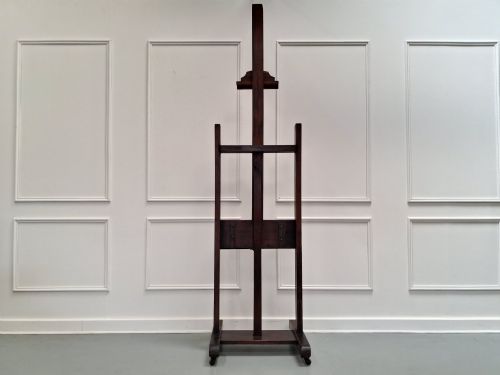
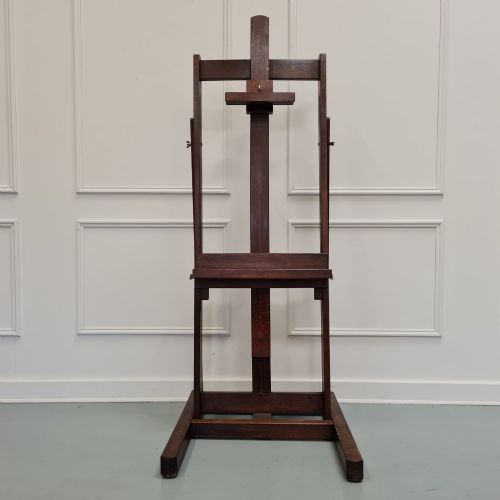
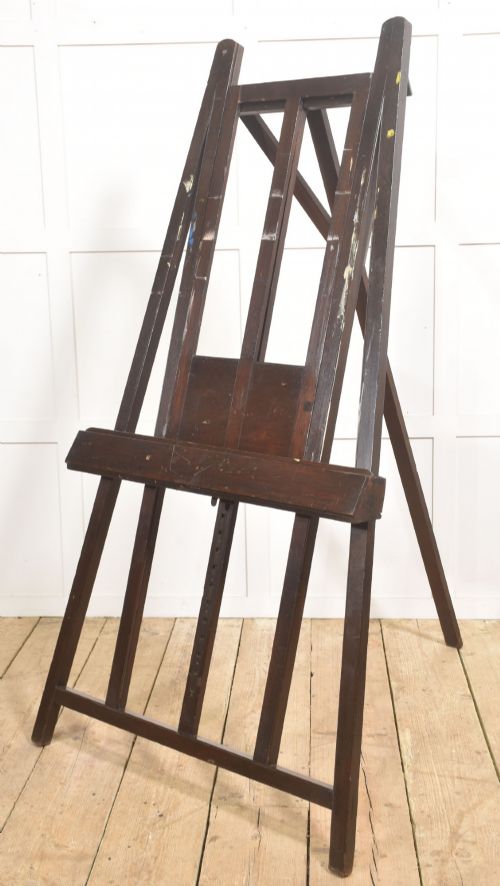
An adjustable artist easel is a functional studio furniture piece designed to hold canvases securely at various working heights and angles. Buyers hunting for an adjustable artist easel will encounter large floor-standing studio models alongside smaller tabletop formats and double-sided gallery variations.
The materials span sturdy oak and mahogany timbers alongside lighter pitch pine and beech wood constructions. Iron and brass fittings provide the mechanical adjustments required for smooth height and tilt manipulation.
Origins range across the nineteenth century and the early twentieth century, taking in English workshop designs and French provincial examples. These utilitarian pieces reflect the practical needs of period painting studios and drawing rooms.
Materials and Construction
Makers relied heavily on dense hardwoods like oak and mahogany to build frames capable of supporting heavy canvases without flexing. Pitch pine and beech appear frequently in travel and lighter studio formats, offering reliable durability.
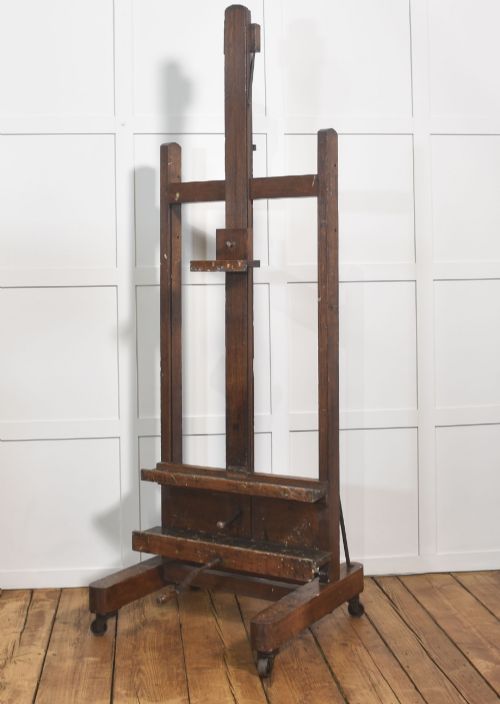
Metal components such as brass ratchets, iron screws, and cast-iron winding mechanisms control the vertical movement of the canvas rests. Leather straps and wooden pegs supplement these metal systems to lock moving parts securely into position.
Joinery techniques prioritize mechanical strength, utilising robust tenon joints and reinforced bases to withstand daily studio adjustments. Many examples incorporate heavy sled bases or wheeled feet for stability and maneuverability.
Nineteenth-century studio models frequently incorporate heavy cast iron winding handles alongside brass fittings.
Assessing Quality and Build
Quality rests primarily on the integrity and smoothness of the mechanical adjustment systems rather than decorative carving. Original brass winding handles, working ratchets, and uncompromised wooden tracks separate superior pieces from altered or stiff examples.
The choice of timber dictates the overall mass and durability, with thick quarter-sawn oak and richly grained mahogany representing the sturdiest tier. Finer pieces maintain their original maker stamps and retain uniform timber colour across all adjustable sections.
Windsor and Newton·C Roberson & Co London·Reeves and sons ltd·Heals
The Adjustable Artist Easel Glossary
- Studio easel
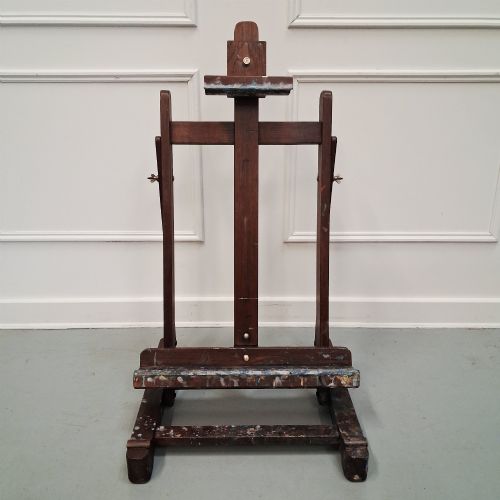
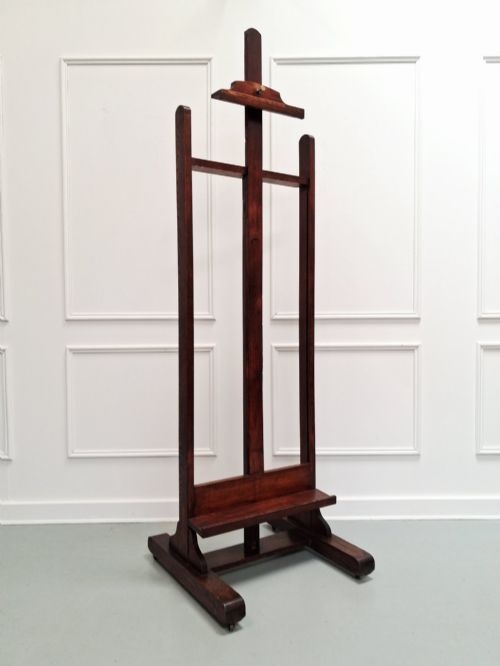
- A large floor-standing wooden frame designed for heavy daily use inside an artist workspace. These heavy pieces typically feature winding mechanisms and large bases.
- Folio stand
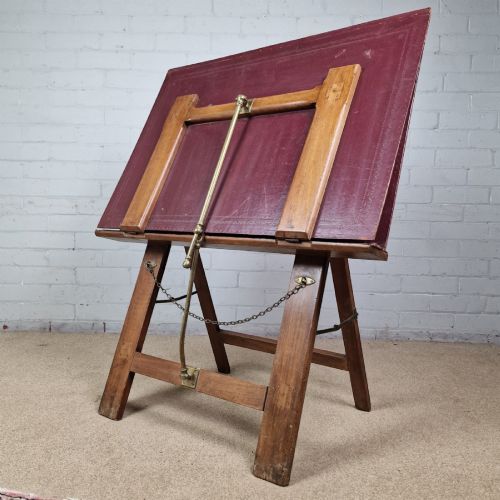
- A low-framed display piece utilised for holding large paper sheets, prints, or architectural drawings flat or upright. They share similar timber construction with related studio equipment.
- Ratchet mechanism
- A notched metal bar and catch system that permits stepwise height adjustment of the canvas shelf. This hardware is central to the functionality of period examples.
- Double sided gallery easel
- A heavier studio stand fitted with working ledges on both front and rear faces to display multiple works simultaneously. They appear frequently in larger nineteenth-century configurations.
Adjustable Artist Easel: Frequently Asked Questions
How do I operate the adjustment mechanism?
Most pieces utilise either a metal winding handle connected to internal cogs or a wooden peg and ratchet system to raise and lower the central shelf. Turning the handle or shifting the peg allows smooth vertical travel along the main upright channels.
Applying a small amount of appropriate lubricant to metal tracks helps maintain smooth movement if the components feel stiff from age.
Can these hold heavy modern canvases?
Studio formats built from dense oak or mahogany possess the structural mass required to support large and heavy paintings securely. Their wide bases and robust internal ratchets were engineered precisely for substantial artistic output.
Lighter beech or pine variants suit medium-format works better than monumental canvases due to their more slender framing.
Were these used outside the studio?
While the majority of tall studio pieces remained stationary, lighter beech and pine variants were specifically designed for travel and outdoor sketching. These folding examples pack down compactly for transport.
Architects and draughtsmen also utilised adjustable desk and table formats for technical drawings and large format folios.
How do I date a wooden studio piece?
Dating relies on observing the combination of timber choice, fastening hardware, and general construction methods relative to recorded workshop styles. Nineteenth-century examples often display hand-cut joinery alongside cast-iron or brass mechanical components.
Later pieces from the early twentieth century introduce standardised machine screws and simpler geometric framing details.