





Antique Oak Easel
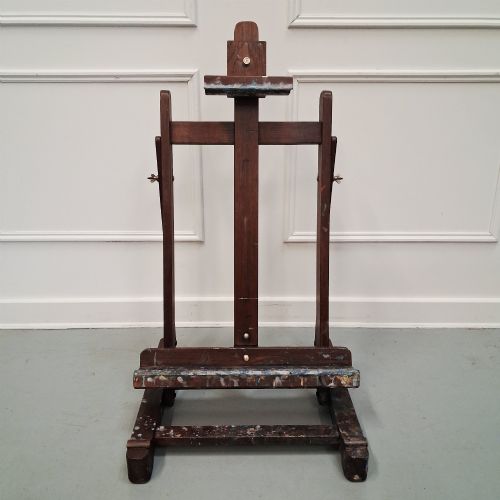
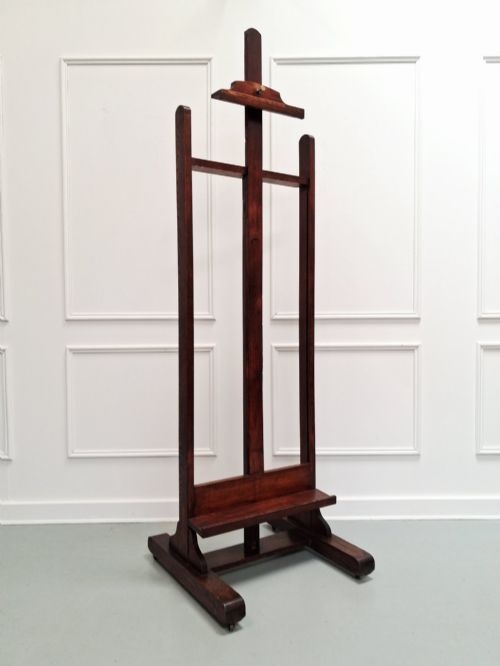
An antique oak easel holds canvases, folios and books with robust utility and grounded period character.
Antique Oak Easel
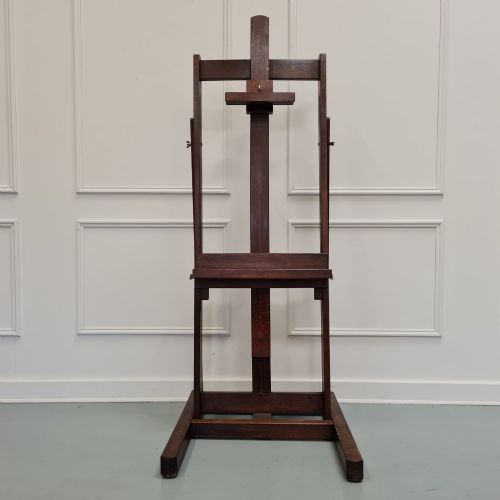
The search for an antique oak easel uncovers a variety of sturdy supports, ranging from towering studio models to compact tabletop versions designed for display or painting. Buyers frequently encounter large nineteenth-century studio pieces alongside smaller French winder designs and Edwardian examples intended for domestic use.
Origins span English workshops and French ateliers, embracing styles from Gothic Revival and Arts and Crafts to French Provincial and Black Forest carving. This broad stylistic range ensures an oak easel fits diverse interior settings while retaining its original utilitarian purpose.
Materials and construction
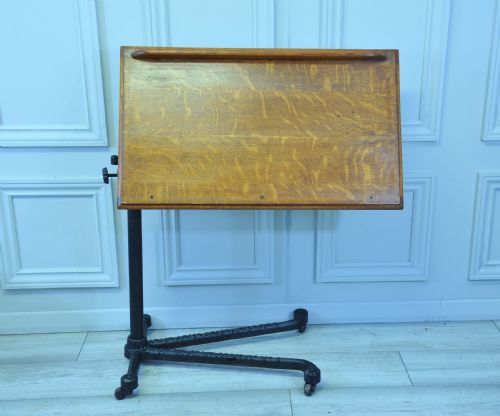
Makers relied principally on solid oak for its structural integrity, often pairing the heavy timber with brass and cast iron mechanisms to handle mechanical adjustments. Metal winding handles, pin ratchets and brackets allowed artists to alter heights and angles securely.
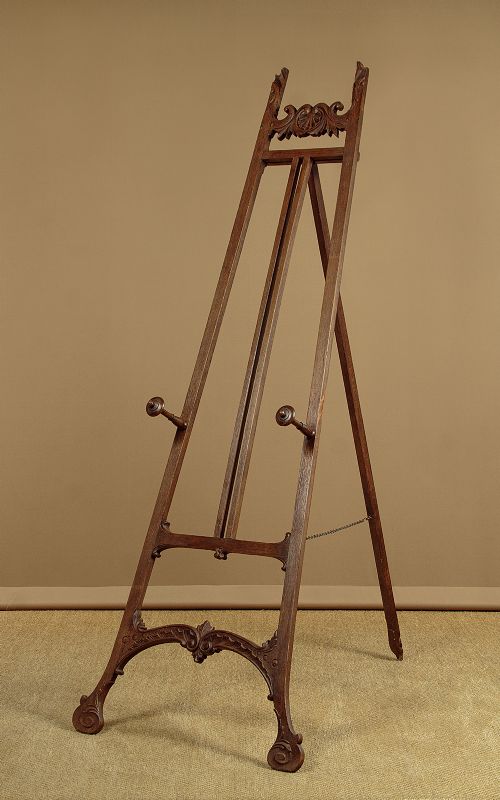
Surface ornamentation varied from plain, functional studio framing to carved decoration, notably in Black Forest and Arts and Crafts pieces. Selected examples incorporated secondary materials like velvet, pine or sterling silver mounts for specific display functions.
Listings feature oak combined with brass, cast iron and velvet across Victorian, Edwardian and Regency periods.
Assessing quality and craftsmanship
Quality in these stands rests upon the complexity of the adjusting mechanism, such as smooth-working winder systems and heavy cast iron ratchets that support substantial weight without slipping. Studio pieces featuring fully adjustable double-sided frames represent significant engineering compared to simpler fixed models.
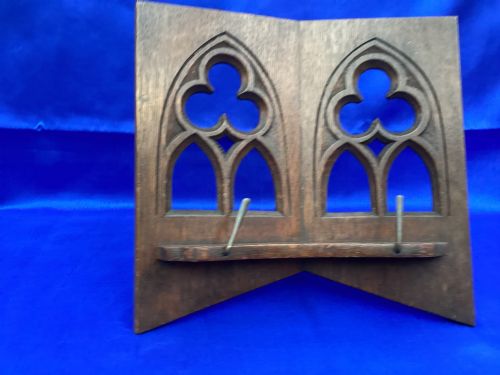
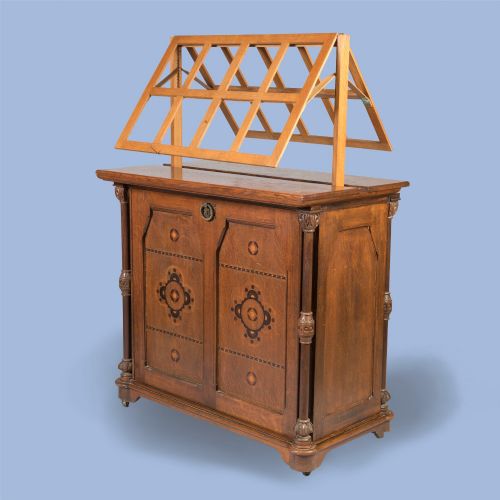
The refinement of the woodwork dictates distinction, separating plain utility frames from heavily carved display pieces or refined Gothic Revival library furniture. Superior execution shows in the crispness of the carving, the integration of brass fittings and the stability of large H-frame assemblies.
Carters Of London·Windsor and Newton·Benjamin Taylor & Sons·Lechertier & Barbe·Reeves & Sons London
The Antique Oak Easel Glossary
- Winder easel
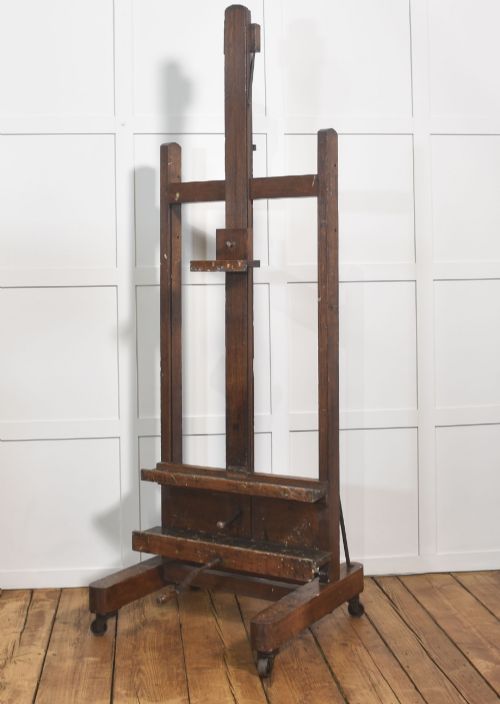
- A mechanical painting stand utilising a handle-operated winch system to raise and lower heavy canvases. This gearing mechanism is frequently found on nineteenth-century French examples.
- Studio easel
- A large, heavy-duty floor-standing support designed for daily use by painters in a professional workspace. These pieces often incorporate castors and extensive vertical adjustments.
- Double sided easel
- A versatile display or painting stand configured to hold work on both the front and reverse simultaneously. This form appears in large Edwardian and nineteenth-century formats.
- Folio stand
- A low rack or stand constructed to store large paper portfolios, architectural drawings and prints safely. Examples often feature hinged sides and sturdy oak framing.
- Gothic Revival
- A nineteenth-century design movement drawing inspiration from medieval architecture and ornament. Pieces in this style display pointed arches, heavy moulding and formal linenfold or geometric carving.
Antique Oak Easel: Frequently Asked Questions
What are studio easels used for?
Large studio easels provide sturdy vertical support for heavy canvases during the painting process, allowing artists to adjust heights easily.
Today, collectors also utilise them in domestic settings to display large artworks and mirrors securely.
How do French winder easels work?
French winder models utilise a mechanical handle and internal cord or screw system to raise the central shelf holding the canvas.
This gearing allows an artist to lift a heavy painting smoothly without straining the frame.
Are double sided easels rare?
Double-sided stands appear less frequently than standard single-faced models, having been made for shared studio spaces and galleries.
Their balanced framing allows two people to work or display items simultaneously.
How do I date an oak easel?
Dating relies on identifying construction methods, hardware types such as cast iron ratchets, and stylistic markers like Arts and Crafts or Gothic Revival motifs.
Comparison with documented maker timelines provides further chronological certainty.