



Art Nouveau Wooden Chairs
These art nouveau wooden chairs bring fluid organic lines and careful craft to domestic seating, offering both historical character and daily utility.
Art Nouveau Wooden Chairs
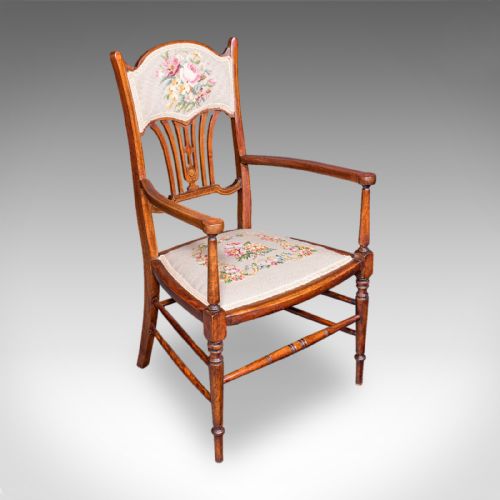
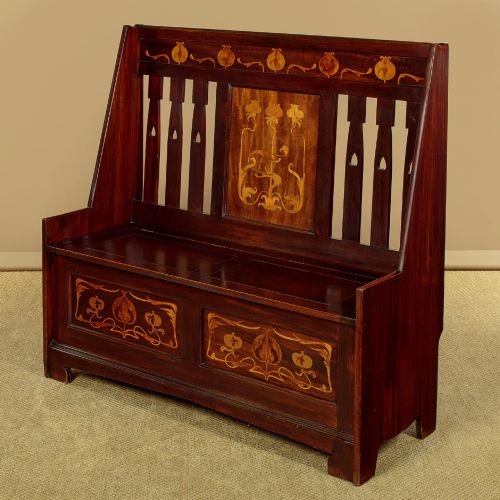
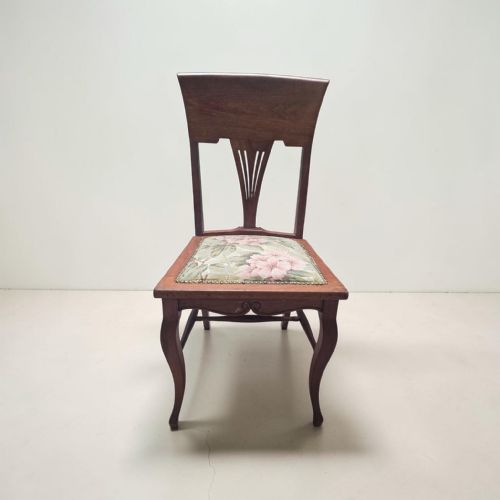
Art nouveau wooden chairs encompass seating from the late nineteenth and early twentieth centuries, capturing the distinct aesthetic of the period alongside adjacent Edwardian and Arts and Crafts styles. Buyers searching for art nouveau wooden chairs encounter diverse forms, ranging from mahogany side chairs and beech highbacks to bentwood rocking chairs and inlaid elbow chairs.
The selection includes individual parlour seats, salon suites, and matched sets of dining chairs alongside occasional armchairs and settles. Pieces originate from various European centres, featuring French hardwood designs, English mahogany frames, and Austrian bentwood construction.
Makers and manufacturers of the era applied characteristic linear movement and floral or geometric inlays to woods such as walnut, satinwood, and oak. These forms serve functional seating roles while displaying the decorative priorities of their period.
How they were made
Cabinet makers utilised hardwoods including mahogany, beech, walnut, and oak to build structural frames, often incorporating satinwood and wood inlay for surface decoration. Steam-bent techniques shaped flexible beech into continuous curved forms for bentwood armchairs and rocking chairs.
Upholstered elements integrated textile and fabric coverings into seats and wing fireside chairs, while metal additions such as brass hardware completed specific designs. Joinery methods relied on traditional cabinet making alongside industrial steam-bending processes.
What varies in quality
Quality differences lie in the execution of the timber work, from the precision of wood inlay and satinwood contrasting details to the integrity of the bentwood curves. Superior examples display balanced proportions, sound joinery, and refined carving that reflect the design ambitions of the maker.
The treatment of materials dictates the overall standard, distinguishing standard commercial production from workshop pieces attributed to known manufacturers. Preservation of original frames and fabric upholstery further separates pieces that retain their period integrity.
Jacob and Josef Kohn·Thonet·James Shoolbred and Co·Liberty and Co·Louis Majorelle
The Art Nouveau Wooden Chairs Glossary
- Bentwood
- Wood shaped by exposure to steam and pressure into curved forms. This technique created the distinct rounded frames seen in Vienna Secession rocking chairs and armchairs.
- Inlay
- Pieces of contrasting timber fitted into a recessed surface to form decorative patterns. Satinwood and various woods were frequently set into mahogany frames.
- Side chair
- A chair without arms, designed originally for dining or general parlour use. These forms often feature high backs with linear or organic motifs.
- Settle
- A wooden bench with a high back and solid arms, often incorporating box storage beneath the seat. These larger pieces served communal areas in domestic interiors.
- Elbow chair
- An armchair with low rests for the arms, suitable for occasional seating or desk use. The form allows for decorative woodwork along the upper supports.
Art Nouveau Wooden Chairs: Frequently Asked Questions
How do I identify art nouveau wooden chairs?
Art nouveau wooden chairs are identified by their flowing organic lines, stylised plant motifs, and characteristic wood inlay work. These elements appear on mahogany, beech, and walnut frames dating from the late nineteenth and early twentieth centuries.
Examination of the joinery and materials helps separate pieces from this movement from later reproductions. Details such as steam-bent frames or satinwood contrasting indicate specific regional manufacturing traditions.
Can these chairs be used daily?
Most art nouveau wooden chairs remain structurally sound for regular domestic use if the frame and joints are stable. Dining chairs and armchairs provide practical seating when the wood and upholstery receive proper maintenance.
Careful placement away from direct heat sources protects the timber and any original fabric or textile elements. Periodic checks of the joinery ensure long-term stability during daily use.
What is the difference between side chairs and armchairs?
Side chairs are built without armrests, making them compact enough to fit neatly around dining tables or along parlour walls. Armchairs incorporate structural supports for the arms, offering a more enclosed seating position for reading or resting.
Both forms share the decorative vocabulary of the period, including inlaid woodwork and high backrests. Armchairs often served as occasional or fireside seating rather than primary dining furniture.
Where were these chairs manufactured?
Manufacturing occurred across various European workshops and factories, with notable production in England, France, and Austria. British firms produced mahogany and oak dining sets, while continental makers specialised in bentwood and hardwood designs.
Export networks distributed these designs widely, leading to diverse stylistic influences within domestic interiors. Attribution often rests on construction methods and characteristic materials used by specific workshops.