



Curved Leg Dining Chairs
Curved leg dining chairs are seating built with flowing supports that bring elegance to the table, ranging from formal Georgian sets to later Victorian variations.
Curved Leg Dining Chairs
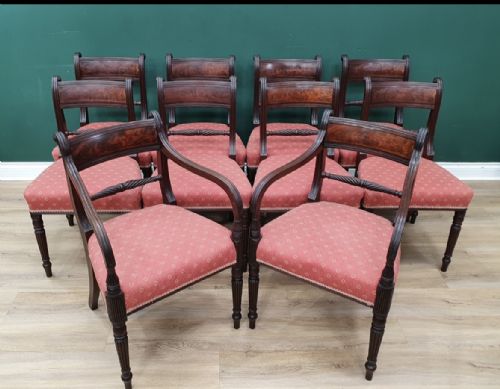
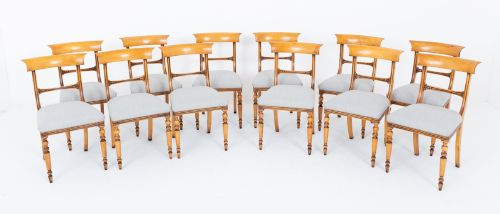
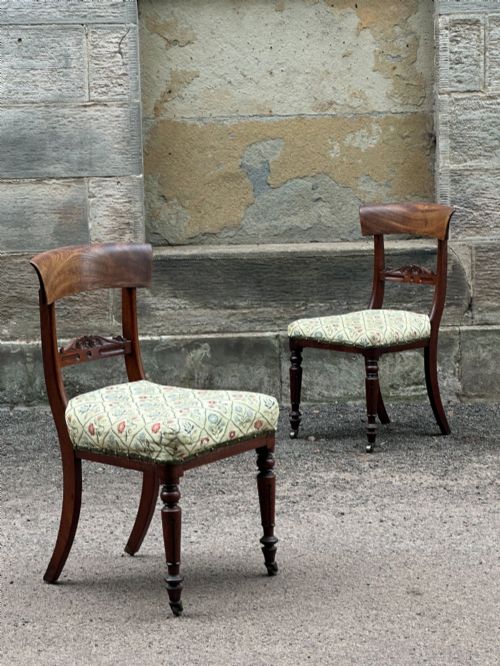
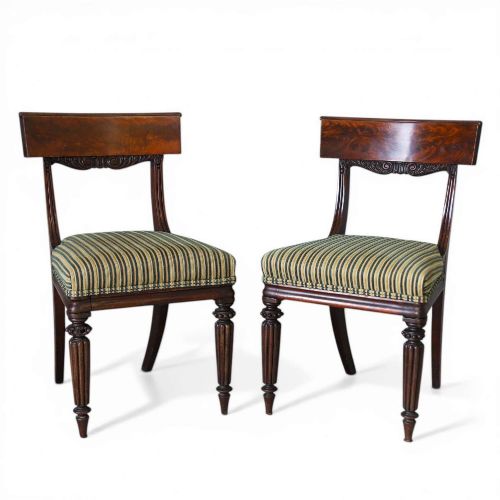
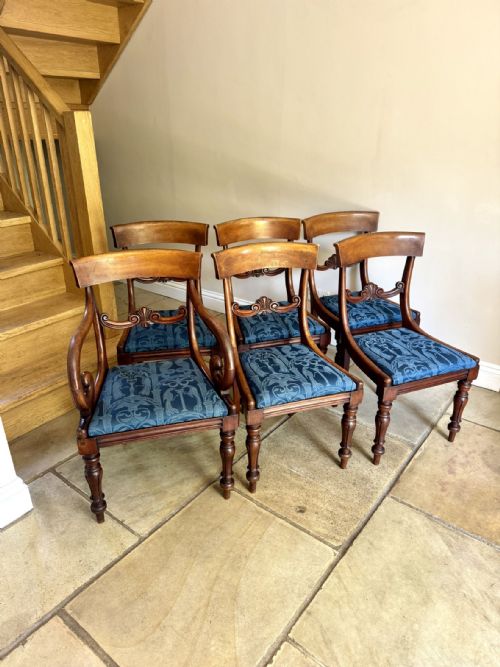
Curved leg dining chairs encompass dining chairs, side chairs, and armchairs built across the Georgian, Regency, William IV, and Victorian periods. These seats appear as single items, pairs, or larger matching sets intended for domestic dining.
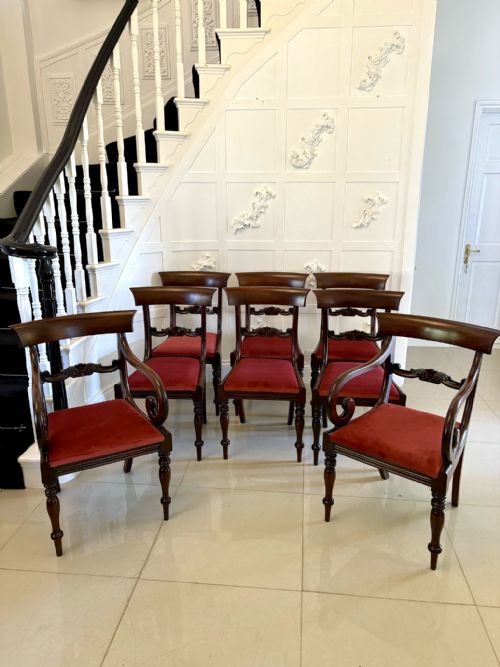
The most frequent examples found in these listings date from the nineteenth century and employ mahogany as the primary timber. Buyers encounter individual carvers alongside large sets that include both armchairs and single chairs.
What varies in quality
The standard of timber selection and carving precision separates standard seating from exhibition pieces. Finer sets display carefully chosen grain patterns in the mahogany and crisply defined contours along the curved wooden supports.
The scale of the matching set and the preservation of original timber influence the character of the chairs. Larger groupings that maintain uniform wood colour and stable joinery across all pieces demonstrate greater initial craftsmanship.
Listings feature dining chairs spanning the 18th, 19th, and 20th centuries, executed in mahogany, walnut, and rosewood with various fabric and leather upholstery.
Holland And Sons
The Curved Leg Dining Chairs Glossary
- Sabre leg
- A curved wooden support that tapers as it sweeps outward from the seat frame. This form appears frequently on Regency furniture.
- Carver
- An armchair designed with armrests for the head of the table. These often match a larger set of single dining chairs.
- Flame mahogany
- A timber veneer sliced to produce a fiery, rippling grain pattern. Cabinetmakers applied this to prominent surfaces for visual impact.
- William IV
- A British design period spanning the 1830s characterised by robust proportions and classical revival details. Furniture from this era often utilises dense mahogany or rosewood.
Curved Leg Dining Chairs: Frequently Asked Questions
How do I spot a Regency dining chair?
Regency dining chairs typically display classic lines with curved wooden supports, sometimes featuring brass inlays or sabre legs. These pieces reflect the neoclassical taste prevalent in the early nineteenth century.
Inspect the timber grain and the joinery where the back meets the seat. Genuine examples from this period rely on traditional construction methods without modern fixings.
Can I mix armchairs with single chairs?
Historic dining sets often combined a pair of armchairs, sometimes called carvers, with a larger number of single side chairs. This traditional arrangement placed the armchairs at the heads of the dining table.
Matching the wood type and the curved leg profile ensures a cohesive look when combining different chairs from the same era.
What wood was used for Victorian dining chairs?
Victorian dining chairs most commonly utilise mahogany, though walnut and other timbers also appear in nineteenth-century listings. Mahogany offered the strength and grain quality needed for carved curved legs.
Examining the underside of the seat frame reveals the unpolished timber and original construction marks left by the cabinetmaker.
How should I care for antique upholstery?
Historic upholstery materials like leather, velvet, and fabric require gentle maintenance to preserve their condition. Regular dusting and protection from direct sunlight prevent the textile fibres from degrading.
Where chairs retain traditional stuffing, avoid excessive pressure and consult a specialist restorer if the internal support needs attention.