


Art Nouveau Planter
An art nouveau planter brings botanical display alive through flowing organic lines and characteristic period metals or ceramics.
Art Nouveau Planter
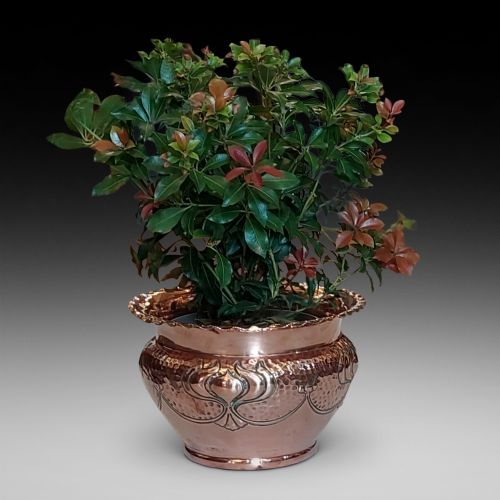
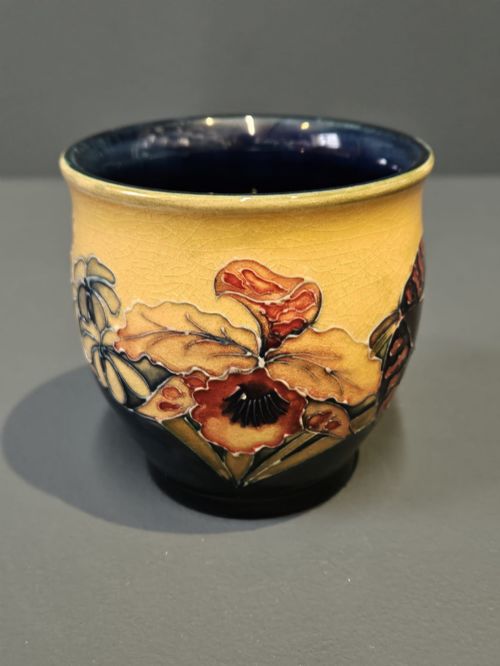
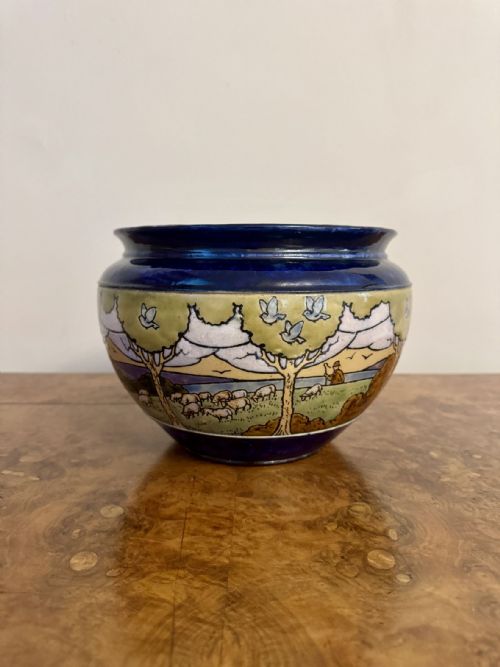
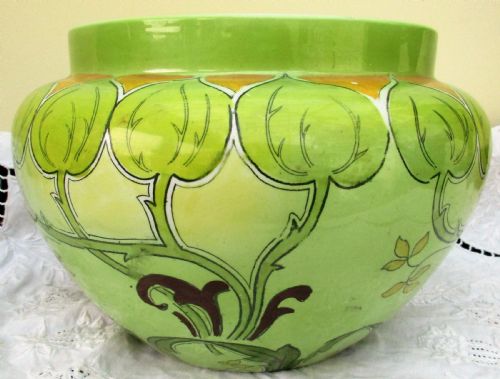
When searching for an art nouveau planter, buyers encounter vessels designed to house indoor plants while exhibiting the sinuous, nature-inspired motifs characteristic of the movement. These pieces frequently appear under alternative designations such as jardinieres, cache-pots, and plant stands.
The selections available on this page span several decades, reaching from the late nineteenth century through the Edwardian era and into the nineteen-twenties. Brass and copper versions frequently emerge alongside glazed earthenware and stoneware productions.
Vessels originating from English, French, and Dutch workshops dominate the selection, often taking the form of footed bowls or handled containers. Buyers are most likely to meet metal bucket forms or ceramic jardinieres bearing stylized floral relief.
Materials and Working Methods
Metal vessels rely on the hammer and the lathe, utilising sheet brass and copper that workers shaped through planishing and embossing. Artisans hammered the metal to create light-reflecting facets, occasionally incorporating enamel or cast iron elements for structural contrast.
Ceramic examples combine earthenware, stoneware, and porcelain bodies finished with specialised glazes. Potters applied lustrous, slip-trailed, or flow-blue techniques to achieve the mottled and iridescent surfaces typical of the period aesthetic.
The inventory spans multiple decades of production, incorporating nineteenth-century Victorian pieces and twentieth-century Edwardian designs.
Distinctions in Execution
Quality rests upon the crispness of the hand-formed detail, whether in the depth of a hammered copper motif or the precise definition of a moulded ceramic relief. Superior metal vessels display robust gauge thicknesses that maintain their structural integrity without buckling.
The harmony between the vessel and any original stand or liner dictates the completeness of the piece. Ceramic examples demonstrate excellence through the even application of glaze and the complexity of the firing technique.
Royal Doulton·J Sankey and Sons·Clement Massier·Minton·Julius Dressler·Macintyre and Co·William Moorcroft·Liberty and Co·Royal Dux·WMF·Albert Meyer·Royal Worcester·W A Adderley
The Art Nouveau Planter Glossary
- Jardiniere
- A large ornamental pot or stand for holding plants or flowers. These vessels often sit directly on the floor or upon a dedicated base.
- Cache-pot
- A decorative flowerpot cover designed to conceal a plain inner plant container. The term translates directly from French as hidden pot.
- Planished
- Hammered with a flat-faced tool to create a textured, light-diffusing surface pattern on sheet metal. This technique strengthens the metal while leaving subtle facets.
- Secessionist
- Pertaining to the progressive art movements in central Europe that rejected traditional academic styles in favour of geometric and organic abstraction. This approach heavily influenced ceramic design.
- Lustre glaze
- A type of ceramic finish containing metallic elements that produce an iridescent sheen when fired in a reduced oxygen environment. The resulting surface catches light with a pearlescent glow.
Art Nouveau Planter: Frequently Asked Questions
What is the difference between a jardiniere and a planter?
A jardiniere typically functions as an ornamental container designed to hold a potted plant, often serving as a decorative centrepiece on furniture or stands.
Planters can encompass a broader range of robust vessels meant for direct planting or heavy indoor botanical display.
How do I clean brass and copper planters?
Maintenance requires gentle washing with mild soapy water and a soft cloth to remove accumulated dust without disturbing the underlying patina.
Harsh chemical polishes should be avoided because they strip away the historic oxidation that gives antique metal its character.
Can ceramic jardinieres hold water directly?
Many historic ceramic pieces feature porous earthenware bodies that can seep moisture over extended periods.
Utilising a small inner plastic saucer protects both the antique ceramic and the furniture beneath from water damage.
How can I identify an art nouveau design?
Authentic pieces rely on asymmetrical lines, whiplash curves, and stylized motifs drawn from stems, seed pods, and insect wings.
Geometric influences began to emerge alongside these organic shapes as the style transitioned toward later twentieth-century aesthetics.