

Art Nouveau Pewter
Art nouveau pewter brings fluid, organic lines and stylized natural motifs into domestic metalwork through domestic objects and decorative vessels.
Art Nouveau Pewter
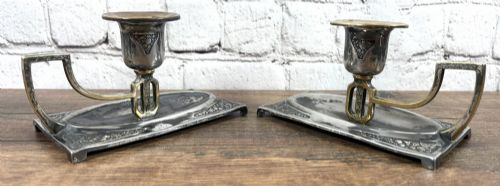
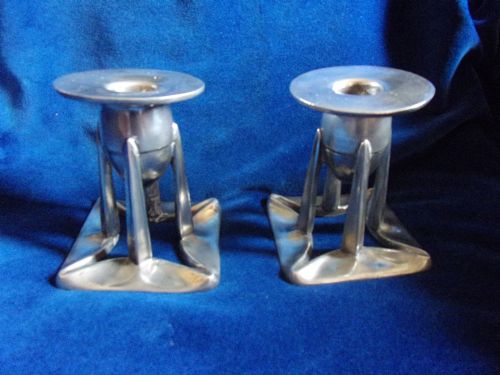
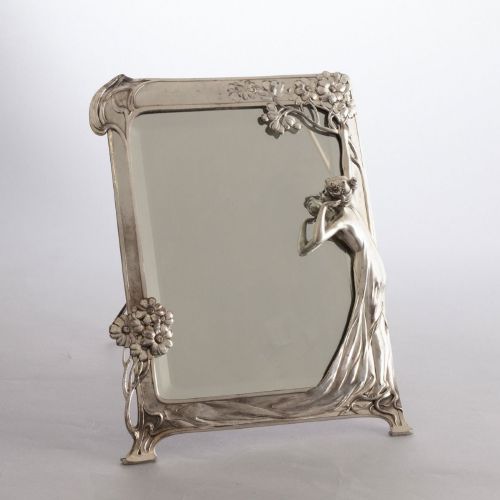
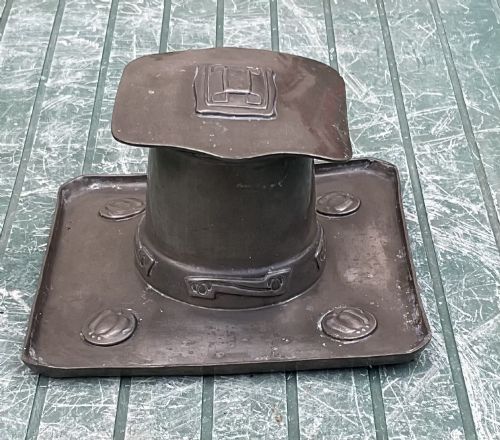
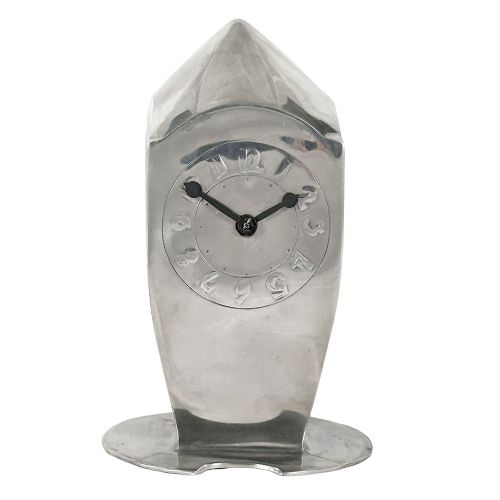
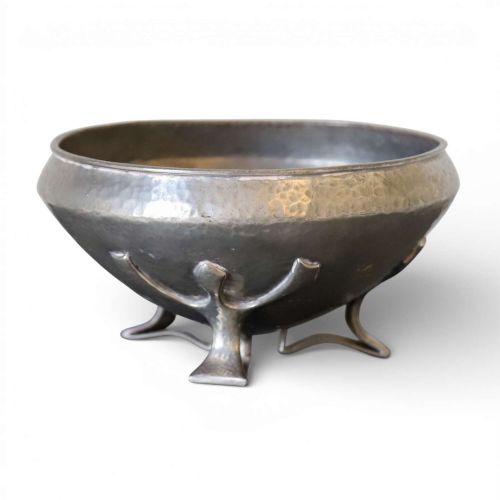
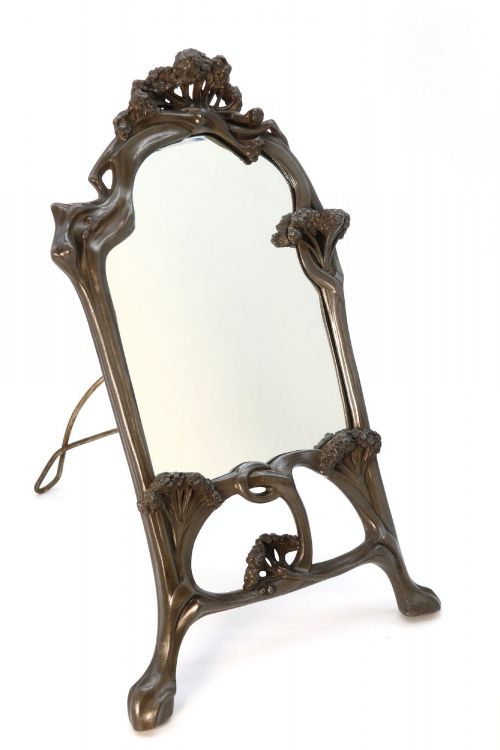
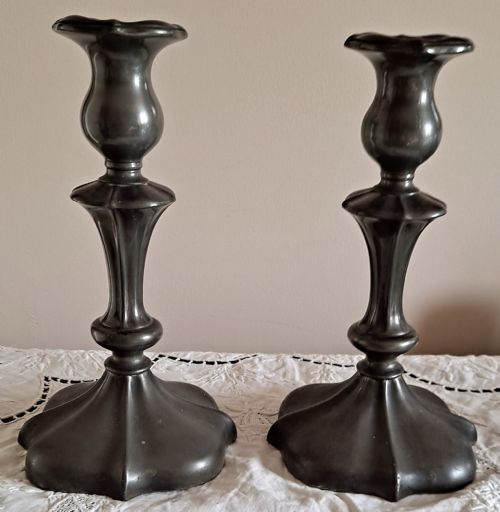
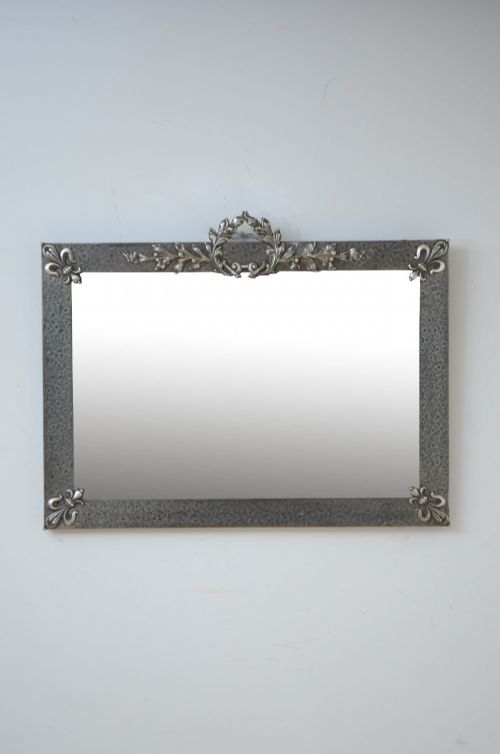
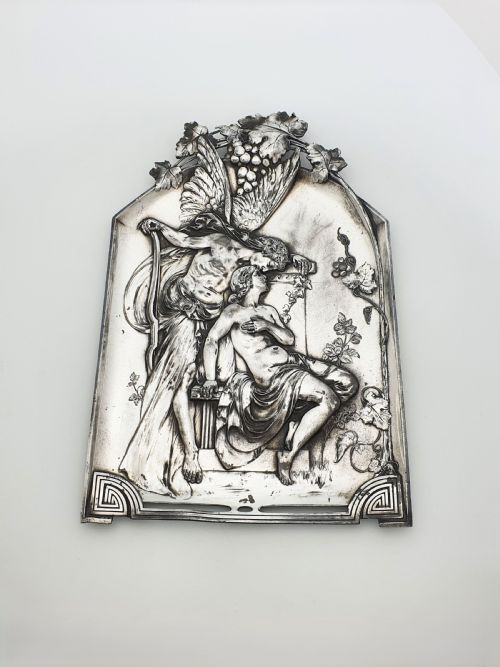
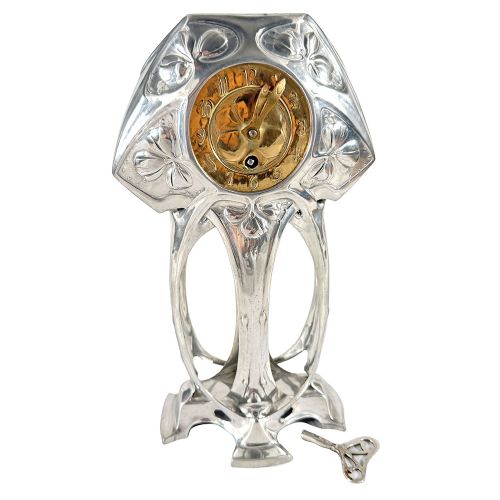
Art nouveau pewter encompasses domestic metalware and decorative items produced during the late nineteenth and early twentieth centuries, capturing the flowing botanical forms characteristic of the movement. Objects range from utilitarian vessels like jugs, tankards and inkwells to decorative mantel clocks, picture frames, card trays and candlesticks.
Makers across Britain and continental Europe utilised the alloy to create fluid designs, often incorporating natural elements such as flowers, climbing foliage and female figures. British examples frequently align with the Arts and Crafts aesthetic, whilst German and French pieces lean towards flamboyant Jugendstil styling.
Buyers encounter everything from small desk accessories to large centrepieces and ewers, with many pieces designed for Liberty & Co under the Tudric line or manufactured by continental firms like WMF and Orivit.
How they were made
Manufacturers cast pewter into intricate moulds, exploiting the metal's low melting point and malleability to capture complex, asymmetrical curves and whiplash lines. Many items received a silvered finish or silver plating to enhance their visual appeal and mimic solid silver.
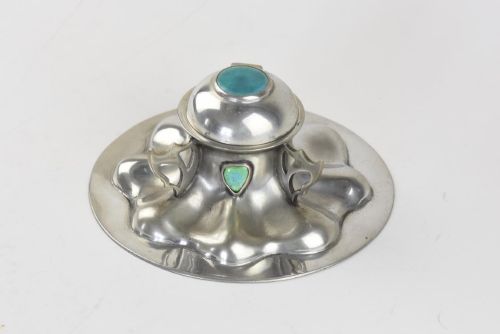
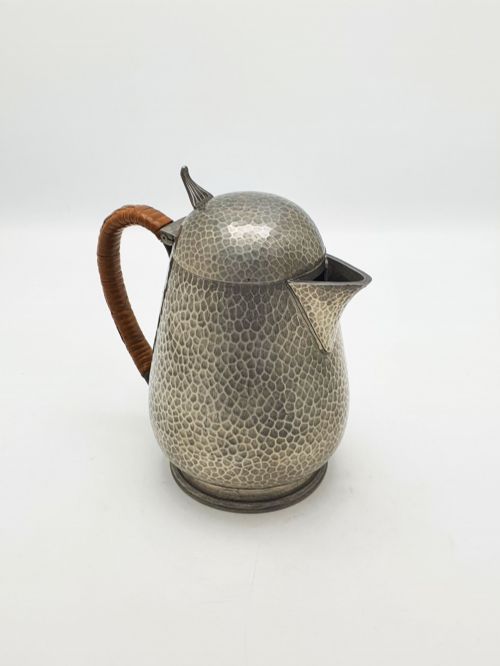
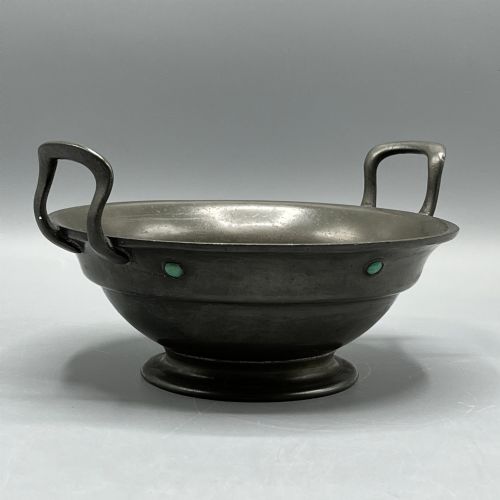
Workshops frequently combined the grey metal with contrasting media, mounting glass vessels within pewter frames or setting vibrant enamel cabochons, abalone shell and Ruskin ceramic inserts into the cast surfaces. Handles often incorporated cane or woven rattan for functional grip and textural contrast.
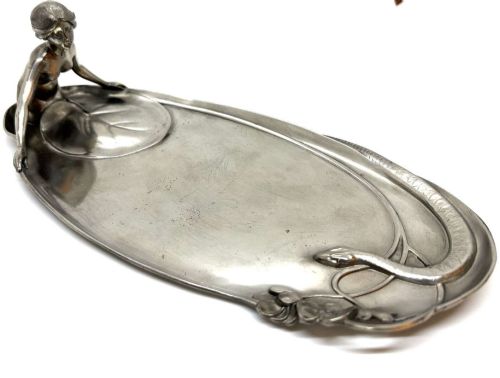
Several pieces feature sculptural animal heads and mermaids serving as handles on trays and jugs, bringing creatures of myth and forest directly to the tea table.
What varies in quality
The distinction between ordinary production pieces and superior work lies in the crispness of the casting detail and the integration of auxiliary materials. Exemplary items display sharp relief work on figurative elements and plant motifs without surface pitting or softening.
Design attribution heavily influences distinction, with pieces bearing marks of renowned designers or established firms commanding greater appreciation. The inclusion of undamaged Liberty Tudric hallmarks, original coloured glass inserts or intact polychrome enamel cabochons elevates the standing of an object.
Archibald Knox·Liberty and Co·William Hutton and Sons·Oliver Baker·David Veasey·Friedrich Adler·Louis Auguste Moreau·Olof Ahlberg·Julius Robert Hannig
The Art Nouveau Pewter Glossary
- Tudric
- The trade name used by Liberty & Co for their line of pewter wares, often designed by figures associated with the Arts and Crafts movement. These items frequently display model numbers stamped to the underside.
- Jugendstil
- The continental German-speaking manifestation of the art nouveau movement, translating as youth style. It prioritises linear dynamism and botanical motifs in decorative arts.
- Cabochon
- An uncut, polished gemstone or coloured glass insert with a convex, rounded top. Makers set these cabochons into pewter mounts to add points of rich colour.
- Silvered Pewter
- Pewter that has undergone a secondary plating process to apply a thin layer of silver over the base alloy. This treatment gave duller grey metal a brighter, reflective surface.
- Britannia Metal
- A specific, high-grade form of tin-based alloy composed largely of tin with small quantities of antimony and copper. It possesses a brighter finish and harder properties than traditional pewter.
Art Nouveau Pewter: Frequently Asked Questions
What is Tudric pewter?
Tudric pewter is the proprietary brand name used by the London retailer Liberty & Co for high-quality pewter items produced during the early twentieth century. These pieces often reflect the principles of the Arts and Crafts movement through Celtic revival patterns and clean structural forms.
Many Tudric designs came from notable artists like Archibald Knox and Oliver Baker. Items from this range typically bear stamped model numbers and maker marks on the base.
How do I clean art nouveau pewter?
Pewter requires gentle cleaning with warm soapy water and a soft cloth to preserve its natural patina and any applied silver plating. Avoid harsh abrasive cleaners or metal polishes that can strip surface finishes and remove original highlights.
Dry the metal thoroughly after washing to prevent water spotting. Pieces featuring enamel cabochons or delicate glass inserts demand extra care around the settings.
Who made these pieces?
Production involved both large continental manufacturing houses and specific British retail firms. Notable names include the German metalwork company WMF, Orivit, Kayserzinn, and British retailers such as Liberty & Co working with independent designers.
Designers like Archibald Knox created numerous iconic motifs for British production. Stamped hallmarks, monograms or registry numbers on the underside usually identify the manufacturer.
How do I spot glass and pewter combinations?
Many decorative vessels combine blown glass bodies with cast pewter overlays, mounts or handles. Manufacturers secured the metal directly around the glass components during production to create claret jugs, decanters, and vases.
Examine the joins where metal meets glass for secure fitting without excessive adhesive. The glass inserts often feature coloured hues like cobalt blue, ruby, or amethyst.