


Art Nouveau Pedestal Bowl
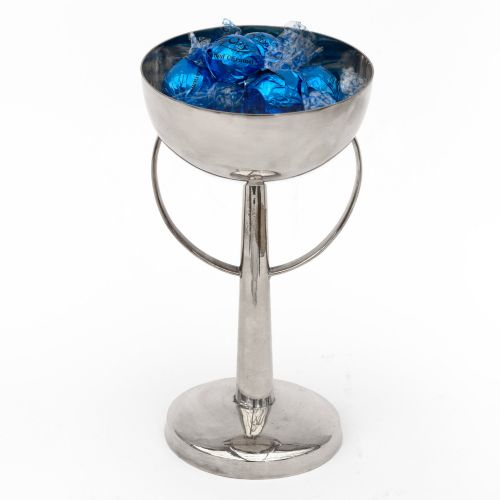
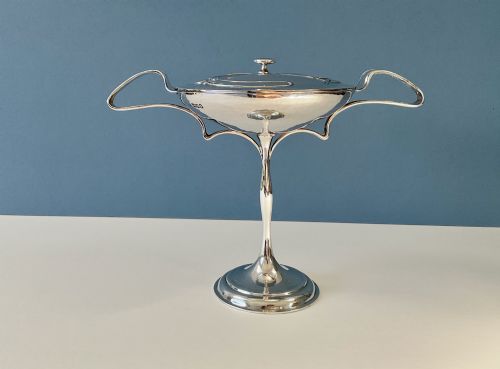
An art nouveau pedestal bowl brings sinuous organic lines and elevated presence to a table, combining fluid floral motifs with practical raised forms.
Art Nouveau Pedestal Bowl
An art nouveau pedestal bowl combines the characteristic flowing, plant-inspired lines of the turn of the twentieth century with an elevated footed form. These decorative vessels appear in forms such as centrepieces, tazze, and handled baskets across various periods including the Edwardian era and the nineteen-tens.
The most common versions met on this page span diverse materials ranging from sterling silver and silver plate to pewter, bone china with lustre glaze, and glass. Makers applied the style to everything from small bon-bon dishes to substantial dining table centrepieces.
The underlying aesthetic draws heavily on natural curves, plant tendrils, and stylized insect or animal motifs. Examples frequently cross over into Arts and Crafts sensibilities or utilise cameo glass and silvered bronze to achieve their sculptural profiles.
Materials and construction methods
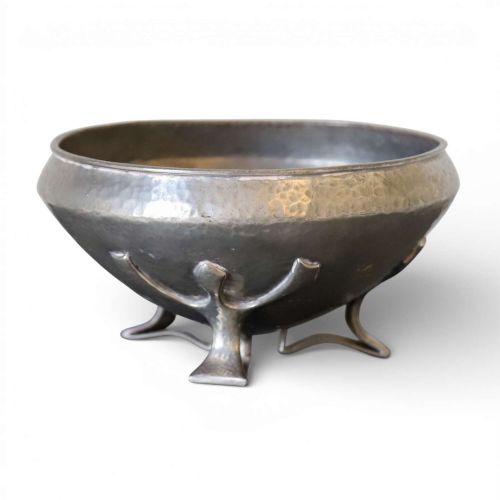
Metals such as pewter, silver, and silver plate dominate the construction, often shaped through casting and intricate hammering techniques. Pewter components allow for deep, flowing relief work characteristic of continental and British workshops.
Ceramic examples employ specialised lustre glazes on bone china to create iridescent surface effects. Glass elements, including cameo glass and crystal inserts, are combined with metal mounts to produce layered, contrasting textures.
The archive records pieces spanning the nineteenth century through the nineteen-thirties, encompassing both British Arts and Crafts and continental metalwork.
Distinctions in quality and execution
The standard of an art nouveau pedestal bowl rests on the crispness of the organic casting and the fluidity of its asymmetrical lines. Superior examples display careful hand-finishing in the metalwork or precise application of lustre glazes that catch the light evenly.
The integration between different materials, such as fitted crystal glass within a metal stand or pewter frame, separates standard production from finer output. Well-executed pieces maintain structural balance while fully committing to the decorative demands of the style.
Liberty & Co·Oliver Baker·WMF·Daisy Makeig-Jones Wedgwood·Eichwald·Orivit·Christofle et Cie
The Art Nouveau Pedestal Bowl Glossary
- Tazza
- A shallow bowl or cup mounted on a stem and foot, commonly used for serving or display. This elevated form emphasises the decorative rim and interior motifs.
- Pewter
- A malleable metal alloy primarily of tin, popular during the early twentieth century for soft, sculptural forms. It takes organic relief casting particularly well.
- Lustre Glaze
- A type of ceramic glaze containing metallic oxides that produce an iridescent sheen when fired. It creates shimmering, multicoloured surface effects.
- Cameo Glass
- Glass formed with multiple layers of different colours carved away to create a raised design. It provides strong textural contrast in decorative vessels.
- Bon-Bon Dish
- A small decorative dish intended for holding sweets or confectionery. These smaller vessels often mirror the elaborate styling of larger centrepieces.
Art Nouveau Pedestal Bowl: Frequently Asked Questions
What is an art nouveau pedestal bowl used for?
These elevated vessels serve primarily as decorative centrepieces, fruit bowls, or display dishes for the dining table and sideboard. Their raised form draws the eye upward and showcases the fluid contours of the period.
Smaller iterations function as bon-bon dishes or nut dishes for domestic entertaining. They bring sculptural presence and organic ornamentation to interior spaces.
How do I care for silver plated vessels?
Silver plated and solid silver pieces require gentle cleaning with a soft cloth and appropriate non-abrasive polish to protect the metallic surface. Avoid harsh chemical dips that strip away patination or damage delicate plated layers.
Glass and ceramic components should be washed separately in lukewarm water with mild soap. Proper handling preserves the original finish and structural integrity of mixed-media objects.
How can I tell Edwardian pieces apart?
Edwardian items often combine classical symmetry with the burgeoning influence of organic floral curves. Hallmarks, stamps, and manufacturer marks stamped into the metal base provide definitive chronological markers.
Stylistic shifts between late nineteenth-century historicism and the fully realised plant forms of nineteen-hundred help distinguish manufacturing dates. Examining the specific alloy and manufacturing technique further clarifies the period.
What defines the arts and crafts influence?
Arts and Crafts examples emphasise visible craftsmanship, hand-beaten metal surfaces, and simpler, honest construction methods. They often feature collaborative designs between prominent metalworkers and commercial guilds.
This aesthetic values the character of the material itself alongside the decorative ornament. It contrasts with purely machine-driven production by celebrating the hand of the maker.