


Antique Floral Compote Bowl
These antique floral compote bowl pieces bring raised presentation to a table, combining pedestal height with botanical decoration.
Antique Floral Compote Bowl
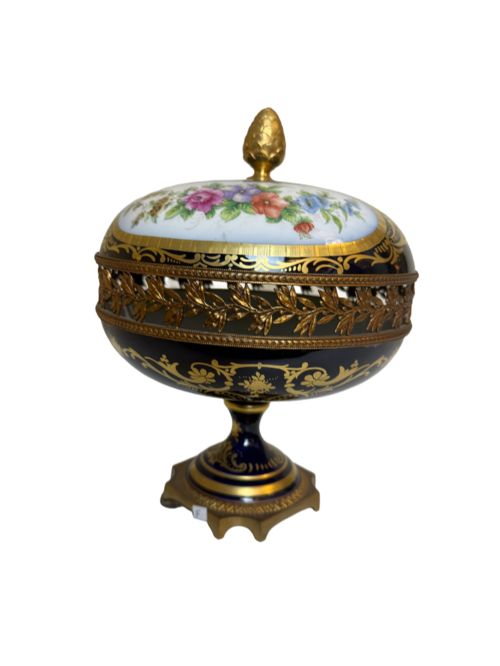
An antique floral compote bowl stands upon a raised pedestal, designed to present fruit or decorative displays in domestic settings. The pieces span periods from the Georgian era through the Victorian period, Edwardian years, and into the early twentieth century.
Forms on this page include footed comports, centrepieces, tazze, and pedestal bowls. European factories and English potteries dominate the selections, alongside Chinese cloisonné enamel and French porcelain.
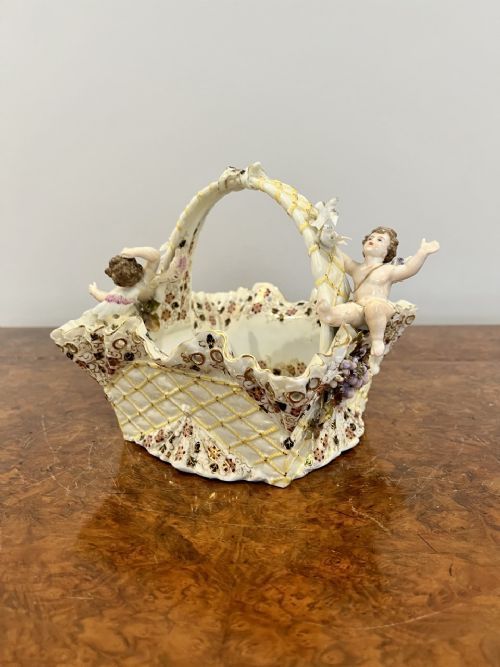
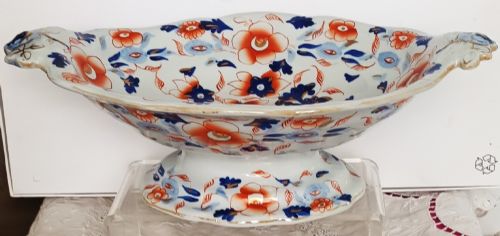
Victorian and German porcelain examples frequently incorporate figurative elements such as putti and applied roses. Ironstone and earthenware versions offer robust alternatives for table service.
What varies in quality
Quality rests upon the crispness of modelling in applied elements such as putti and flowers, where hand-finishing defines the better examples. Painted details show variation between factory-printed transfers and careful brushwork.
The integrity of applied gilding and the precision of the pedestal mount influence overall character. Maker marks, particularly from established German or English potteries, distinguish standard production from finer output.
German porcelain factories frequently combined pedestal bowls with hand-modelled cherubs and applied ceramic roses.
Ulisse Cantagalli·C.G. Schierholz and Sohn·Mason·Orivit·Samson
The Antique Floral Compote Bowl Glossary
- Compote
- A raised bowl on a foot or pedestal, traditionally used for serving fruit or sweets. These pieces often feature decorative handles or scalloped rims.
- Tazza
- A shallow bowl mounted on a stem and foot, originating as a ceremonial vessel. In later periods, makers produced these for display and fruit service.
- Ironstone
- A type of heavy durable earthenware patented in nineteenth-century England. It provided a tough ceramic body suitable for bold patterns.
- Cloisonné
- A metalwork technique where enamel paste fills compartments created by soldered wire. Artisans then fire the piece to produce a smooth coloured surface.
- Putti
- Sculptural representations of chubby male infants, frequently winged, appearing on European centrepieces. They often climb among applied porcelain roses.
Antique Floral Compote Bowl: Frequently Asked Questions
What is an antique compote bowl?
An antique compote bowl is a raised vessel on a pedestal base designed for presenting fruit or floral arrangements on a dining table.
These pieces combine functional serving forms with decorative sculptural elements from various periods.
How were compote bowls used?
Historically, households utilised these elevated bowls as centrepieces for serving fruit, sweetmeats, or decorative floral displays during formal meals.
Their height allowed them to sit above other table settings, creating a focal point in the room.
How do I date a porcelain centrepiece?
Dating relies upon identifying factory marks, stylistic indicators such as Rococo Revival or Art Nouveau, and manufacturing methods.
Examining the glaze composition and wear patterns also helps determine the historical period of production.
Are ironstone comports durable?
Ironstone ceramics were developed to offer a robust and heavy alternative to delicate porcelain while maintaining refined aesthetics.
This dense ceramic body resists everyday wear, making these pieces suitable for careful practical use.