
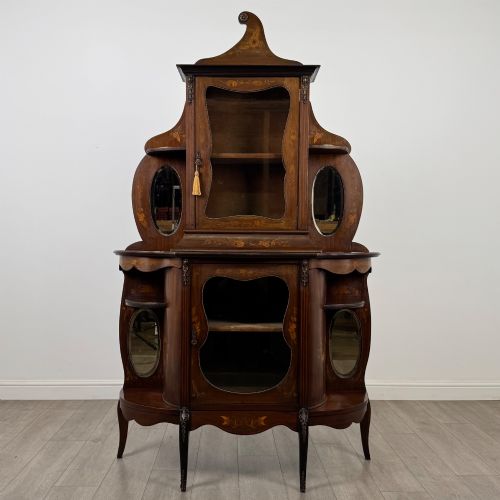
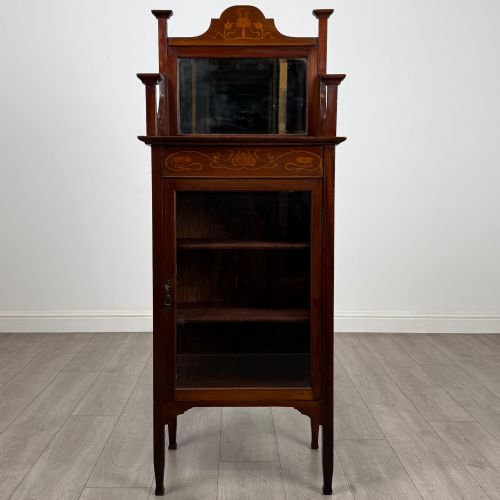
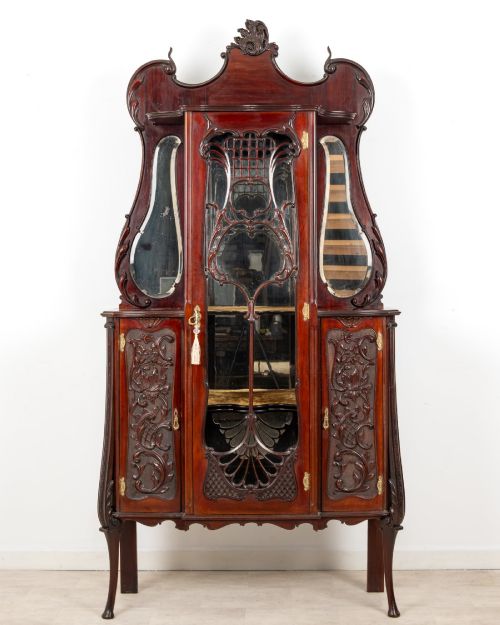
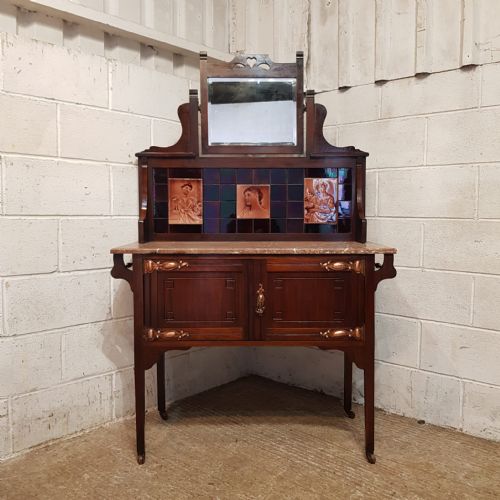
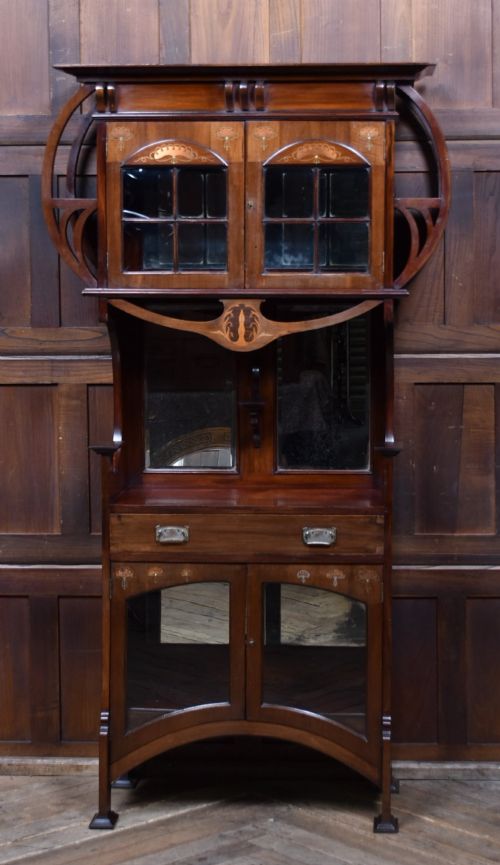


Art Nouveau Mirror Cabinet
An art nouveau mirror cabinet brings sweeping organic lines and gleaming glass into a room, offering both display space and reflection.
Art Nouveau Mirror Cabinet
When you search for an art nouveau mirror cabinet, you are looking at functional furniture that combines carved or inlaid woodwork with integrated glass surfaces. These pieces appear across late Victorian, Edwardian, and 1900 periods, bridging the transition from nineteenth-century ornamentation to twentieth-century design.
How they were made
Cabinet makers constructed these pieces primarily using solid and veneered woods such as mahogany, oak, and satinwood, frequently enriched with delicate wood inlay. Skilled artisans shaped the timber with curved profiles characteristic of the style.
Mirrors were set into backboards, console stands, or doors, complemented by brass and copper hardware. Carved details further defined the surfaces of washstands, dressers, and display cabinets.
The site listings feature mahogany, oak, and satinwood alongside brass, copper, and marble.
What varies in quality
The distinction between standard examples and superior pieces rests on the complexity of the timber work and the integration of the mirror glass. Finer cabinets display intricate wood inlay and more ambitious carving rather than plain surfaces.
Design execution also dictates standard; pieces with harmonious proportions across their display shelving, cupboards, and mirror backs represent the higher end of the range found in Edwardian and late Victorian workshops.
The Art Nouveau Mirror Cabinet Glossary
- Art Nouveau
- A stylistic movement spanning the late nineteenth and early twentieth centuries, defined by organic forms and flowing lines. This style dominates the decoration of these cabinets and sideboards.
- Edwardian
- A period covering the early twentieth century until the First World War, noted for lighter furniture designs. Many mirror cabinets and display pieces date from this era.
- Inlay
- A technique where pieces of contrasting wood are inserted into the primary surface to create decorative patterns. It frequently appears on mahogany cabinets from this period.
- Mirror Back
- A reflective glass panel fitted behind shelves or sideboard surfaces to enhance light and display space. It serves as a defining feature of these combination cabinets.
Art Nouveau Mirror Cabinet: Frequently Asked Questions
What rooms suit an art nouveau mirror cabinet?
These cabinets suit living rooms, dining spaces, or hallways where their reflective glass and display shelves can catch the light. They function well as drinks cabinets, sideboards, or decorative storage.
Their varied forms, from washstands to tall display units, allow them to fit into both traditional and eclectic modern interiors without dominating the floor plan.
How do I care for the wood and glass?
Maintain the timber surfaces by dusting regularly with a soft cloth and occasionally applying appropriate furniture wax. Avoid placing the wood in direct sunlight or near heat sources to prevent warping.
Clean the mirror glass with a gentle glass cleaner applied to a cloth rather than sprayed directly, protecting the surrounding wood frame from moisture damage.
How can I tell the period?
Dating relies on observing the combination of stylistic cues, construction methods, and materials used in the piece. Late Victorian and Edwardian examples often feature specific wood choices like mahogany and oak alongside distinct inlay work.
Stylistic shifts between nineteenth-century carving and the flowing lines of 1900 help narrow down the decade of manufacture.
Were mirror cabinets used for storage?
Yes, these pieces offered practical storage alongside their decorative mirror backs and display shelves. Cupboards, drawers, and open compartments held everything from table linen to glassware.
Hall cupboards and cloak cabinets provided specialised storage for hats and coats, combining utility with ornamental design.