

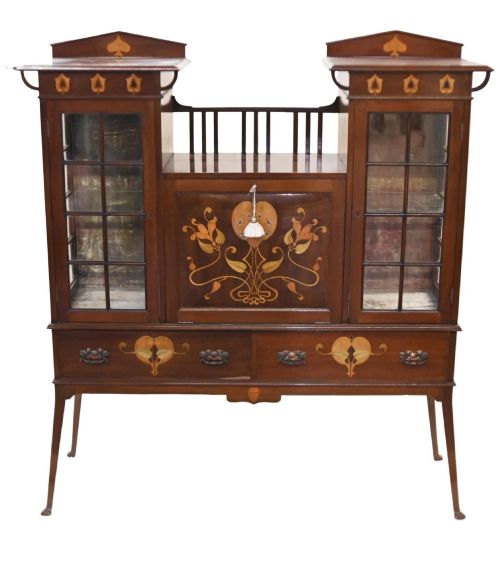
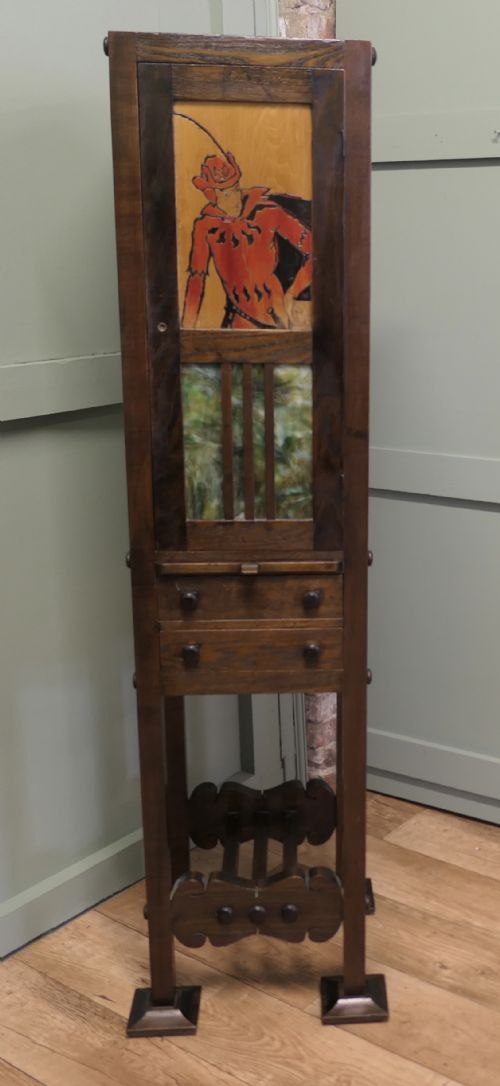
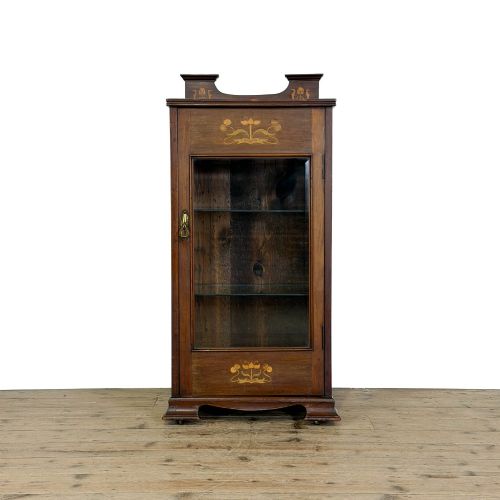
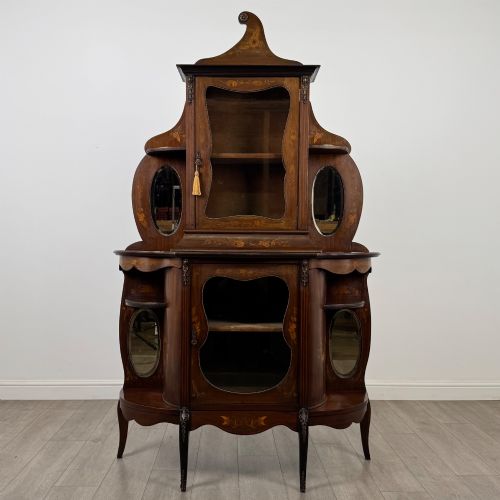


Art Nouveau Marquetry Cupboard
These art nouveau marquetry cupboards bring fluid floral motifs and meticulous wood inlay into domestic spaces with distinct late nineteenth and early Edwardian character.
Art Nouveau Marquetry Cupboard
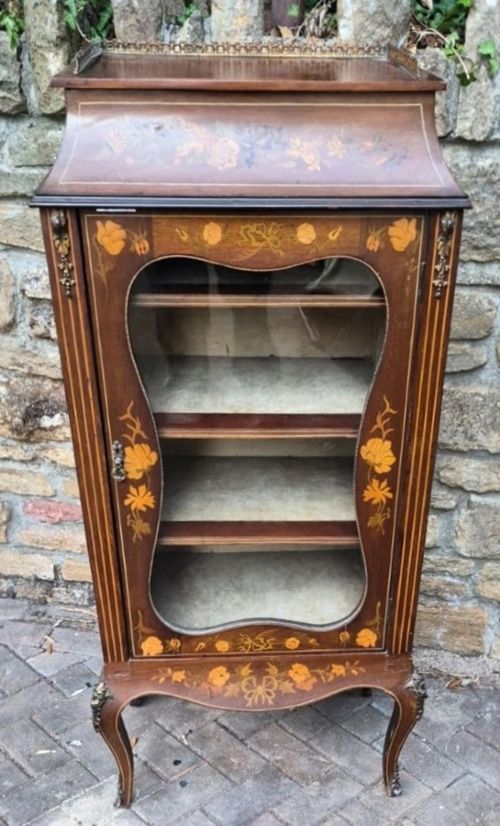
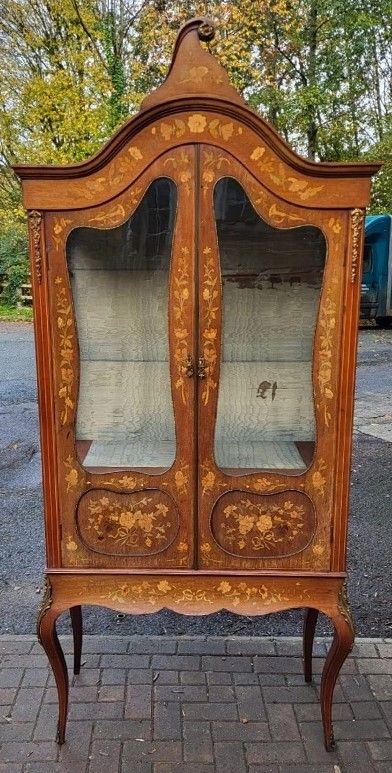
When you search for an art nouveau marquetry cupboard, you encounter a selection of cabinets, display cases, bookcases, sideboards, and bedside tables dating from the late nineteenth century through the Edwardian period. The most common form on this page is the mahogany display cabinet, frequently decorated with intricate floral marquetry veneers that define the aesthetic of the era.
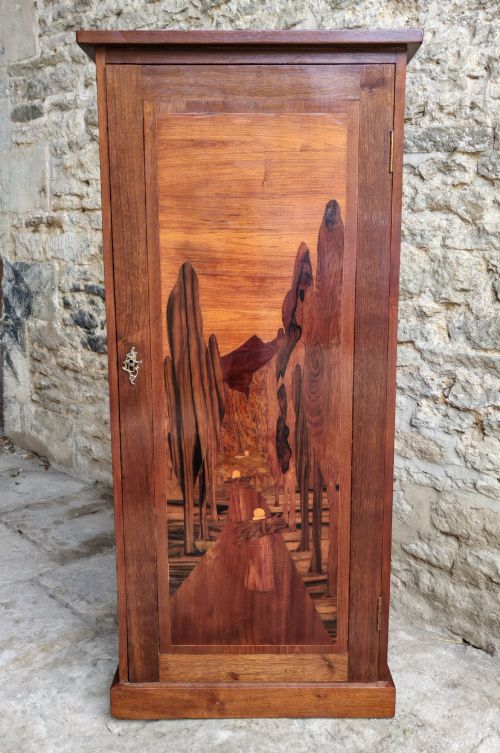
Makers and workshops of the period adopted both flowing organic lines and structured Arts and Crafts principles, producing freestanding furniture alongside smaller wall cabinets and music cabinets. Pieces span the Victorian era, the 1900 decade, and the 1910s, utilising rich timber bodies to frame glazed doors, mirrored backs, and brass hardware.
The integration of cabinetmaking with detailed wood inlay creates storage items that double as decorative focal points for a room. Whether viewing an inlaid side cabinet or a compact bedside table, the underlying construction reflects the transition from Victorian formality to the stylized naturalism of the Art Nouveau movement.
Materials and construction
Construction relies primarily on solid mahogany and satinwood, selected for their stable grain and capacity to take fine finishes. Cabinetmakers applied contrasting marquetry veneers to create pictorial floral designs and geometric borders across doors and panels.
Secondary elements involve brass for handles and hinges, alongside glass panes and mirror plates set into door frames to lighten the heavier timber carcases. These materials were combined using traditional joinery methods suited to the demands of elaborate decorative inlay.
Art Nouveau Marquetry Cupboard Retail Price Guide 2026
Typical asking prices for art nouveau marquetry cupboard among the pieces listed under this phrase on Sellingantiques today, from the lower quarter to the upper quarter. They describe what is for sale here now, not the wider market.
Music cabinets from this era accommodated sheet scores with the same artistic care applied to grand dining room sideboards.
Assessing quality and execution
Quality in these cupboards rests on the precision of the marquetry cutting and the choice of contrasting timbers used for the veneer work. Finer examples display seamless integration of different wood species where natural grain directions simulate petals and stems without gaps or heavy filler.
The structural integrity of the main mahogany carcase and the refinement of the brass mounts also distinguish standard production items from workshop pieces attributed to known makers. Attention to interior detail, such as fitted shelving and original glass, completes the measure of a superior cabinet.
Shapland & Petter
The Art Nouveau Marquetry Cupboard Glossary
- Marquetry
- The art of applying decorative pieces of veneer to a structural structure to form pictorial designs. Cabinetmakers use contrasting woods to achieve tonal depth.
- Satinwood
- A durable tropical hardwood with a lustrous yellowish grain utilised for contrasting inlay work. It provides brightness against darker timbers like mahogany.
- Coromandel
- A dense, dark timber featuring irregular black stripes, valued for small tables and luxury cabinetry. It offers a distinct surface texture.
- Display Cabinet
- A glazed piece of furniture designed to showcase porcelain, glassware, or books. These items often feature mirrored backs to reflect light through the contents.
Art Nouveau Marquetry Cupboard: Frequently Asked Questions
What woods were used in these cabinets?
Makers relied heavily on mahogany as the primary structural timber, complemented by satinwood and various marquetry veneers for the decorative inlay work. Coromandel also appears on specific pieces.
These timbers were chosen for their ability to hold fine detail and contrast effectively against one another.
How do I date an art nouveau cupboard?
Dating relies on stylistic markers such as floral marquetry, brass hardware design, and the transition from Victorian proportions to Edwardian lightness. Most items date between 1880 and 1910.
Construction methods and timber selection provide additional clues regarding the specific decade of manufacture.
Where were these cabinets placed originally?
Display cabinets and sideboards stood in principal reception rooms to hold tableware or ornaments, while smaller cupboards served bedrooms and music rooms. Their dual purpose combined storage with decorative display.
They functioned as focal points within domestic interiors influenced by the Arts and Crafts movement.
How do I care for marquetry surfaces?
Maintain the finish by avoiding direct sunlight and excessive humidity which can affect the delicate wood veneers. Regular dusting with a soft cloth preserves the polish without harming the inlay.
Apply appropriate wax sparingly to nourish the timber when necessary.