


Art Nouveau Lustre Bowl
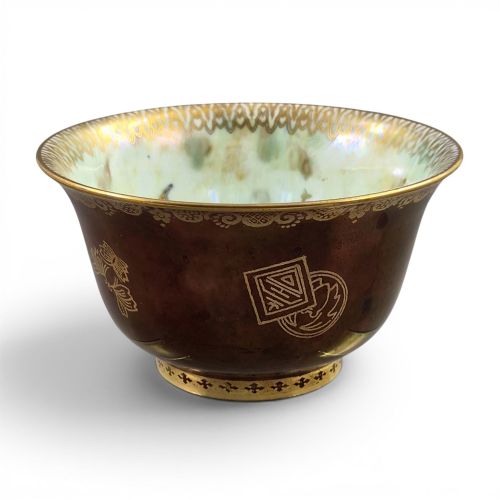
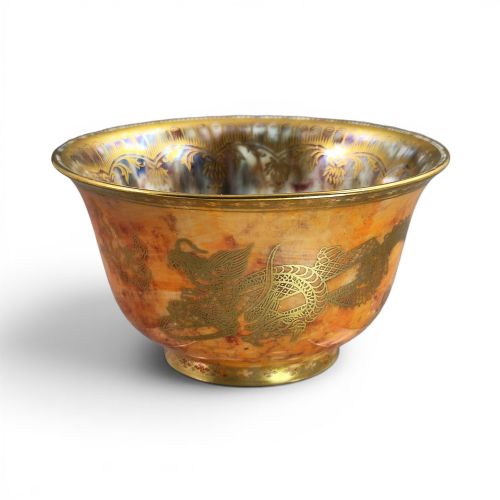
These art nouveau lustre bowls capture an iridescence that collectors prize for its shimmering metallic finish and intricate pattern work.
Art Nouveau Lustre Bowl
An art nouveau lustre bowl is a decorative ceramic vessel defined by its luminous metallic glaze and flowing ornamental motifs. When you search for this phrase, you find pieces originating from the Edwardian period and the early twentieth century, spanning around 1900 to 1920.
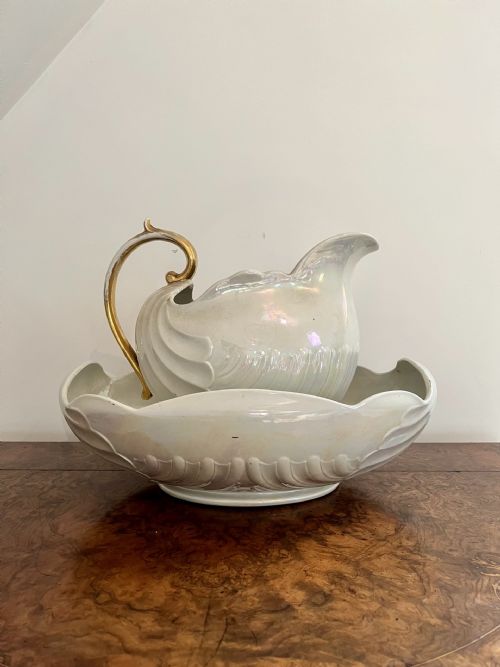
The selections here showcase distinct forms, ranging from miniature bowls and octagonal vessels to standard decorative bowls and larger jug and bowl sets. Most examples date from the mid-1910s and reflect the aesthetic movements of the era through mythical subjects and natural themes.
Makers such as Wedgwood dominate the offerings, alongside individual pieces bearing alternative Edwardian manufacture. Collectors encounter varied motifs including butterflies, dragons, fish, and abstract diaper patterns rendered in rich ruby and gold tones.
Materials and manufacture
Makers produced these vessels using ceramic bodies such as porcelain, bone china, and standard earthenware. Artisans then applied metallic glazes and lustre glazes to create the characteristic light-reflecting sheen.
Further surface enrichment often involved the application of gold leaf and gilt detailing over the fired glaze. This combination of ceramic techniques produced the deep, shifting colours seen across the period's output.
The listings on this page span the Edwardian period, nineteen-ten, and nineteen-twenty, featuring materials such as porcelain, bone china, gold leaf, and lustre glaze.
Distinctions in quality
The sophistication of the lustre finish largely determines the standing of a piece, particularly the depth of the metallic iridescence and the precision of the glaze application. Complex pictorial scenes require a higher degree of technical control during the firing process than simple geometric patterns.
The intricacy of the painted or transferred design also marks the distinction between standard production items and ambitious studio outputs. Pieces featuring elaborate mythological narratives or detailed animal subjects display greater artistic ambition.
Daisy Makeig-Jones·Wedgwood·James Hodgkiss·Shelley
The Art Nouveau Lustre Bowl Glossary
- Lustre Glaze
- A type of ceramic glaze containing metallic salts that produce an iridescent, reflective surface upon firing. This technique creates the shimmering effect characteristic of these vessels.
- Bone China
- A type of soft-paste porcelain containing bone ash, known for its high strength, whiteness, and translucency. It served as a refined body for many early twentieth-century decorative pieces.
- Gold Leaf
- Hammered gold beaten into extremely thin sheets used for gilding and surface decoration. Artisans applied it to highlight specific elements of the ceramic design.
- Diaper Pattern
- A continuous decorative motif composed of repeating geometric figures or small units. It often forms a background or border texture on ceramic surfaces.
- Octagonal Bowl
- A vessel possessing eight distinct sides or panels in its cross-section. This geometric form alters the way light hits the lustre glaze.
Art Nouveau Lustre Bowl: Frequently Asked Questions
What periods do these bowls come from?
The pieces shown on this page belong to the Edwardian era and the early decades of the twentieth century, specifically clustering around the nineteen-tens and nineteen-twenties.
Makers active during this time produced decorative ceramics that transitioned between traditional aesthetic styles and early modernist movements.
How were lustre glazes applied?
Artisans applied metallic salts directly onto the fired ceramic body before subjecting the piece to a specialised reduction firing. This process drew out the iridescent sheen and metallic finish.
Additional layers of gold leaf or gilt could then be added to accentuate specific design elements within the overall composition.
What designs appear on these pieces?
Motifs vary from naturalistic subjects such as butterflies and goldfish to elaborate mythical creatures including dragons and fairy-themed narratives. Geometric diaper patterns also frequently appear as borders or background textures.
These subjects reflect the imaginative decorative trends popular among Edwardian ceramic designers.
How do I care for an antique bowl?
Display these delicate ceramic vessels away from direct sunlight to preserve the sensitivity of the metallic glaze. Dust them gently with a dry, soft cloth rather than using liquid cleaners.
Due to the presence of delicate lustre finishes and potential gold leaf detailing, hand washing or abrasive cleaning methods should be avoided entirely.