


Art Nouveau Gold Pin
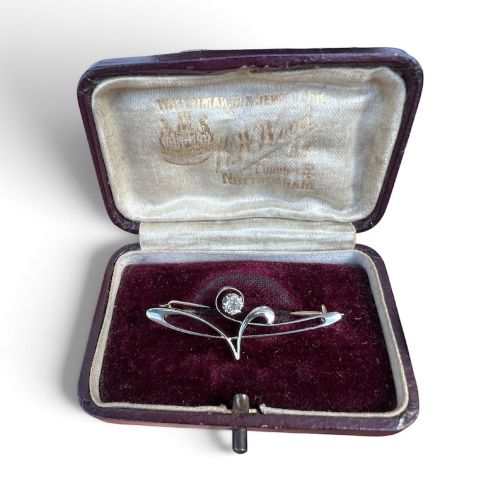
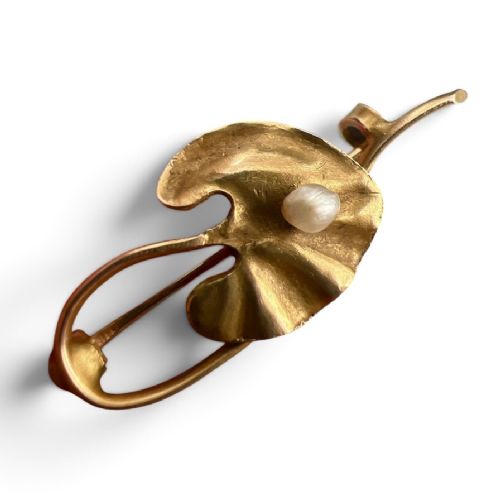
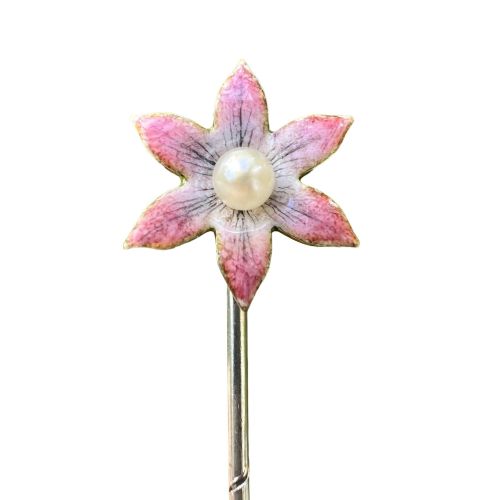
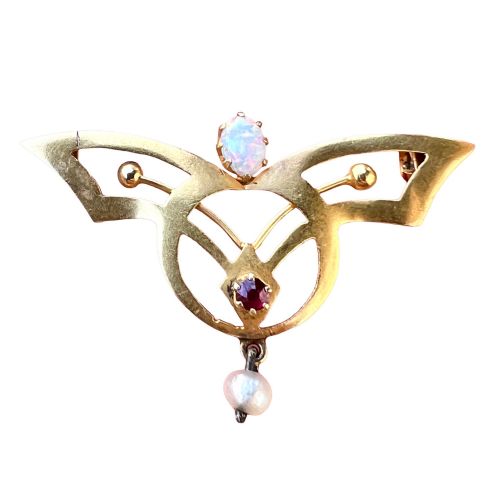
These art nouveau gold pin examples offer sinuous natural motifs in gold, pearl and enamel that define the turn of the twentieth century.
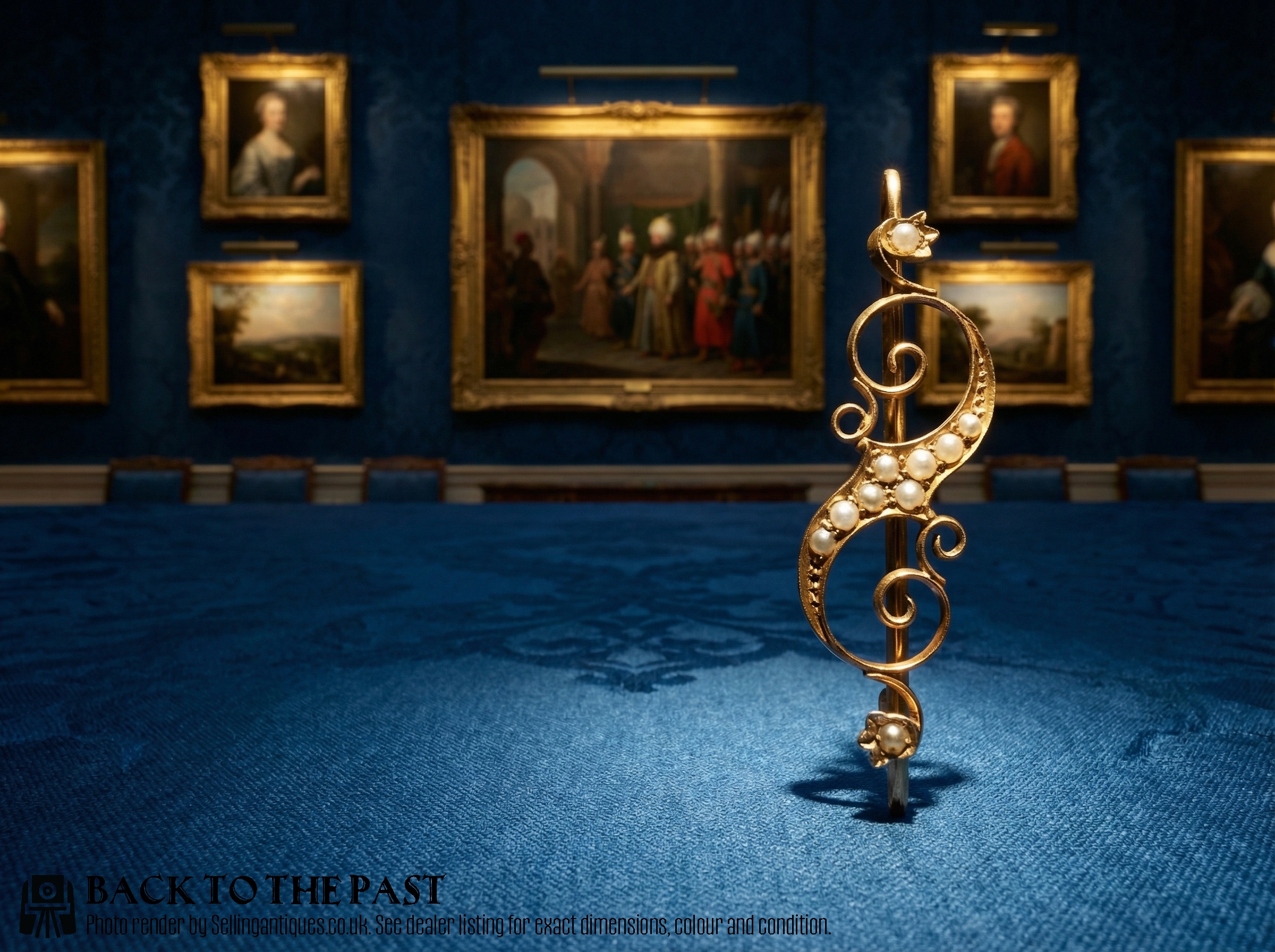
Art Nouveau Gold Pin
When you search for an art nouveau gold pin, you encounter delicate brooches, stick pins and hatpins spanning the Victorian, Edwardian and nineteen-hundred periods. The pieces appearing here predominantly take the form of brooches and pins shaped with characteristic flowing lines.
Makers of this era employed motifs such as flowers, leaves, hearts and butterflies, frequently incorporating gemstones like peridot, opal and diamond. These jewels served as decorative dress fastenings and personal adornments for the fashionable wardrobe of the period.
Materials and Construction
Goldsmiths worked in nine-carat, fourteen-carat, fifteen-carat and eighteen-carat gold, often pairing the metal with platinum or silver settings for stones. Enamelling techniques, including plique-à-jour, brought vibrant translucent colour to floral and insect designs.
Lapidaries set pearls, diamonds, rubies, amethysts, turquoise and sapphires into the metalwork to accentuate the organic curves of each piece. Construction methods combined traditional casting and hand-working with specialised enamel firing.
Listings feature pearls, diamonds, peridots, opals and amethysts set in gold, silver and platinum across Victorian and Edwardian periods.
Assessing Quality
Quality rests on the crispness of the chased or cast goldwork and the finesse of any plique-à-jour or opaque enamel work. Superior examples display secure stone settings and harmonious gemstone combinations, such as matching pearls or well-matched peridots.
The distinction between standard commercial pieces and masterworks lies in the artistry of the design and the preservation of delicate enamel surfaces. Maker attribution also elevates certain works above anonymous factory production.
Murrle Bennet and Co·Gustav Gaudernack·Royal Dux·Rene Lalique
The Art Nouveau Gold Pin Glossary
- Plique-a-jour
- An enamelling technique where the enamel is fired in open cells, creating a translucent stained-glass effect without a backing. This lets light pass directly through the coloured glass.
- Stick pin
- A long pin with a decorative head, worn upright in a cravat, lapel or scarf. The form gained immense popularity during the Victorian and Edwardian eras.
- Hatpin
- A long, sturdy pin used to secure women's hats to their hair. Elaborate decorative heads often mirrored contemporary art nouveau motifs.
- Pendant brooch
- A versatile jewel designed to be worn either suspended from a chain as a necklace or pinned directly to clothing. Many examples feature detachable fittings for dual use.
- Silver gilt
- Silver that has been coated with a thin layer of gold. This technique provided the rich appearance of solid gold while utilising a silver base.
Art Nouveau Gold Pin: Frequently Asked Questions
How do I wear an antique stick pin?
Stick pins insert securely into heavy lapels, cravats, hats and woven scarves using a protective cap on the sharp end.
They function best in thick fabrics that support the upright shaft without sagging.
What is plique-a-jour enamel?
Plique-a-jour is a translucent enamelling method lacking a backing metal, resembling miniature stained glass.
Light shines through the coloured cells, highlighting the organic curves typical of the period.
How do I care for antique gold jewellery?
Gentle cleaning with a soft cloth preserves the delicate gold surfaces and fragile enamel work.
Harsh chemical dips and ultrasonic cleaners damage pearls, opals and fired glass.
Are these pieces solid gold?
The evidence shows items fashioned from nine-carat, fourteen-carat, fifteen-carat and eighteen-carat gold.
Other pieces utilise silver gilt or platinum settings alongside the gold components.